
The hidden corrosion threat: How small chemistry shifts can damage big investments
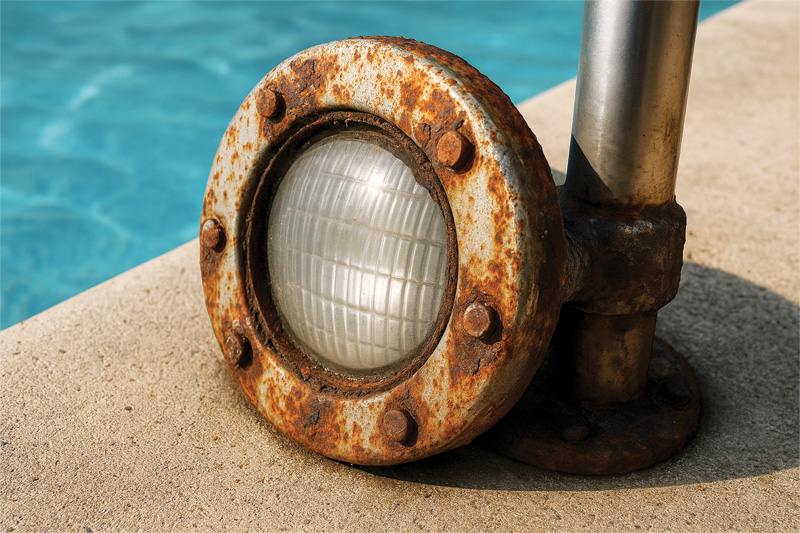
Everyone has a general understanding of corrosion, whether they are aware of it or not. Rust on metal surfaces is a type of corrosion. When iron-containing metals are exposed to oxygen and moisture, a chemical reaction occurs. The reaction is an oxidation process that forms iron oxide, more commonly known as rust. What may not be known is the extent to which rust is damaging to metal. The reddish, brown, flaky coating that forms will weaken and degrade the metal over time. In swimming pools, all the necessary ingredients for metal and cementitious surface corrosion are present. The key factors of corrosion are:
- Oxygen
- Water
- Salts
- Acid
- Temperature
Managing pool chemistry is crucial to prevent the water from becoming corrosive. The Langelier Saturation Index (LSI) is a widely used tool for determining the corrosivity of water.
A basic understanding of water chemistry can serve as a guide in determining the optimal values to prevent damaging corrosion of equipment or surfaces. Most accepted chemistry values include balanced calcium hardness, pH, and total alkalinity (TA), as per best practice ranges. One standard to ensure corrosion prevention is to have a minimum calcium hardness value of 150 parts per million (ppm). A recommended target for calcium in plaster pools is 350 ppm or 250 ppm in vinyl or fibreglass surfaces. The minimum recommended pH is 7.2, with an ideal target of 7.5. TA should be maintained at a minimum of 60 ppm, with a target of 90 ppm for optimal water balance. If these targets are used as a baseline:
- Calcium—350 ppm
- pH—7.5
- TA—90 ppm
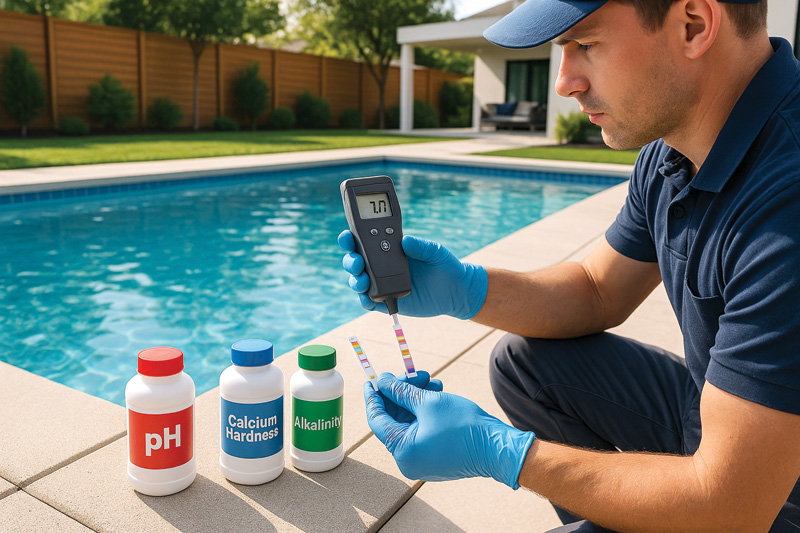
Along with the following:
- Cyanuric acid (CYA)—45 ppm
- Temperature—29 C (85 F)
- Total dissolved solids (TDS)—500
In this scenario, with these values, the water is considered balanced and non-corrosive, showing an LSI of 0.01. However, when the temperature is lowered to 24 C (75 F), the LSI shifts to -0.06, indicating that the water has become slightly corrosive.
This is just one example of some of the hidden causes of corrosion in pools.
How high TDS and unbalanced targets lead to corrosion
Pure water has an extremely low conductivity of electrical flow. Since there are little to no dissolved solids, there is a greater resistance to electrical flow in pure water. The presence of dissolved solids will lower the resistance of water and increase conductivity (the potential for greater electrical flow). Therefore, high TDS will lead to a corrosive environment in the pool. Any increase in dissolved salts or impurities in the pool will accelerate the electrochemical corrosion reaction. High TDS can also decrease the efficacy of chlorine, requiring increased amounts of sanitizer to achieve the proper level. Increased chlorine use may also contribute to corrosion.
Using the same LSI example, if TDS increases from 500 to 1,000 ppm, the LSI shifts from a balanced 0.01 to a corrosive -0.04. As TDS levels rise, the potential for corrosion increases. Adjustments can be made to the LSI to help maintain a balanced water level; however, these adjustments must remain within acceptable target ranges. Incorrect parameter ranges may produce a balanced LSI reading, but still create other water quality issues.
As noted, higher TDS levels contribute to corrosion; however, changes in TA or pH can sometimes mask the issue, resulting in a balanced LSI despite elevated TDS. True water balance depends on evaluating all test values in conjunction with the LSI to ensure hidden corrosion risks are not overlooked.
In general, TDS in pools should be maintained as close as possible to the level of the original fill water. For example, if the fresh fill has a TDS of 500 ppm, the pool water should be maintained at a similar level to minimize the potential for corrosion.
Galvanic corrosion
In 1981, the Statue of Liberty was in a severe state of degradation. The outside copper skin of the statue was so corroded that some spots were as thin as a sheet of paper.
What caused this severe breakdown of Lady Liberty was a phenomenon known as galvanic corrosion. It can also pose a threat in swimming pools, especially those with salt chlorine generators (SCGs).
Galvanic corrosion can occur in standard swimming pools when TDS builds up to a very high level. As TDS builds up, the electrical conductivity of the water increases. The occurrence of a high mineral solution, coupled with an increase in electrical capacity, is known as electrolysis. Swimming pools with high TDS that are near any strong electrical potential, such as transformers or high-tension wires, can have metals within the pool that begin to corrode and turn black.
In pools using a saltwater chlorine generator, galvanic corrosion can be a significant threat. Salt pools incorporate a good level of salt in the water. Typically, 3,500 to 4,500 ppm of sodium chloride. This salinity contributes to a higher TDS.
Also, SCGs have titanium and ruthenium-coated cells. These are two noble metals commonly used for their strong resistance to corrosion and oxidation. In an SCG, sodium chloride is converted into chlorine through the process of electrolysis. An electrical charge is sent that splits the sodium chloride molecule into two ions. The sodium ion has a positive charge, and the chloride ion has a negative charge. There are two cells of noble metal within an SCG; one is the anode with a positive charge, and the other is the cathode with a negative charge.
Now that the sodium chloride has been split into ions of opposite charges, the positive sodium ion goes to the negatively charged cathode, and the negatively charged chloride ion goes to the positively charged anode.
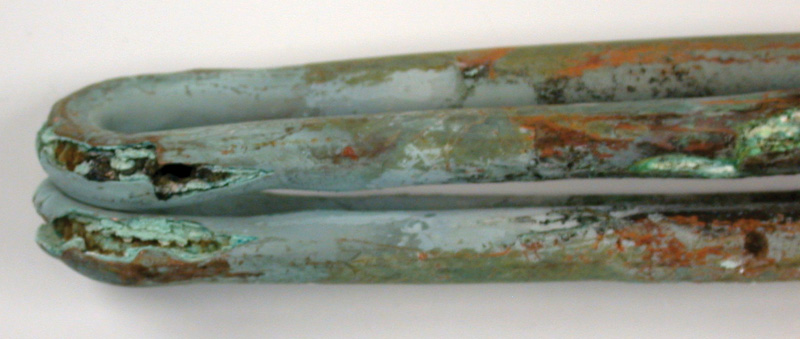
Copper is another metal used for piping, heat exchangers, rails, and light rings. Copper is also a noble metal due to its corrosion-resistant properties. However, in the case of a salt generator with high TDS and electrolysis, copper, being the least noble of the metals, will act as a sacrificial anode. This means copper will corrode first.
Most pools have lights, and the light ring is typically made of brass or copper. If the system includes a heater, the heat exchanger is often made of copper or another type of metal. This creates a highly concentrated solution of sodium chloride in contact with three different metals, and when combined with an electrical current, the potential for corrosion increases significantly. This is the perfect storm for galvanic corrosion. In this case, copper will corrode, and fixtures will appear black and discoloured. In fact, the key determinant of galvanic corrosion is the discolouration of metal parts.
So, what can be done to prevent galvanic corrosion in a saltwater pool?
The use of a simple zinc anode inserted into the skimmer or installed into the plumbing. The zinc anode will protect the other metals from corrosion because zinc becomes the sacrificial anode rather than the copper, and zinc corrodes without causing any staining or detriment to the pool. Using a good metal sequestering product can help to remove any metal oxides that can lead to discoloured water and fixtures. Zinc may also be used in standard pools to prevent galvanic corrosion resulting from high TDS water near potential electrical sources, such as transformers and high-voltage lines.
Improper carbonate alkalinity based on CYA level
Another source of hidden corrosion in pool water is related to the TA and CYA levels. CYA is a buffer as part of TA, which primarily acts to prevent the pH from decreasing. When calculating LSI, it is the carbonate and bicarbonate alkalinity that is relevant. With levels of CYA exceeding 60 ppm, the measured alkalinity can consist of carbonate alkalinity and cyanurate alkalinity.
When calculating LSI, it is only the carbonate alkalinity that is a concern since CYA is not involved in the solubility of calcium carbonate. It is advised to determine the TA and the CYA levels. Then, the CYA level divided by three should be subtracted from the TA test result. This is an estimated method for ensuring that there is sufficient carbonate alkalinity to resist corrosion.
Example calculation: TA test 90 ppm
CYA test = 60 ppm divided by 3 = 20
90 – 20 ppm = 70 ppm
According to the LSI, the water is more corrosive than if 90 ppm were used to calculate. For instance, imagine if the TA test is at 100 ppm and the CYA level is 300 ppm.
CYA 300 divided by 3 = 100
100 – 100 = 0 carbonate alkalinity
In this case, there will be definite corrosion of metal in the system. This is one of the reasons why the acceptable recommendations for CYA are 30 to 50 ppm.
The role of water temperature and corrosion
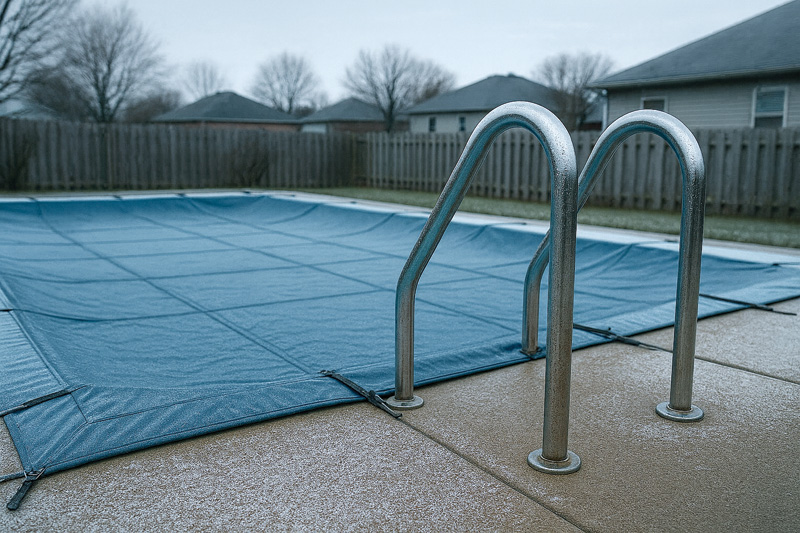
Temperature can be a hidden source of corrosion, especially when there is a lack of understanding of how temperature affects water balance and the LSI. Cold water is more aggressive to cementitious surfaces and metallic equipment. There are two main reasons for this:
First, as water temperature decreases, it causes the pH to become unstable because it also causes the TA to drop. TA is the buffering capacity of the pH, so a low TA result means that the pH will be unstable and can potentially spike up and down. In normal operational pool temperatures, with proper TA, the majority of alkalinity should be in the bicarbonate form (buffer)—the ability to hold onto dissolved carbon increases in cold water. Carbon dioxide in cold water will yield higher levels of carbonic acid, which lowers both TA and pH. This will lead to increased corrosion as the pH level drops and the bicarbonate alkalinity buffer is depleted.
Secondly, calcium carbonate and calcium hydroxide are two types of calcium species that become more soluble in cold water. When calcium carbonate dissolves in water, the water becomes corrosive. The LSI is based on the saturation of calcium carbonate. Water will be more aggressive when calcium is in the soluble (dissolved) state. This is where hidden corrosion can sneak in. A test can be conducted, and the soluble or dissolved calcium will be registered on the test. The assumption is that since the hardness level is good, everything is fine. This is where LSI can prove to be an especially useful tool. When water is cold, LSI needs to be interpreted in relation to the temperature first. Then, calcium may be raised accordingly if it is not possible to raise the temperature. While tests may show acceptable levels of calcium, it is essential to note that colder temperatures cause the calcium carbonate to dissolve as a solid into a more soluble form. This, in a sense, fools the water, causing it to react as if it is undersaturated.
To become more saturated, water will pull calcium from cementitious surfaces, such as plaster, grout, and metals. A lowering of water temperature by just 15 degrees lowers the LSI by 0.1. If there was a perfect LSI of 0.0 in a pool and the temperature went down 30 degrees, the perfect LSI ends up at a corrosive level of -0.3. In colder winter temperatures, the calcium level can be adjusted to fall within the target range of 450 to 500 ppm, meeting the water’s demand for calcium saturation. In many cases, due to winter and early spring rains or snowmelt, the higher calcium levels will be diluted out before it is time to open the pool.
Improper grounding
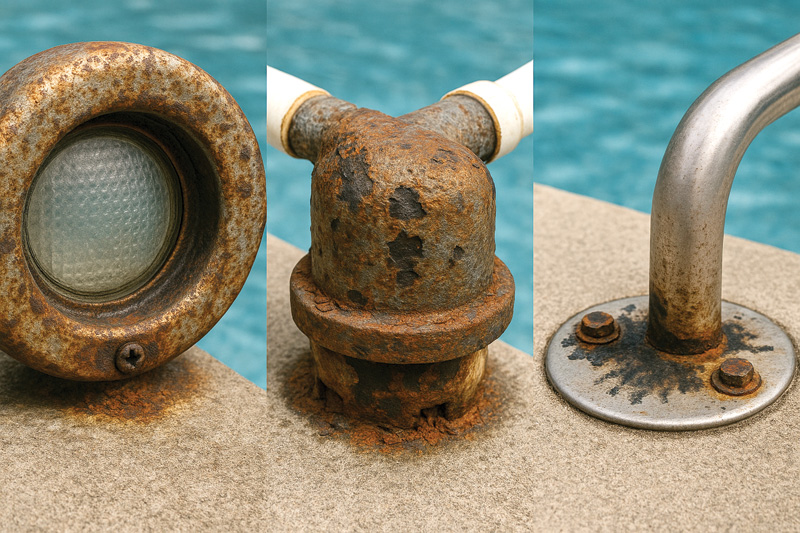
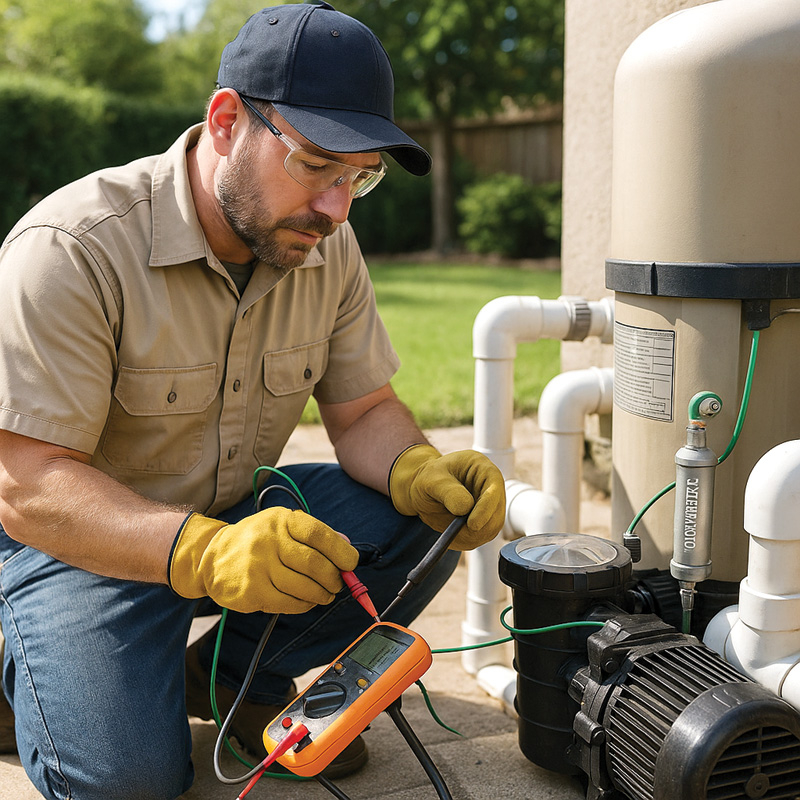
Stray currents and electrolysis from improper grounding can also lead to galvanic corrosion, especially in pools equipped with SCGs. When stray electrical currents take an unintended path through pool water and connected metal parts, destructive corrosion of equipment can occur.
Improper grounding also poses a risk of electrocution to swimmers. Improper bonding can also cause corrosion of lights, handrails, and ladders. All metal parts should be bonded to the bonding grid. If there are broken or missing connections, then there will be no path of equalization for electrical potential. This too can be a source of unintended corrosion and electrical shock in the pool.
Another source of electrical interference can be high-voltage power lines or a transformer located near the pool. These can introduce stray voltage into the pool grounding and bonding system, leading to corrosion and discolouration of metal parts.
If corrosion from any form of unintended electrolysis is suspected, a full professional inspection of all equipment should be conducted by a qualified electrician. If grounding and bonding are correct, a sacrificial zinc anode can be added to the skimmer or installed as an inline component.
The key to corrosion prevention
Proper use of the LSI and careful management of individual water chemistry parameters remain the most effective ways to prevent corrosion in operating pools. Maintaining a balanced water level throughout the year, especially during seasonal temperature fluctuations, helps protect equipment and surfaces from hidden damage. A proactive approach to monitoring and adjusting water chemistry during winter can significantly reduce corrosion risks, ensuring a smooth transition and fewer maintenance issues when pools reopen in the spring.
Other forms of hidden corrosion
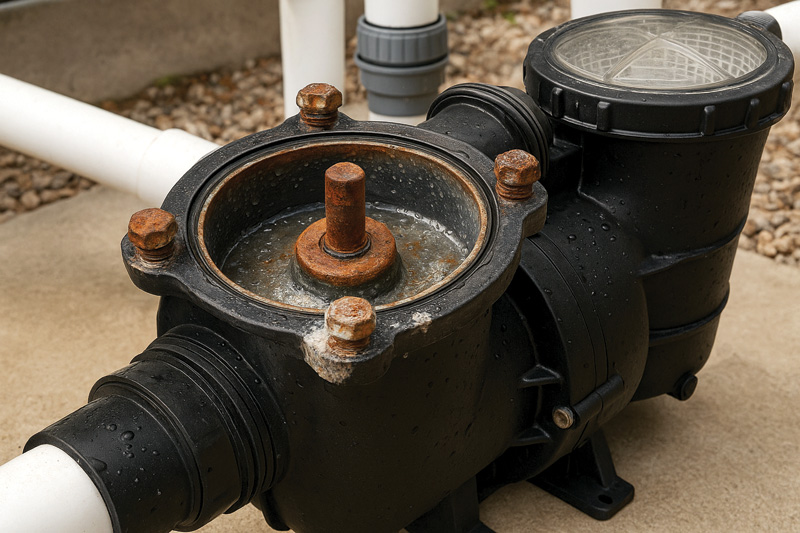
- Velocity or erosion corrosion from oversized pumps or undersized plumbing. High velocity and turbulence strip away protective layers in metal piping and on heat exchangers.
- High cyanuric acid (CYA) levels can contribute to increased total dissolved solids (TDS), which can increase corrosion.
- High salinity makes the water more conductive and thus more corrosive. In pools equipped with salt chlorine generators (SCGs), install a zinc anode and adjust the Langelier Saturation Index (LSI) to achieve the proper target ranges for total alkalinity (TA), calcium hardness, and pH. The addition of borate in saltwater pools can also act as a protectant against aggressive water, as borate allows for a higher calcium level while keeping the pH from rising too high.
- Trichlor tablets in the skimmer. The pH of trichlor is 2.8 to 3.0, indicating an acidic form of chlorine. Trichlor tablets are erosion tablets that dissolve with contact in water. There are just a few gallons of water in a skimmer well. Trichlor tablets dissolved in these few gallons while the pump system is off create an acidic solution that, when the pump turns on, will be the first thing passing over the pump, filter, heater, and other equipment.
Author

Terry Arko is a product training and content manager for HASA Pool Inc., a manufacturer and distributor of pool and spa water treatment products in Saugus, Calif. He has more than 40 years of experience in the pool and spa/hot tub industry, working in service, repair, retail sales, chemical manufacturing, technical service, commercial sales, and product development. He has written over 100 published articles on water chemistry and has been an instructor of water chemistry courses for more than 25 years. Arko serves as a voting member on the Recreational Water & Air Quality Committee (RWAQC) board. He is a Commercial Pool Operator (CPO) course instructor, a Pool Chemistry Certified Residential course teacher for the Pool Chemistry Training Institute (PCTI), and a Pool & Spa Marketing Editorial Advisory Committee member. Arko can be reached at terryarko@hasapool.com
Sign up for our newsletter
Get all the latest news and features from Pool & Spa Marketing. Submit your email below to get our twice-monthly newsletter.
Products

Read the Latest Issue