Selecting the right rails, ladders, and lifts: A practical guide for builders, dealers, and operators
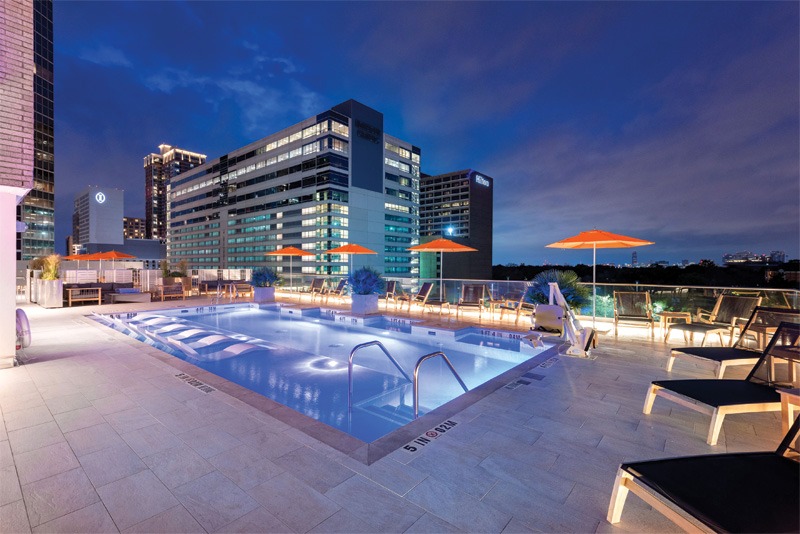
Pool access equipment is rarely the headline item in project specifications, yet it plays a defining role in safety, usability, compliance, and long-term operational success. When the right rails, ladders, and lifts are selected and installed thoughtfully, they make aquatic environments more inclusive and safer for everyone. When they are not, the consequences—uncomfortable users, safety issues, costly replacements, and compliance headaches—can last for years.
For pool builders, equipment dealers, and facility operators across Canada, choosing access equipment is about more than meeting minimum requirements. It is about making informed decisions that hold up in the real world.
Safety is the baseline—not the finish line
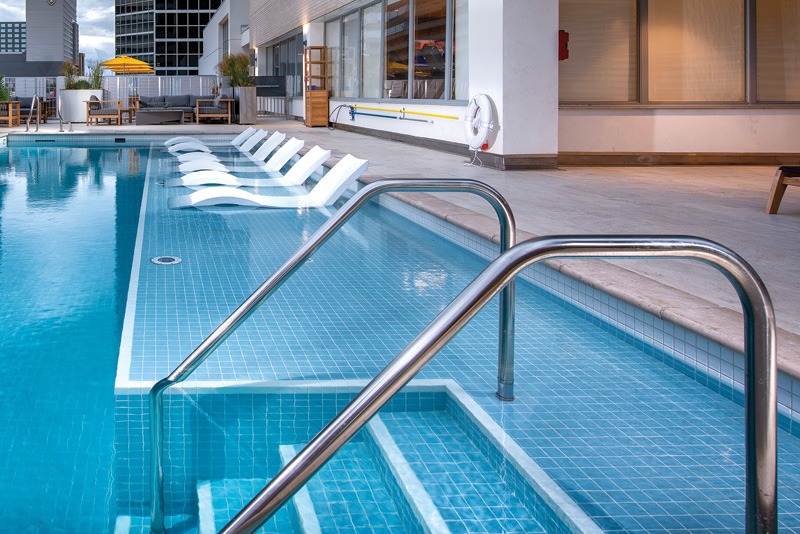
Safety must be the foundation for every decision about pool-access equipment. From handrails to ladders to pool lifts, every component should be evaluated for its ability to protect users in real-world conditions. For Canadian aquatic facilities, accessibility guidance, such as the Accessible Canada CAN ASC 2.1 standard, provides a framework for designing safer environments, including recommended clear deck space, stable surfaces, and proper placement of lifts and ramps.
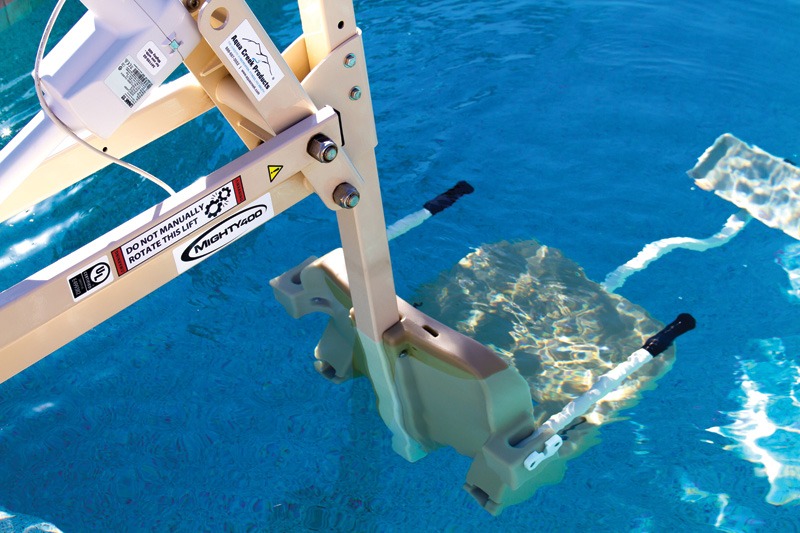
Safety deserves the same level of planning as any other core pool system. Access equipment performs best when selected early, positioned intentionally, and aligned with how the facility will be used. Handrails should guide movement naturally, ladders should support steady entry and exit, and lifts should be available, visible, and ready for use. When safety is prioritized during selection—not revisited after installation—access equipment becomes a dependable part of daily operations rather than a liability.
Pool access quick checklist
Use this as a practical reference for planning, selecting, and operating pool access equipment.
- Codes, standards, and baselines (start here)
þ Has compliance with local building codes, provincial regulations, and applicable accessibility standards been verified?
þ Are there provincial or municipal guidelines that influence the type of access, placement, or clearances for this facility?
þ Are recognized safety and performance standards (e.g. UL standards for powered equipment) being referenced where applicable?
- Users and use patterns
þ Who are the primary and secondary user groups for this pool (e.g. children, seniors, adaptive users, rehabilitation, general public)?
þ What is the anticipated frequency and intensity of use (seasonal, daily, high-traffic, or therapeutic)?
þ Will the access equipment need to serve multiple user types or programs?
- Environment and site conditions
þ Are the materials appropriate for the local environment and water chemistry (e.g. 316L stainless steel for heavily chlorinated or outdoor saltwater pools)?
þ Is the pool indoor or outdoor, and how will UV exposure, freeze-thaw cycles, or weather affect the performance of the equipment?
þ Are deck surfaces, slopes, and drainage compatible with safe equipment installation?
- Equipment selection and layout
þ Are handrail placement, ladder tread count, and lift positioning appropriate for the pool depth, wall configuration, and deck height?
þ Does the ladder tread count align with water depth to allow safe, comfortable entry and exit?
þ Is lift placement coordinated with clear deck space, transfer zones, and nearby features?
þ Is the equipment compatible with existing pool structures, gutters, coping, and deck details?
- Installation and integration
þ Are the installation, anchoring, and bonding instructions complete and realistic for the facility?
þ Can the equipment be installed without compromising structural integrity or waterproofing?
þ Are manufacturer requirements clearly communicated to installers?
- Operations, maintenance, and support
þ Are maintenance requirements, inspection intervals, and service procedures clearly defined?
þ Are replacement parts readily available in Canada?
þ Does the supplier offer responsive technical support and meaningful warranty coverage?
- Daily operations and staff readiness
þ Will access equipment be available and operational during all intended operating hours?
þ Have staff been trained in safe operation, emergency procedures, and routine inspections?
þ Is redundancy required for high-use or public facilities?
- Future flexibility
þ Have future retrofits, expansions, or program changes been considered?
þ Do removable or adjustable components enable long-term adaptability?
þ Will today’s choices limit future upgrades to accessibility?
Independent testing and industry standards
Safety is not just a regulatory checkbox; it is a performance outcome. Once safety is established as a baseline principle, the next practical question is: How can one be confident that a product will perform safely and reliably over time? This is where independent testing and industry standards play an invaluable role.
In Canada, building codes and accessibility standards focus on performance outcomes—ensuring that lifts, ladders, and rails are stable, accessible, and capable of safe operation, with appropriate clear deck space and ramp slopes. Many provincial design guidelines and industry best practices refer to recognized safety standards as a practical means of demonstrating performance, even though these standards are not legally mandated.
For example, British Columbia’s pool design guidelines recommend that accessibility lifts and hoists be independently certified to recognized safety standards and installed in accordance with the manufacturer’s instructions. Although this certification is not a provincial legal requirement, it reflects widely accepted design expectations and best practice for safe, reliable operation.
For builders and dealers, specifying equipment that has undergone rigorous independent evaluation assures that:
- Structural components perform as intended under load
- Controls and mechanical systems operate consistently in challenging, wet, corrosive environments
- Manufacturers have demonstrated performance beyond internal claims
For operators, third-party testing can mean fewer operational surprises, more predictable maintenance needs, and greater confidence that equipment will not fail during everyday use. Look for widely recognized third-party certifications that signal rigorous safety and performance testing, such as Underwriters Laboratories (UL). The primary UL standard applicable to electrically powered pool lifts, UL 60335-2-1000, sets safety and performance requirements for electrical safety, structural integrity, and functional reliability for both public and residential use. While adherence to UL standards is not universally required by law in Canada, products evaluated to globally recognized standards such as UL 60335-2-1000 are widely regarded as meeting a higher bar for safety, consistency, and real-world performance in aquatic environments.
Beyond the specs: Reliability and support matter
Access equipment decisions go beyond a spec sheet; they extend to long-term durability, serviceability, and manufacturer accountability. Durability and long-term reliability are equally important and depend not only on the product itself but also on the company behind it. A well-designed lift, ladder, or rail is only as effective as the manufacturer’s ability to support it throughout its life-cycle.
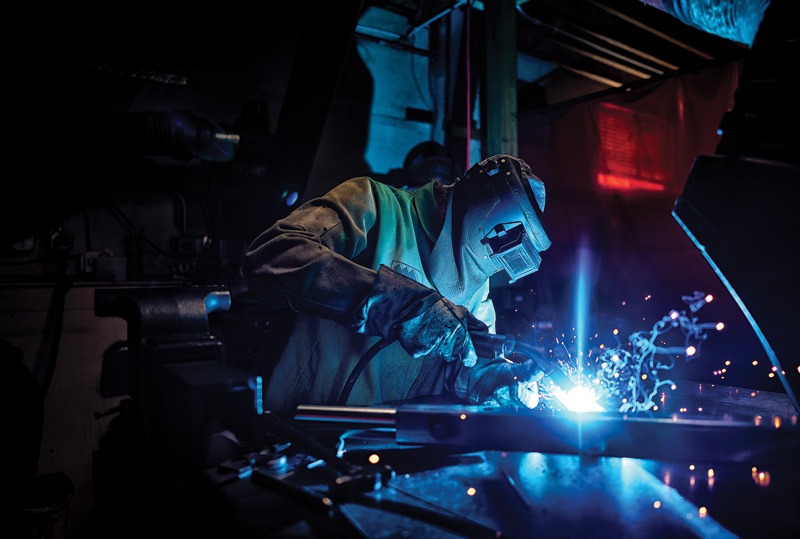
Durability is not guaranteed by stainless steel or corrosion-resistant coatings alone. Factors such as alloy grade, fabrication quality, weld integrity, and the ability to withstand the specific environment—outdoor exposure, saltwater, or heavily chlorinated pools—all affect how a product performs over time. That is where quality management systems, such as ISO 9001:2015 certification, become critical. ISO is not a product certification; it is a structured approach to ensuring that a manufacturer consistently produces products that meet defined quality standards. Facilities that specify equipment from manufacturers with recognized quality processes are more likely to receive equipment that performs reliably, installation after installation.
Long-term reliability also depends on how a company stands behind its product. A warranty is only as strong as the people who honour it. When evaluating potential suppliers, ask about:
- Warranty coverage and limitations
- Availability of replacement parts in Canada
- Technical support responsiveness
- Installation guidance and training resources
- Ongoing maintenance recommendations
Choosing products from companies with strong quality management practices and robust support ensures the investment continues to deliver value throughout the years of operation. It also reduces unexpected downtime, maintenance headaches, and safety risks, protecting both users and operators.
Practical guidance: Choosing the right equipment for a project
This section offers actionable guidance for builders, dealers, and operators when specifying and selecting pool access equipment. By considering the specific environment, user needs, and operational context, informed choices can be made that optimize safety, usability, and durability.
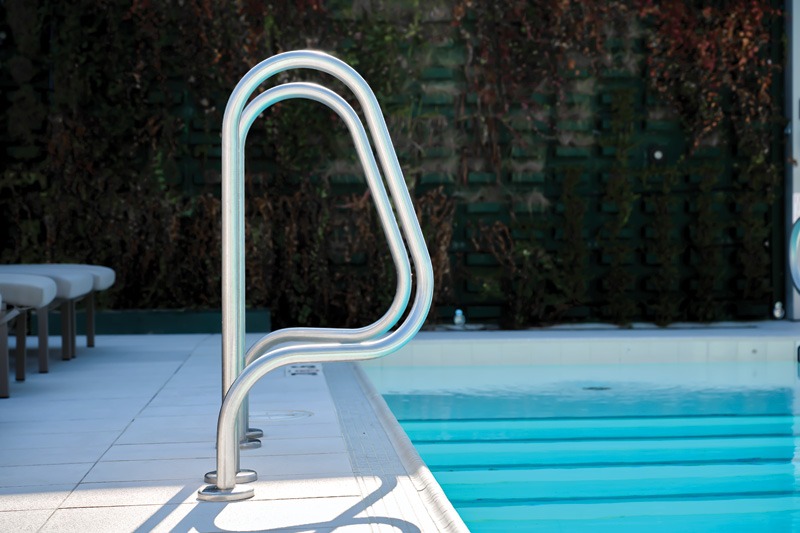
Handrails: Support where it matters
- Ergonomic placement for continuous support from deck to water
- Anchor type and material selection appropriate for the deck surface and water chemistry
- Multibend or extended rails for enhanced stability and accessibility
- Use custom, adjustable rails for unique pool edges or retrofits
- Material selection appropriate for long-term environmental exposure (e.g. 316L marine-grade stainless steel is recommended for heavily chlorinated or outdoor saltwater pools)
Pool ladders: Balancing safety and comfort
- Select the appropriate tread type for the intended use
- Ensure handhold continuity for secure entry and exit
- Consider cross-braced ladders for commercial or high-traffic pools
- Select a tread count appropriate to pool depth, ensuring the ladder has enough rungs for safe, comfortable deck-to-water entry and exit (many guidelines specify a minimum of four rungs in deeper water)
- Select material appropriate to environmental exposure (e.g. 316L marine-grade stainless steel is recommended for heavily chlorinated or outdoor saltwater pools)
Pool lifts: Matching equipment to users and layout
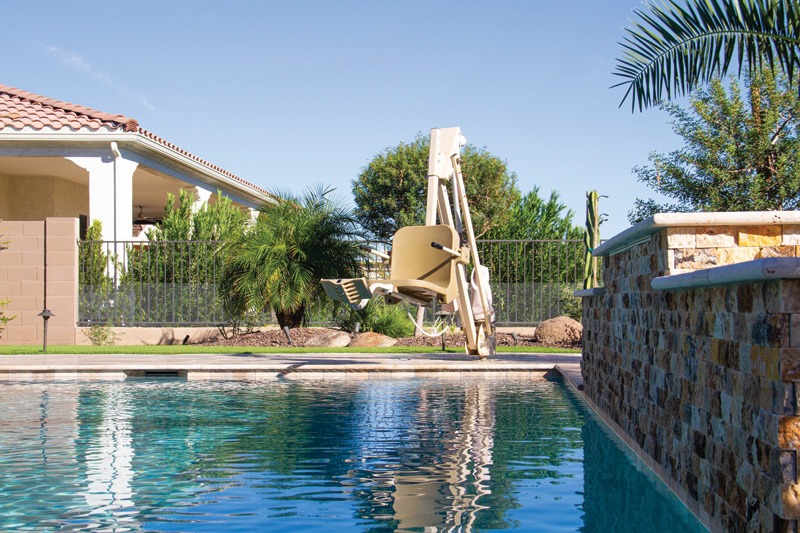
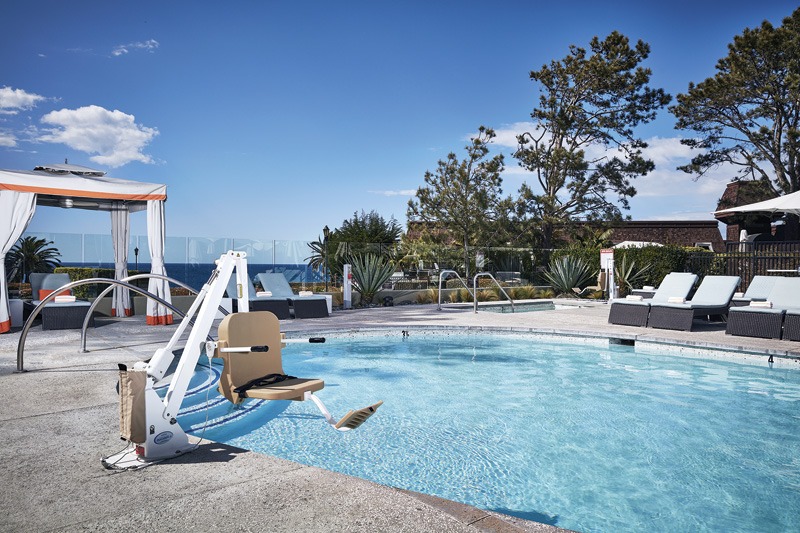
- Consider water depth, deck height, required setback range, and proximity to other features
- Controls should be intuitive and accessible from the deck and the water, where possible
- Placement should allow for clear deck space and safe and secure transfers
- Material and mechanical durability for the intended environment and frequency of use
- Ensure the seat height is 406 to 483 mm (16 to 19 in.) above the deck for wheelchair transfers
- Pool lifts should be readily available to users during operating hours
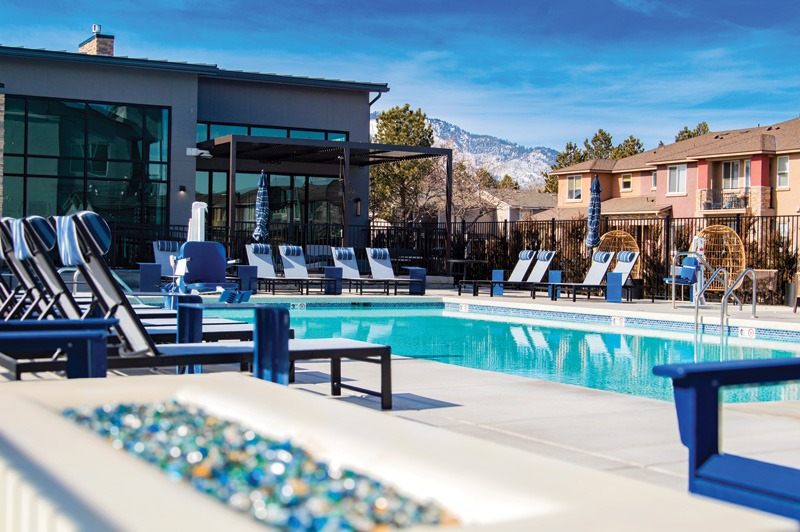
Co-ordinated access planning
- Ensure logical circulation between entry points, decks, and water
- Consider planning multiple access points to reduce congestion
- Maintain barrier-free paths from changing rooms to pool edges
- Provide redundancy to improve safety and usability in high-use or public facilities
Installation, training, and ongoing operations
Even well-chosen equipment requires ongoing attention after installation. Clear installation instructions, routine inspection protocols, and staff training ensure railings are secure, ladders remain stable, and lifts are ready for use.
Documented maintenance schedules and accessible technical support help facilities maintain safety and uptime over years of operation.
Conclusion: Better decisions lead to better aquatic experiences
For Canadian aquatic professionals, choosing access equipment is both a technical and operational responsibility. Safety, durability, and long-term support should be considered from the outset. By specifying thoughtfully designed products, prioritizing independent testing and quality management, and partnering with manufacturers who stand behind their equipment, operators and builders can create aquatic environments that are safe, reliable, and easier to manage over time. Ultimately, accessibility works best when it is baked in rather than bolted on.
Author

Marley Cunningham is the director of marketing at Aqua Creek Products in Missoula, Mon. She combines her passion for the outdoors with creative writing. Cunningham can be reached at mcunningham@aquacreek.com.
Sign up for our newsletter
Get all the latest news and features from Pool & Spa Marketing. Submit your email below to get our twice-monthly newsletter.
Products
Read the Latest Issue