Proactive pools, predictable costs: Preventing risk before expenses escalate
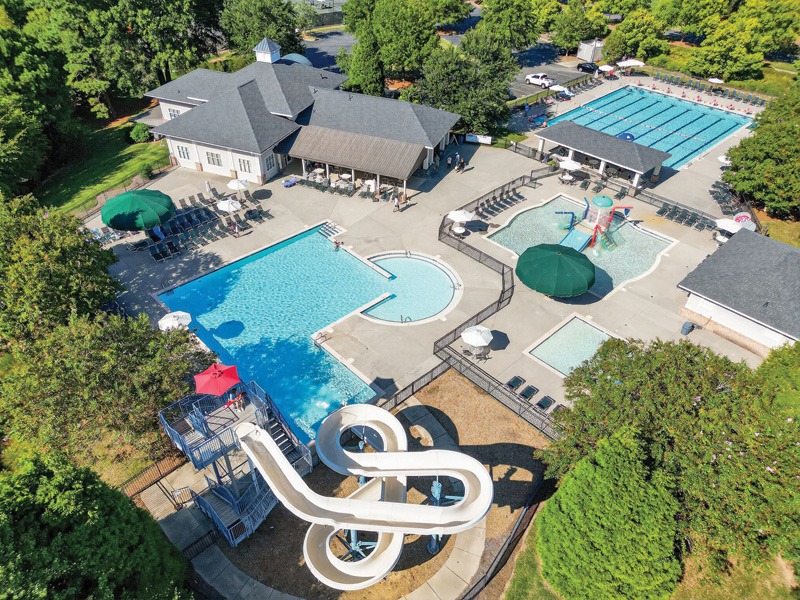
Running large-scale aquatic operations means managing people, facilities, and risk in environments where safety expectations are high, and resources are limited. For leaders responsible for municipal pools, homeowners’ association (HOA) facilities, resorts, universities, and private clubs, that responsibility entails constant tension. On one side is the obligation to keep swimmers, staff, and facilities safe. On the other hand is the reality of fixed budgets, seasonal labour, aging pools, and increasing regulatory expectations.
Too often, safety and budget are framed as opposing forces. Safety is seen as costly, while budget discipline is viewed as restrictive. In practice, this framing pushes organizations toward reactive decision-making: money is spent only after incidents occur, inspections are sometimes rushed, training becomes inconsistent, and oversight is sporadic rather than steady.
The reality is more nuanced and encouraging. Many of the most effective safety practices in aquatic operations do not require major financial investment. They require time, focus, consistency, and leadership. When applied correctly, these practices reduce incidents, improve staff performance, stabilize operations, and lower long-term costs. Much of this comes down to controlling what can be controlled, something aquatic operations have more influence over than many realize.
This article examines how large-scale aquatic facilities can balance safety and budget through proactive planning, standardization, and operational clarity, drawing on real-world operational principles. The concept, often referred to as “Project Zero” thinking, emphasizes achieving zero surprises, zero shortcuts, and zero tolerance for preventable risk.
The hidden cost of reactive safety
Most aquatic facilities do not intentionally deprioritize safety. Instead, they adopt reactive patterns driven by urgency, staffing pressures, and limited time:
- A serious incident triggers a policy update
- A failed inspection leads to last-minute repairs
- A staffing issue prompts rushed training
- A complaint often results in a temporary enforcement spike
These responses often feel necessary, but they come at a cost that is not always obvious. Reactive safety costs appear as emergency repairs rather than planned maintenance, increased insurance exposure, higher staff turnover due to stress or unclear expectations, and significant administrative time spent managing crises after an incident.
Ironically, reactive safety almost always costs more than proactive safety. The difference lies in perception. Reactive costs are easy to justify because they follow something visible. Proactive investments—time spent inspecting, coaching, training, and planning—are harder to value because their success is measured by what does not happen.
It is difficult to see the value in preventing incidents, injuries, and near-misses that never materialize. However, that is exactly where the return on proactive behaviour lies.
The challenge for facilities leaders is to shift from fixing problems after they occur to preventing predictable failures by controlling what can be controlled.
Safety is not a line item; it is an operating system
One of the most important mindset shifts in aquatic operations is recognizing that safety is not a standalone expense. It is an operating system that influences how people work, how facilities are managed, and how decisions are made every day. Simply put, do the staff care, and are they guarding from their hearts? Strong safety cultures are built on behaviours, not binders.
They rely on clear expectations, repetition and reinforcement, leadership visibility, and consistent follow-through. Many of these elements have little or no direct cost. What they require is discipline, structure, and alignment.
When safety is treated as a program, it shows up only during audits, inspections, or after incidents. When it is treated as an operating system, it becomes embedded in daily routines—how shifts start, how guards rotate, how leaders show up on deck, and how issues are addressed in real time.
Proactive inspections: ‘Inspect what you expect’
Inspections are often misunderstood. In many facilities, they are treated as mere compliance exercises, done only for documentation.
In high-performing aquatic operations, inspections serve a different purpose: education and reinforcement.
Effective inspections confirm expectations, identify drift before it becomes dangerous, create coaching opportunities, and reinforce accountability through consistency. They are not “gotcha” moments. They should highlight what is going well while clearly addressing opportunities for improvement.
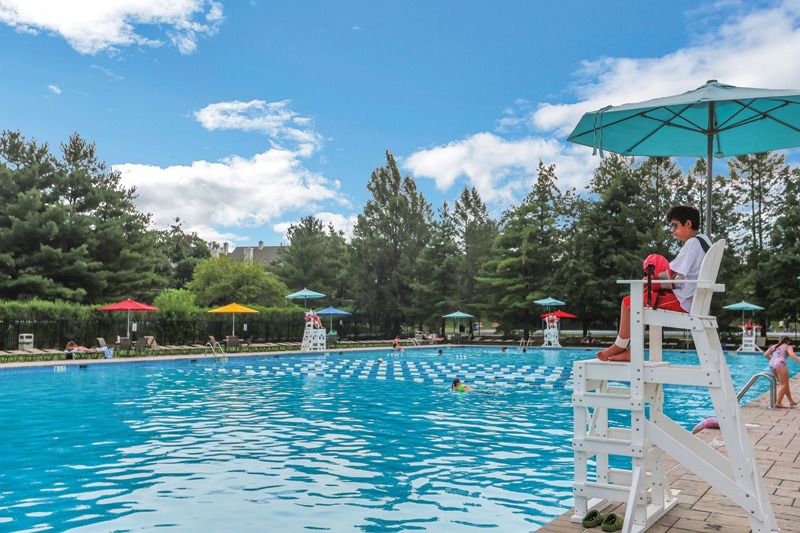
There is a saying in aquatics: a great lifeguard is the one who does not get wet. That mindset is rooted in proactive safety—positioning, scanning, zone clarity, and anticipation—not reaction.
Too often, the contributing factors to incidents are controllable: chair placement, poorly defined zones, under-maintained equipment, and unclear guard rotations, to name a few. None of these issues is expensive to fix, but all of them become costly when ignored.
Proactive inspections cost time, not money. That time investment pays off by reducing preventable failures, improving staff confidence, and making safety conversations normal rather than punitive.
Constant in-service: Training as a habit, not an event
One of the most common misconceptions in aquatic safety is that training is expensive. While certifications and formal courses have costs, most meaningful safety learning happens after verification on pool decks, in real conditions.
Ongoing in-service training and touchpoints with staff are among the most effective and least expensive safety tools available.
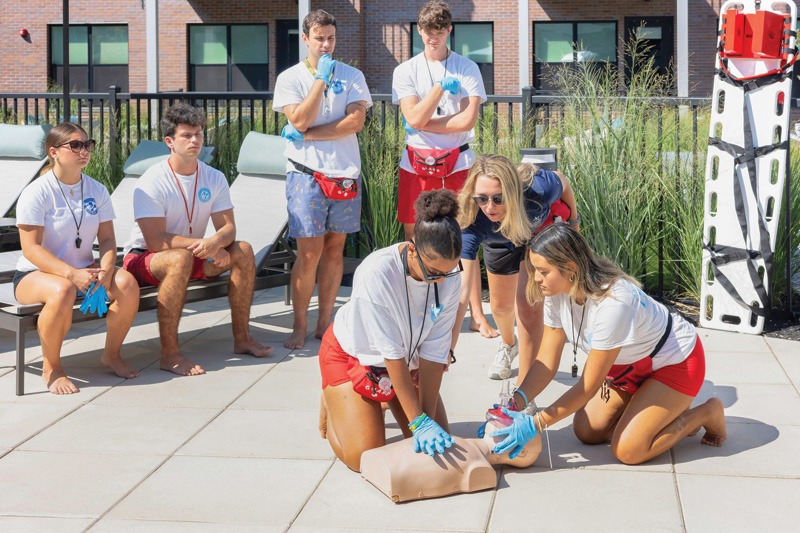
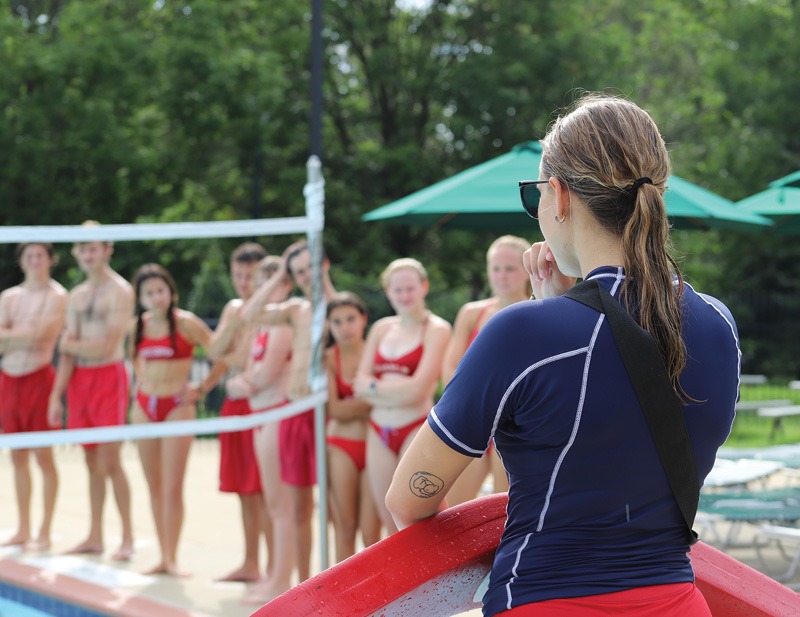
Short, consistent in-service sessions reinforce critical skills, address recent observations, adapt to real conditions, and keep safety top of mind. A few minutes at the start of each shift can prevent months of downstream issues. Review scanning techniques, emergency response steps, and recent near-misses. Most importantly, do not forget the good.
Constant in-service reframes training. Staff stop seeing it as punishment or remediation and begin seeing it as an investment in their performance and growth.
Facilities that struggle with safety train too infrequently. Facilities that excel train constantly, using a mix of micro-learning, hands-on drills, one-on-one coaching, and group discussions, enabling development from multiple angles at no cost but attention.
Standardization reduces risk and cost
Large-scale aquatic operations often suffer from inconsistency. Different locations, supervisors, staff, or shifts develop their own interpretations of procedures. Over time, this variability becomes a risk.
Standardization does not mean rigidity. It means clear minimum expectations, a shared language, consistent responses to common situations, and predictable routines.
In aquatic operations, standardization applies across the board, from opening and closing procedures and chemical checks to lifeguard rotations, incident response, and equipment placement. The benefit is twofold. Safety improves because expectations are clear, and costs decrease because fewer errors occur.
When staff do not have to guess, improvise, or relearn expectations, performance stabilizes. Fewer mistakes mean fewer incidents, fewer repairs, and fewer escalations.
Leadership presence matters more than policies
Many facilities invest heavily in written policies but underinvest in leadership presence. A well-written manual cannot replace visible, engaged leadership.
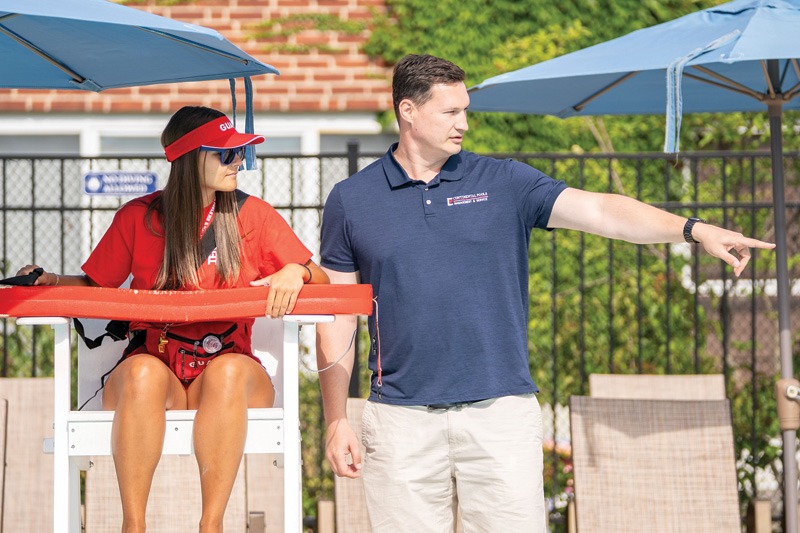
Leadership presence in safety means being regularly seen on deck, asking questions rather than only giving directives, coaching in the moment, modelling calm, professional behaviour, and consistently reinforcing expectations.
This does not require additional staff or budget. It requires leaders to be intentional about how they spend their time.
Creating an environment where staff feel seen and supported matters, especially in aquatics, where a large percentage of lifeguards are minors, and many are in their first job. Ownership of safety should feel shared, not imposed.
Facilities with strong safety outcomes almost always have leaders who are visible, approachable, and consistent. Facilities that struggle often rely on documentation rather than engagement.
Eliminating surprise management
Surprise management, inconsistent enforcement of standards, or harsh reactions to issues create instability. These approaches may drive short-term compliance but lead to long-term resentment, hidden issues, and fear-based behaviour.
Fear is dangerous in aquatic management. Staff who are afraid to speak up may hide near-misses, avoid asking questions, or hesitate
during emergencies.
A better model is predictable accountability. Expectations are clear. Oversight is consistent. Corrections are timely and respectful. Escalation follows a known path.
This approach builds psychological safety, which directly supports physical safety. Staff who feel safe speaking up help identify risks before they
become incidents.
Time and energy: The real investment
Many of the most impactful safety improvements do not require money. They require time, attention, consistency, and discipline:
- Walk the pool deck
- Hold a five-minute in-service with one guard on break
- Coach instead of ignoring drift
- Hold weekly staff check-ins
- Call out wins and safe behaviour
As the saying goes: “your safety standard is not what you say it is—it is what you tolerate.”
These choices compound over time. Small, consistent actions create cultures where safety is expected, reinforced, and shared—and where unsafe behaviour is neither normalized nor ignored.
Long-term thinking in seasonal environments
Aquatic operations are often seasonal, making long-term safety planning challenging. Short seasons, high turnover, and compressed timelines create pressure to simply get through the summer. This is exactly where proactive safety matters most.
Facilities that plan safety year-round, even when pools are closed, are better prepared when the season starts. Reviewing incidents, updating standards, training leaders, and preparing materials in the off-season reduces in-season stress and costs.
Preparation spreads effort over time rather than concentrating it during peak demand.
Aligning safety with budget reality
Balancing safety and budget is not about choosing one over the other. It is about aligning them.
That alignment occurs when safety is embedded in daily operations, leaders invest time before money, standards are clear and consistent, training is ongoing rather than episodic, and oversight is predictable rather than reactive.
Facilities that do this well often find that safety stabilizes costs rather than increases them. Incidents decline. Turnover slows. Insurance exposure improves. Leadership bandwidth increases.
Safety and budget are not opposites
The idea that safety and budget discipline are at odds is one of the most persistent myths in large-scale aquatic operations.
In reality, the most effective safety practices often cost the least overall. They rely on time, attention, consistency, and strong leadership—not large capital investments.
By shifting from reactive responses to proactive systems through inspections, ongoing in-service, standardization, leadership presence, and predictable accountability, facilities can operate safely within real financial constraints.
When done right, safety is not an optional expense. It is a commitment to the people who work in and rely on aquatic facilities every day.
Author

Brian Bergeski is the chief executive officer of commercial aquatics at The Amenity Collective, overseeing strategic growth, financial performance, and operational support across the platform. He works closely with brand leaders to ensure each organization has the structure, accountability, and resources needed to deliver consistent results for clients while empowering teams to lead with confidence. With 20 years of service in the aquatics industry, Bergeski began his career in construction services at American Pools and later advanced into broader leadership roles across aquatics operations within The Amenity Collective.
Sign up for our newsletter
Get all the latest news and features from Pool & Spa Marketing. Submit your email below to get our twice-monthly newsletter.
Products

Read the Latest Issue