
A hierarchical model for pool water chemistry
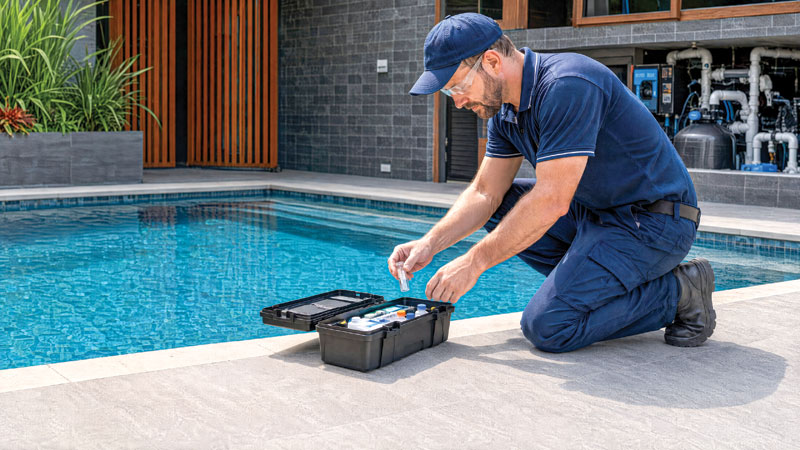
Pool water chemistry instruction has long been structured around pH. Over the past several seasons, however, some professionals, including this author, have shifted to a different framework—one that places chlorine at the top of a hierarchy rather than treating pH as the central variable.
In this model, chlorine occupies the apex, since sanitation is ultimately its primary purpose. Beneath it are three supporting layers: pH, total alkalinity, and borates. When these supporting layers are properly maintained, the top-layer sanitizer performs as intended. When they are neglected, operators must compensate for a system working against itself.
This article examines each layer in turn, along with the practical consequences of getting the hierarchy wrong.
A framework with more than one dimension
Chlorine sits at the top of this pyramid structure because it is the component directly responsible for eliminating pathogens and algae. Immediately beneath it is pH, which determines how efficiently that sanitation occurs. Below pH is the total alkalinity, which helps stabilize pH. The fourth layer, borates, serves as a secondary buffer that reinforces alkalinity and adds further stability to the system. The recommended dosage of 30–50 ppm is consistent for residential, commercial, and salt-chlorine generator (SCG) pools. Since most spas rarely encounter algae at the level of pools, a slightly lower maximum concentration is tolerated.
Note that this structure is multi-dimensional. The same variables that govern water and sanitation also influence corrosion potential and the Langelier Saturation Index (LSI), a separate but related measure of water balance. Adjusting one variable to improve sanitation can have downstream effects on equipment protection and surface chemistry. Pool water chemistry is not a linear checklist but an interconnected system where every adjustment has secondary consequences.
Lowering the pH is an obvious method to maintain a higher level of free available chlorine (FAC). Still, a lower pH lowers the Langelier Saturation Index (LSI), prompting other chemical adjustments to maintain balance within the specific target range.
The chemistry behind sanitizer efficacy
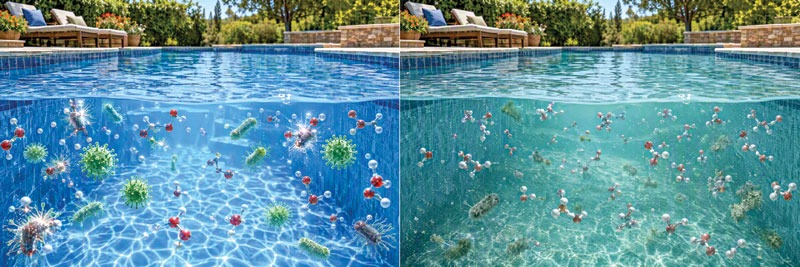
Chlorine is a registered pest control product with Health Canada’s Pest Management Regulatory Agency (PMRA; in the U.S., the Environmental Protection Agency [EPA]), used to kill organisms that make swimmers ill and algae that cloud the water. However, its effectiveness is highly dependent on pH. The generally accepted operating range is 7.2 to 7.6, with 7.4 treated as the target. As pH moves to the lower end of that range, chlorine’s killing efficiency increases; as it rises, that efficiency declines.
Cyanuric acid (CYA) has been widely studied since its introduction to the pool industry in the mid-to-late 1950s, but its relationship with pH and disinfection performance has produced seemingly contradictory findings. In a 1974 review, Edmondo Canelli reported that pH has a negligible effect on the efficacy of stabilized chlorine—chlorine used in the presence of CYA. By contrast, pH is a primary factor affecting the sanitizing power of unstabilized chlorine. In laboratory testing, pH values as high as 9 showed little to no effect on chlorine efficacy when 50 ppm CYA was present, which was twice the 20–25 ppm CYA concentration recommended in the paper. Field findings were less consistent. Canelli cited a study by Donohue and Mulligan in which disinfection was unsatisfactory in eight pools operated for nine weeks at pH 7.7–9.0, with 1.0–1.5 mg/L of FAC and 15–50 mg/L of CYA. In that case, the relatively high pH may have contributed to the poor disinfection results. The review also noted that other substances in pool water may interfere with chlorine’s bactericidal activity, potentially helping to explain inconsistent field results.1
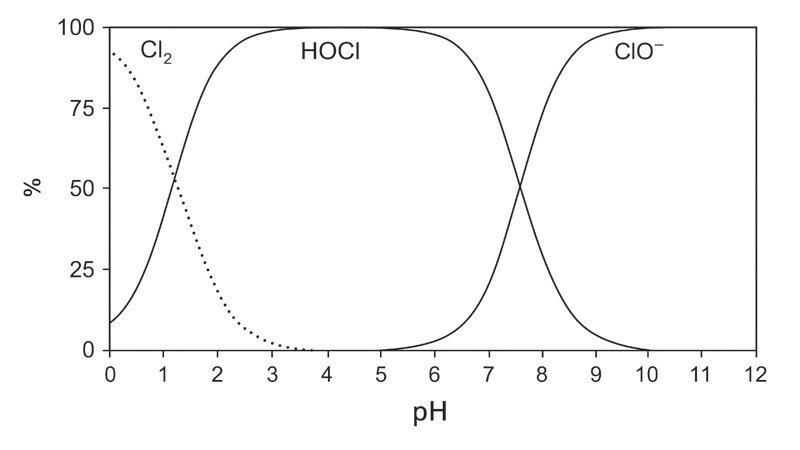
The underlying mechanism is straightforward. When chlorine is introduced to water, it forms hypochlorous acid, the compound responsible for disinfection. As pH increases, more of that chlorine instead exists as a hypochlorite ion, a substantially weaker form. At a pH of 7.2, roughly 68 per cent of available chlorine is present as hypochlorous acid. At the upper end of the acceptable range, that figure drops to approximately 45 per cent. At a pH of 8.0, only about 25 per cent remains in its active form.
In practical terms, 1 ppm of chlorine at pH 7.0 provides roughly the same disinfecting power as 3 ppm at pH 8.0. An operator running a pool at pH 8.0 is, in effect, using three times as much chlorine as needed to achieve the same result. When a customer reports adding chlorine steadily without achieving clear water, elevated pH is frequently the explanation: the chlorine being added is not in a form capable of doing the work.
Maintaining a residual of 1 to 3 ppm free chlorine, at the correct pH, is sufficient to keep water properly sanitized. The priority should always be to correct pH before increasing the chlorine dose.
pH and total alkalinity as an interdependent pair
Treating pH and total alkalinity independently is not ideal. Adjusting one reliably shifts the other; technicians who chase pH without accounting for alkalinity—or the reverse—may find themselves repeatedly correcting the same imbalance. The two should be managed together, with a target pH of 7.2 to 7.6 and total alkalinity near 100 ppm treated as a paired objective rather than two separate line items on a test sheet. Since real-world water contains so many variables, targeting alkalinity with finer accuracy would be both impractical and unnecessary.
Selecting the correct adjustment tool
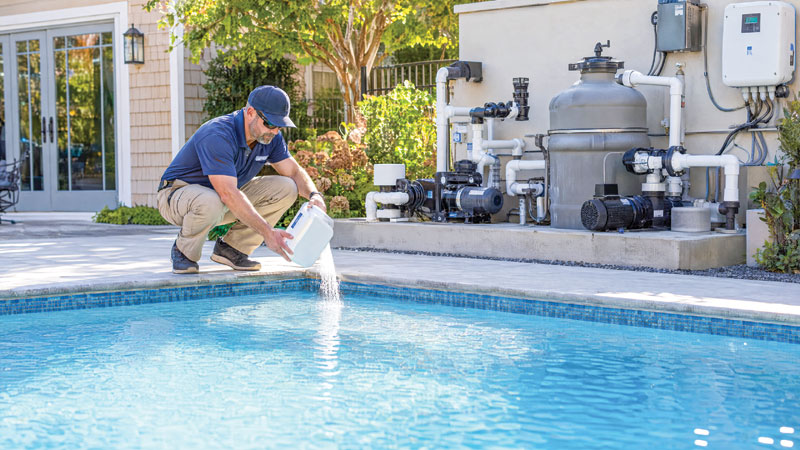
Because pH and alkalinity move together, the choice of chemicals matters. Standard pH increaser has a pH near 10.5 and will raise both pH and alkalinity simultaneously—a broad, non-selective adjustment. By contrast, an alkalinity increaser has a pH closer to 8.5, much nearer neutral, and typically raises alkalinity by adding carbonates without significantly shifting pH. When both values need to rise, the pH increaser is the appropriate product. When only alkalinity needs correction, an alkalinity increaser allows for a more targeted adjustment.
Buffering capacity and environmental stability
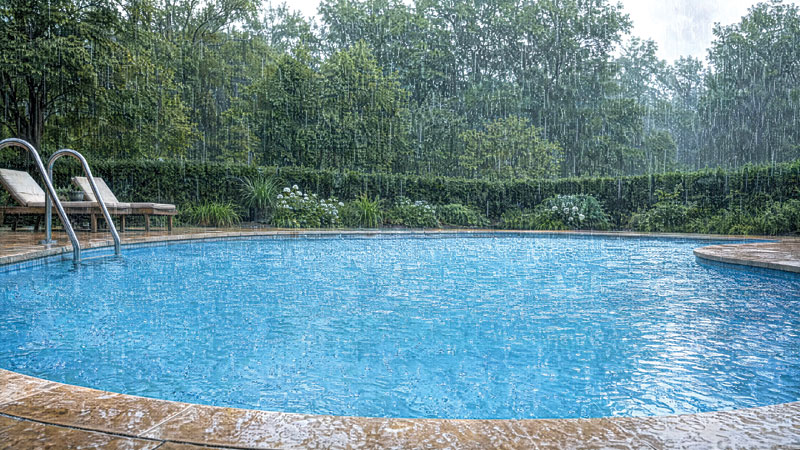
Total alkalinity and borates function as buffers, resisting pH swings caused by rainfall, bather load, and incidental debris. Without adequate buffering capacity, chlorine’s effectiveness fluctuates as pH shifts, and the cost of continually correcting these shifts with acid and base additions adds up quickly.
A second, less obvious factor is also constantly acting on pH: Henry’s Law of solubility, which holds that water seeks equilibrium with the surrounding atmosphere. Because pool water typically holds more dissolved carbon dioxide than the air above it, CO2 is continuously released from the water. Since CO2 lowers pH, this off-gassing causes pH to drift upward over time. It is important to note that indoor pools with poor air exchange are a notable exception, where trapped CO2 can instead pull pH downward.
Atlas Scientific explains that carbon dioxide is influential in regulating pH in water. Measuring the CO2 concentration in a solution is one way to assess its effect on pH. For example, the more CO2 in water (H2O), the lower the pH will generally be. When CO2 is dissolved in water, part of it reacts with water to become carbonic acid (H2CO3). It is the hydrogen ions present in carbonic acid that make water acidic, lowering the pH.
The following equation shows the formation of carbonic acid:
CO2(aq) + H2O ⇌ H2CO3(aq)
Carbonic acid can also break up, or “dissociate,” into hydrogen ions (H+) and bicarbonate ions (HCO3–), as shown in the following equation:
H2CO3 ⇌ H+ + HCO3–
Bicarbonate can further dissociate into hydrogen ions (H+) and carbonate ions (CO32–):
HCO3– ⇌ H+ + CO32–
When this happens, hydrogen ions form in the water, increasing acidity and lowering the pH.
If CO2 is reduced in water, the pH will increase. Atlas Scientific identifies the addition of high-pH additives, such as non-stabilized chlorine or a pH adjuster—for example, sodium carbonate or sodium bicarbonate—as one way to raise pH. A salt chlorine generator (SCG) may also contribute to a rising pH.
Another way to raise the pH in water is to allow it to increase naturally through off-gassing. Off-gassing is the release of dissolved gas, in this case, CO2. Aeration features, such as jets, can be added to systems such as swimming pools to release CO2 from the water and naturally raise the pH.
Other forms of decarbonation—the release of CO2 from water—include turbulence from SCG activity, agitation from water fountains, or water added forcefully through a hose.
This is the primary reason why borates are a non-negotiable part of the hierarchy. Layering 50 ppm of borates on top of properly maintained alkalinity can substantially blunt the pH swing associated with a rain event. This swing might otherwise range from 0.2 to 0.6; borates significantly reduce or eliminate that movement. If pH governs chlorine performance, then borates serve as a safeguard against pH fluctuations. Follow the maximum concentration on the PMRA-registered product label (in the U.S., the EPA sets a maximum of 50 ppm in recreational water). Testing is performed using available test strips and test discs.
Managing chlorine demand from non-target contaminants
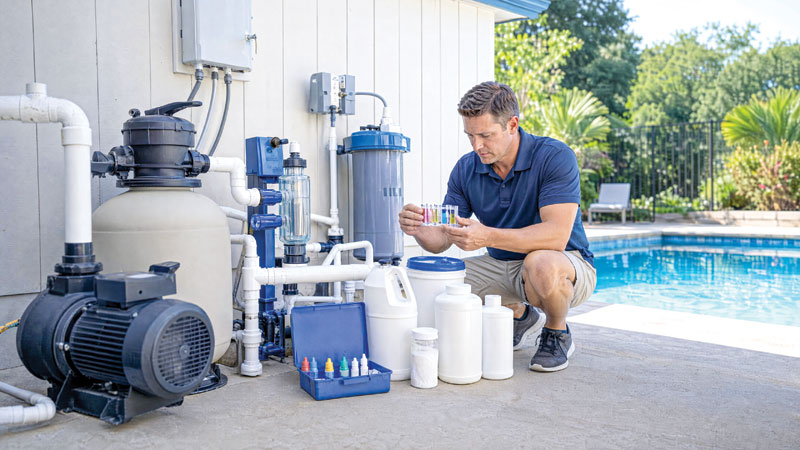
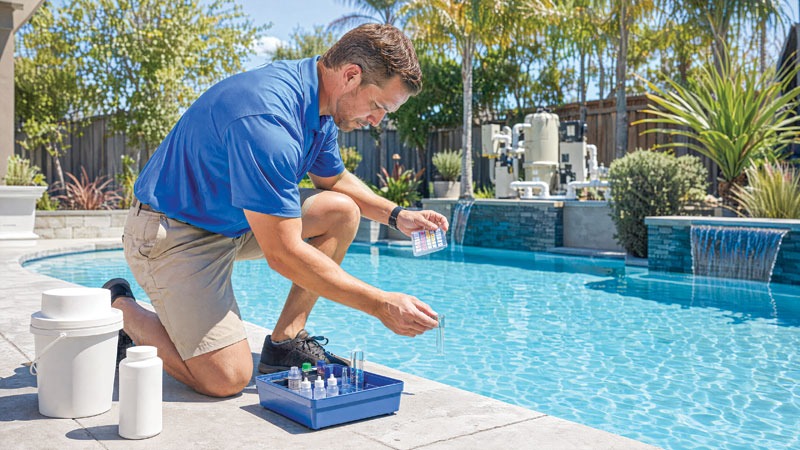
Chlorine does not distinguish between the pathogens it is meant to eliminate and the incidental organic load introduced by bathers: ammonia via sweat and urine, body oils, lotions, sunscreen, and trace metals.
Industry studies indicate that only 10 per cent of applied unstabilized chlorine in pools goes toward actual sanitation; the rest is consumed via UV photodegradation along with this incidental load of contaminants.
When chlorine reacts with ammonia from sweat and urine, it forms chloramines in stages: monochloramine first, then dichloramine, and finally trichloramine, which becomes airborne. The sharp chemical odour associated with poorly maintained indoor pools is trichloramine. Because trichloramine is heavier than air, it does not readily disperse in spaces with limited ventilation; instead, it settles and re-dissolves into the water, compounding the combined chlorine problem. Adequate air exchange is therefore a critical, and frequently overlooked, component of indoor pool operation.
Air quality standards for indoor pools and natatoriums
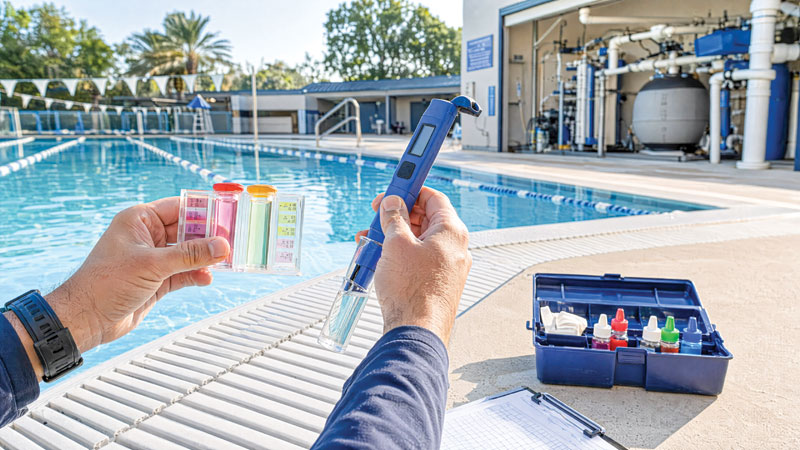
Several organizations, including the American Society of Heating, Refrigerating and Air-Conditioning Engineers (ASHRAE) and the World Health Organization (WHO), have established guidelines to support safe indoor air quality in swimming facilities.
The primary concern is the presence of chloramines, which form when chlorine reacts with organic substances in the water, such as sweat and urine. High levels of chloramines can lead to respiratory and eye irritation, as well as other health concerns.
ASHRAE Standard 62.1-2019 specifies ventilation rates for indoor pools based on factors such as pool area, occupancy, and water-surface area. The standard emphasizes the importance of effective ventilation to remove contaminants and maintain acceptable indoor air quality (IAQ). Maintaining proper water chemistry, including chlorine levels and pH, is also important in minimizing chloramine formation.
ASHRAE recommends:
- Four to six volumetric air changes per hour in a regular natatorium
- Six to eight volumetric air changes per hour in spectator areas
A quick calculation can determine the supply-air requirement:
- Supply air required (L/s) = Room volume (m³) × Desired air changes per hour ÷ 3.6 (supply air [CFM] = room volume [ft³] × desired air changes ÷ 60)
- The room volume determines the amount of supply air a
space requires
Supplemental sanitation: reducing the burden on chlorine
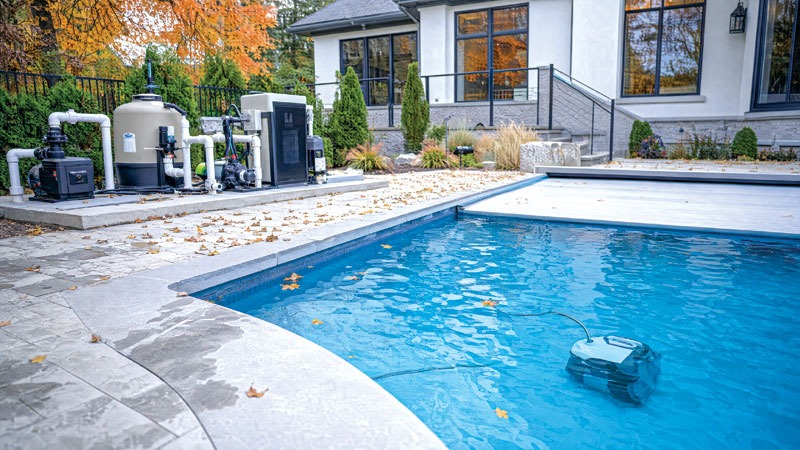
Given how easily chlorine’s capacity is diverted, pairing it with at least one supplemental product is good practice. Each of the following reduces the incidental load chlorine would otherwise have to process:
- Algaecides are PMRA-registered products (EPA-registered in the U.S.), effective against algae independent of chlorine residual.
- Clarifiers coagulate fine particulate matter so that it can be removed by filtration instead of oxidation.
- Enzymes naturally break down oils and long-chain organic molecules into forms that filter out quickly rather than persisting in the water. They are ideal for use in essentially every body of water, particularly in hot tubs.
- Borates not only serve as buffers but also provide meaningful algae suppression, which is part of why they should be considered close to essential.
- Supplemental equipment, such as UV, mineral, and ozone systems, all reduce or eliminate pathogens without generating combined chlorine byproducts. UV disinfection operates through a distinct mechanism; mineral systems typically use trace metals such as silver and copper to control bacteria and algae. Ozone is highly effective as an oxidizing supplement. While UV and ozone systems are very effective killers of pathogens, they provide no residual effect and only work when the systems are operating and water is circulating.
No operation needs every product on this list. The core recommendations are a properly balanced pool, a well-maintained chlorine residual, and at least one supplemental product that shares the oxidation load. A common and preferred combination is enzymes and borates. Though supplements support chlorine’s function, they do not replace it. With a fixed ceiling for chlorine residual (1–3 ppm), water with higher bather loads, warmer water, and recurring algae would take greater advantage of supplemental additives and equipment to help defend against outside contamination.
Stabilizers: extending chlorine’s working life
Outside of extreme northern climates, ultraviolet light steadily degrades unstabilized chlorine. Roughly 50 per cent of an unstabilized dose is lost within 17 minutes of sun exposure, and 90 per cent within two hours.2
Cyanuric acid (CYA), commonly called a stabilizer, addresses this. CYA is present in the water and reversibly binds with free chlorine, helping protect it from degradation by ultraviolet light while maintaining a reserve of chlorine available for disinfection. Unstabilized chlorine sources—such as liquid chlorine and calcium hypochlorite—add chlorine to the water without adding CYA. Stabilized chlorine products add both chlorine and CYA.
The Recreational Water Quality Committee of the Association of Pool & Spa Professionals (APSP, now the Pool & Hot Tub Alliance [PHTA]) recommends maintaining CYA within a defined range, generally 25–50 ppm, to provide meaningful protection from sunlight without allowing CYA to accumulate unnecessarily. As CYA rises, the free-chlorine target must also rise to maintain an appropriate level of active chlorine. CYA levels above 50 ppm generally provide limited additional stabilization benefit and can make effective chlorine management more difficult.3
Trichlor tablets (52 per cent CYA) and dichlor granules (54 per cent CYA) both build chlorine around a cyanuric acid core, meaning every application of stabilized chlorine adds further CYA to the water. Trichlor’s low pH, in the range of 2.8 to 3.5, has the secondary benefit of offsetting the gradual upward drift in pH caused by CO2 off-gassing. Tablet quality is also worth verifying: a properly manufactured trichlor tablet should be dense and resistant to breaking by hand. Tablet hardness typically leads to slower dissolution rates and is a good sign of lower moisture levels. A 227-g (0.5-lb) trichlor tablet and 227 g (0.5 lb) of sodium dichlor each contain approximately 120 g (0.25 lb) of cyanuric acid.
The operational cost of over-stabilization
Consider a fecal contamination event, a standard scenario in certified pool operator training. With no CYA present, 20 ppm of chlorine neutralizes the contamination in approximately 12.75 hours. With just 15 ppm of CYA in the water—a modest, unremarkable level—the same task takes 28 hours. The chlorine dose and the eventual outcome are identical; only the time required more than doubles because stabilized chlorine releases too slowly to overcome the contamination promptly.
This is where the hierarchy reinforces itself: operating at elevated pH requires roughly three times the chlorine dose, and if that chlorine is a stabilized product, three times the CYA accompanies it. Maintaining pH within the correct range is therefore one of the most effective ways to limit long-term stabilizer accumulation. By maintaining pH at an optimal level and removing barriers to proper sanitation, stabilized chlorine usage can be greatly reduced, and the resulting decrease in CYA accumulation benefits the entire sanitation environment.
Prevention is the only practical strategy here. If 90 per cent of chlorine is consumed during UV degradation and contamination oxidation, this presents an opportunity. Much of that oxidative burden can be shifted to digestion through enzymes, a non-chlorine oxidizer, or additional filtration. Increasing filtration time is often the simplest lever available—filtering 24 hours a day rather than 12 measurably improves water clarity independent of chemistry. Therefore, filtration remains one of the most underused tools in the industry.
Once CYA levels are excessive, there is no chemical remedy. The only correction is partial or full water replacement, an outcome operators should avoid rather than manage after the fact, since draining and refilling can be costly. Maintaining attention to pH is the least expensive form of prevention available, since it prevents stabilizer accumulation from tripling in the first place.
Consistency through automation
The objective for water balance should be a flat line: consistent conditions from one day to the next, without new problems emerging over the course of the season. Achieving that consistency starts with automation.
Automating sanitizer delivery, either through a chlorine feeder or a salt chlorine generator, removes the variability from manual dosing, particularly for those who are inconsistent about adding chlorine on a fixed schedule. Automated dosing depends on regular circulation; a consistent filtration schedule, whether eight, 12, or ideally 24 hours daily, matters more than the specific number chosen. The only disadvantage of increased filtration is cost (electrical and equipment lifespan).
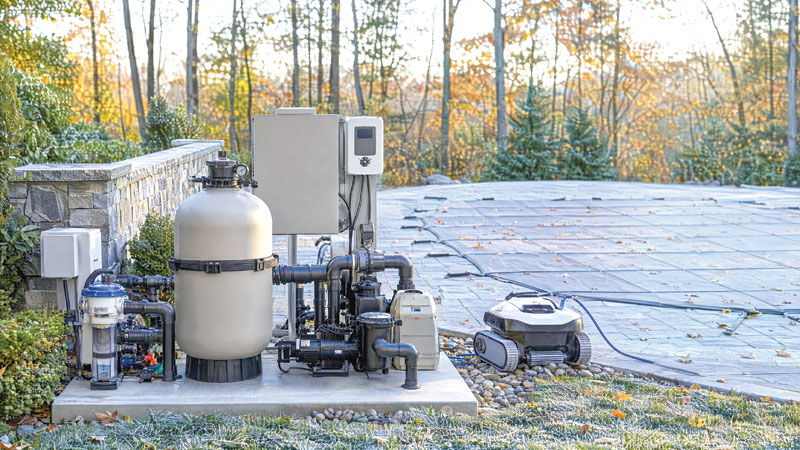
The same principle applies to pH: proper buffering, through maintained alkalinity and borates, keeps it anchored near its target with minimal manual intervention. Automated cleaning equipment applies the same logic to debris management, keeping the pool clean continuously rather than through periodic manual effort.
Mitigating what automation cannot prevent
In practice, water balance is not a flat line. External factors outside an operator’s control will continue to move it. Once automation is in place, the remaining work is managing the disturbances that automation cannot anticipate.
The most effective mitigation strategy is bathing hygiene. Encouraging swimmers to rinse off before entering the water, removing shampoo and conditioner residue in particular, along with basic sanitary practices, meaningfully reduces incidental organic load. Pool covers provide a similar benefit: an automatic cover largely eliminates overnight contamination. Even a standard cover reduces incoming debris by roughly a third relative to an uncovered pool—a pool covered for eight hours a day avoids eight hours’ worth of debris that would otherwise accumulate in an uncovered pool. A cover would expect to collect an even greater percentage of debris if closed during a significant weather event that typically carries a higher concentration of debris—e.g. wind and rain. This is particularly significant during extended pollen seasons, which vary by region.
On the chemistry side, mitigation requires regular testing and adjustment, with particular attention following rain events—while avoiding the tendency to overcorrect.
Season transitions: why closing determines opening
The final area worth addressing is the transition between seasons. A poor pool opening is rarely something that can be corrected in the moment; by the time a pool is opened for the season, the window for prevention has already closed. The condition of an opening is determined almost entirely by the quality of the preceding closing, which is why early opening—ideally while temperatures are still cool—and a properly executed closing are both priorities. Where budget allows only one professional service per year, a closing generally provides greater value than an opening, since a poorly executed closing creates problems that compound over the winter. Early openings are not always an option—especially in volatile climates. Pools should not be opened if a significant freeze is still anticipated.
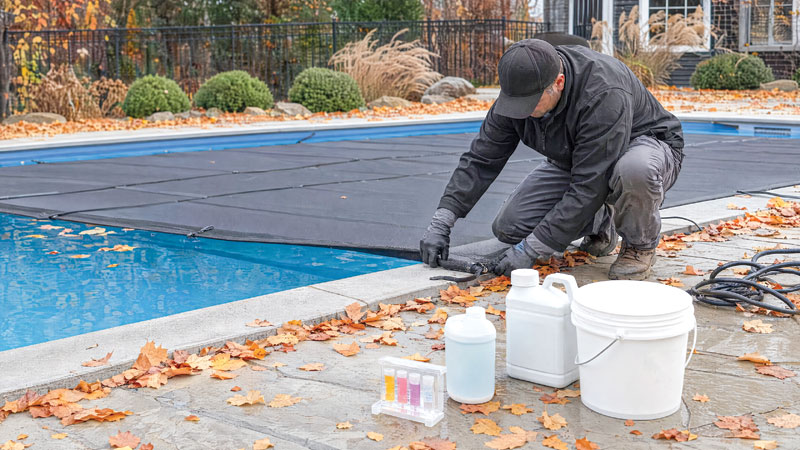
A successful closing depends on three elements: correct water chemistry at the time of closing, proper sealing of the pool, and a supplemental sanitizer to carry the water through winter, since chlorine alone typically lasts only 10 to 14 days under a winter cover. For pools with elevated metal content, also consider a metal sequestrant for the off-season. Borates are the preferred winter supplement, given their algae-suppressing properties—a significant factor in whether a pool opens clear when a mesh cover is in place. Since borates are not consumed or lost, they continue to work throughout the extended winter months, unlike chlorine, which has a finite lifespan.
A system with more than one face
Chlorine is at the top of the chemical pyramid, with pH governing its efficiency, alkalinity and borates providing structural support, and a supplemental product reducing chlorine’s workload from the hierarchy. These same variables also govern the LSI and, by extension, corrosion risk and equipment longevity. Adjustments made for one purpose inevitably affect the other, and maintaining both sanitation and LSI within acceptable ranges simultaneously is an ongoing balancing exercise—one to be addressed in more detail in a subsequent article. As proper water sanitation remains the key health indicator for commercial and home pools, testing and sanitation controls must be the focus of water testing and maintenance. All other water parameters must remain in service of sanitation to their own proper degree of support.
That follow-up discussion will focus on calcium, a variable deliberately excluded from this article. As temperatures fall through autumn and winter, calcium behaves differently in solution, introducing a separate set of considerations for both sanitation and LSI management.
Notes
1Edmondo Canelli, “Chemical, Bacteriological, and Toxicological Properties of Cyanuric Acid and Chlorinated Isocyanurates as Applied to Swimming Pool Disinfection: A Review,“ American Journal of Public Health 64, no. 2 (1974): 155–162, especially 157, doi.org/10.2105/AJPH.64.2.155.
2Lisa H. Nowell and Jürg Hoigné, “Photolysis of Aqueous Chlorine at Sunlight and Ultraviolet Wavelengths—I. Degradation Rates,“ Water Research 26, no. 5 (1992): 593–598.
3Association of Pool & Spa Professionals (APSP) Recreational Water Quality Committee, “Cyanuric Acid,“ revised September 2011.
Author

John Bereza is the Great Lakes regional sales manager for Haviland Pool & Spa Products, a manufacturer of water treatment products based in Grand Rapids, Mich. He has worked at Haviland since 2003 in a range of roles, including decorative coatings technical support and marketing. He has held his current sales position, with a primary focus on technical training, since 2020. He can be reached at johnb@havilandusa.com.
Sign up for our newsletter
Get all the latest news and features from Pool & Spa Marketing. Submit your email below to get our twice-monthly newsletter.
Products

Read the Latest Issue