
Co-ordinating a complex backyard build: How planning and sequencing shaped a large residential project
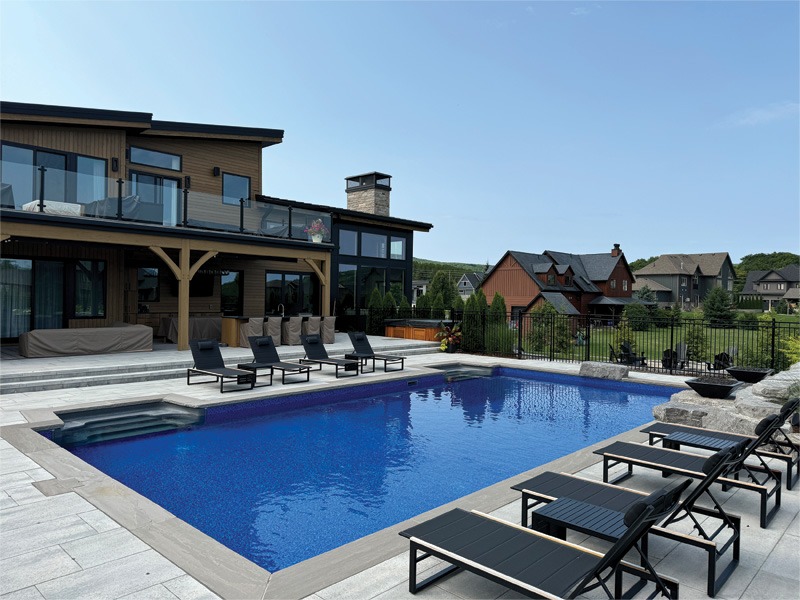
This mountain meadow project shows how careful planning, material co-ordination, and construction sequencing can ensure the successful completion of a large-scale residential pool and landscape installation. For pool professionals, the project offers insight into integrating water features, fire elements, and extensive hardscape within a single residential setting.
Project overview
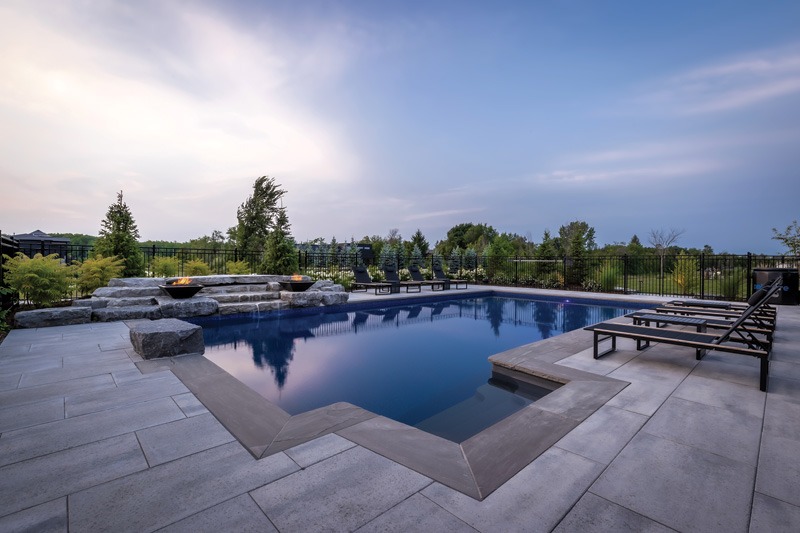
Located in Collingwood, Ont., this project involved building a custom inground pool along with a fully integrated outdoor space. Pool Craft of Richmond Hill, Ont. installed the pool.
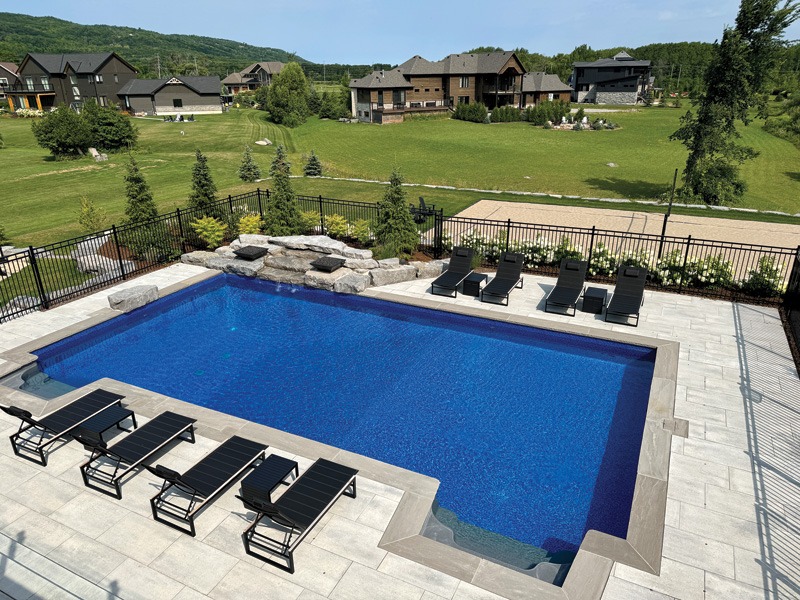
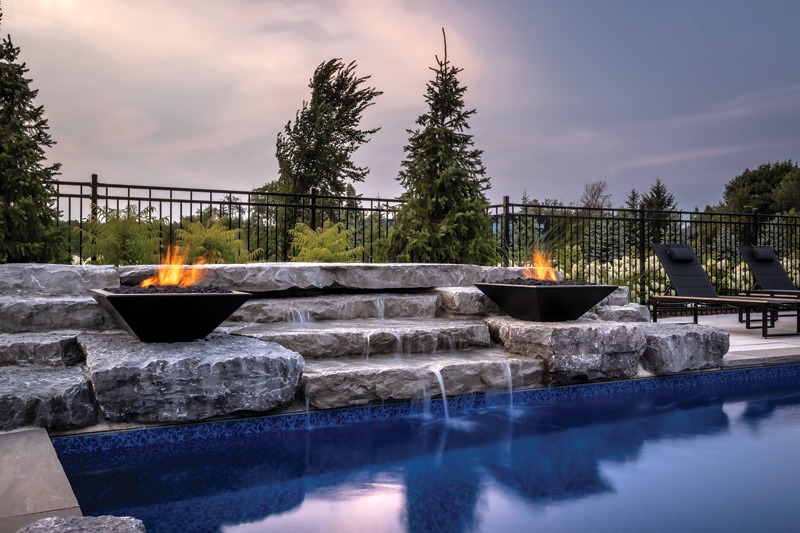
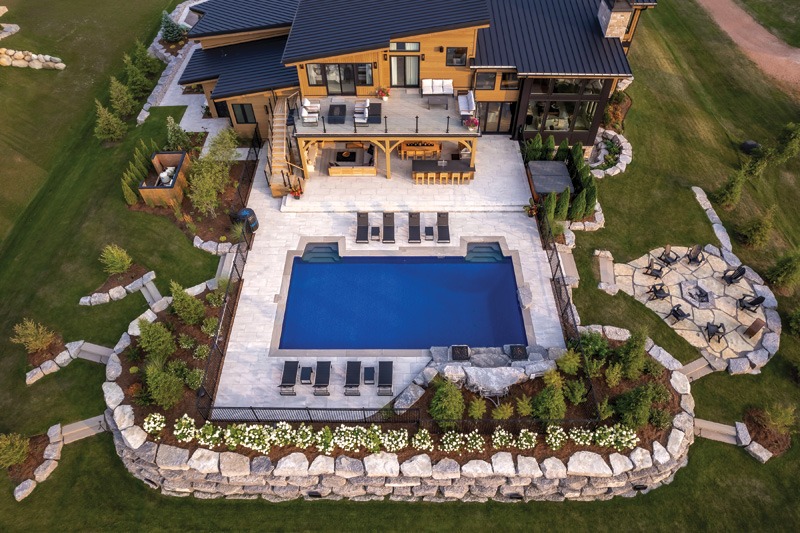
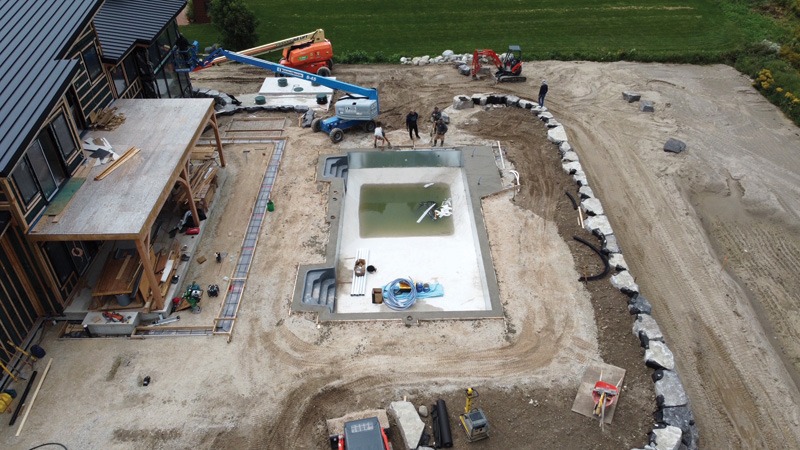
At the centre of the project is a 6 x 12 m (20 x 40 ft) rectangular pool. It features two fibreglass step units positioned at opposite ends, providing multiple entry points and enhancing circulation within the space. A custom waterfall with integrated fire bowls serves as a focal point, but adds extra mechanical and coordination considerations.
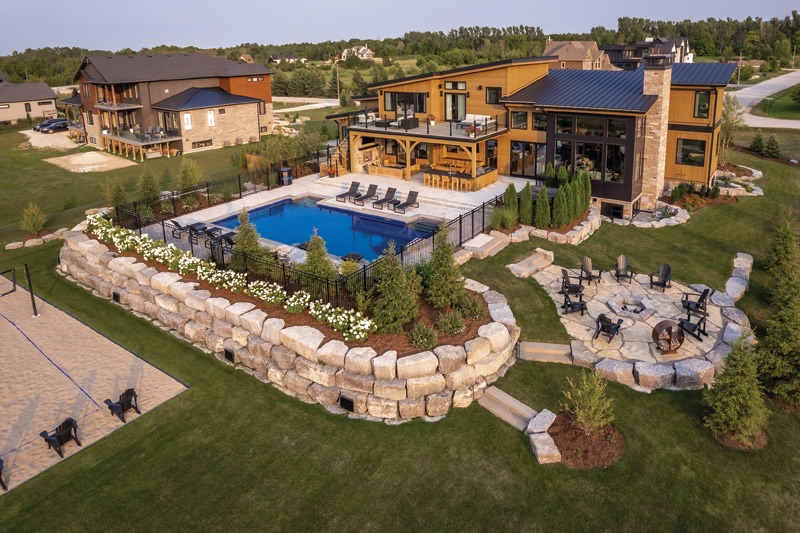
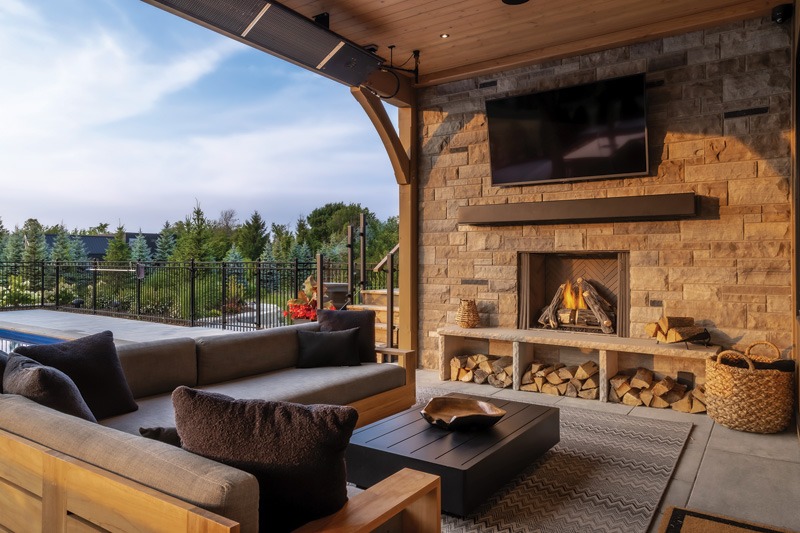
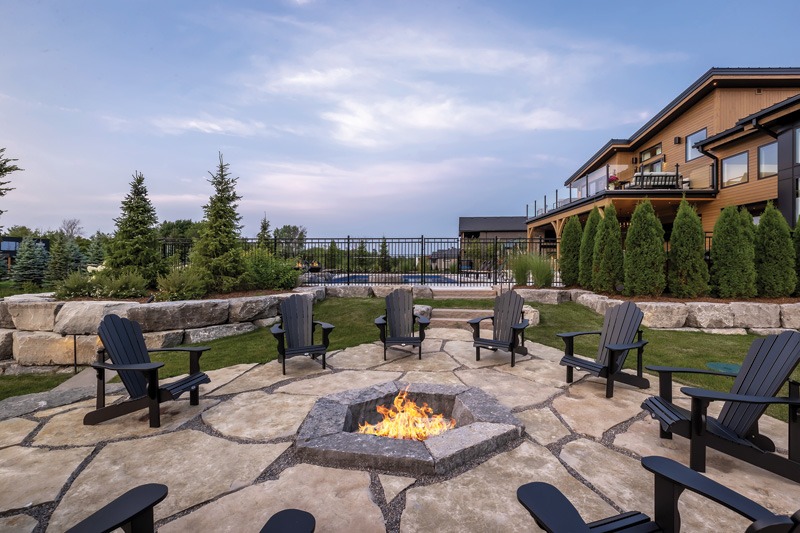
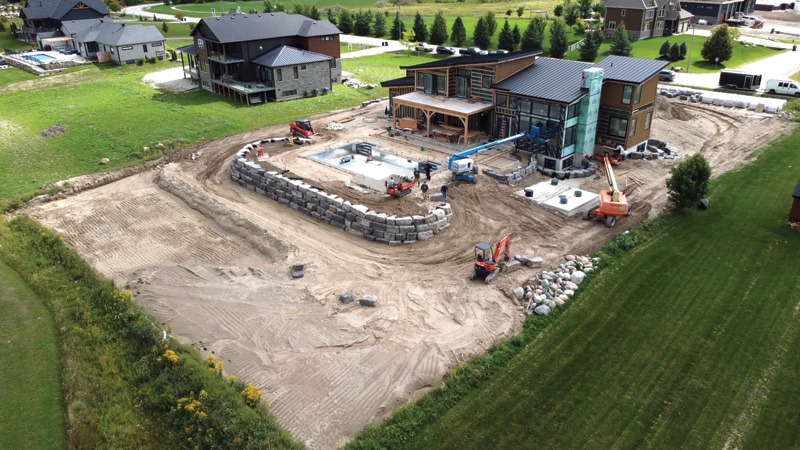
The scope of work went well beyond just the pool. About 279 m2 (3,000 sf) of patio area, large armour stone features, a substantial water element, and a dedicated firepit zone were included in the design. Pathways, lighting, fencing, and planting added finishing touches, creating visual and functional unity among the different outdoor areas.
From a professional perspective, the project is noteworthy for both its scale and the integration of multiple systems—structural, hydraulic, electrical, and landscape—into a single, well-planned build.
Existing conditions and constraints
While the site provided ample space, it also introduced several practical limitations that affected both design and construction.
Significant grade changes across the property required early attention to drainage planning, especially considering the amount of hardscape and stonework involved. Managing surface water flow was essential to preserving the pool structure and surrounding patios over time.
The use of large quantities of armour stone introduced additional structural considerations. Supporting heavy stone loads required careful subgrade preparation and consistent compaction, especially in areas where patios, retaining elements, and walkways meet. Soil conditions varied across the site, highlighting the need for ongoing evaluation during excavation rather than relying solely on assumptions made during the planning phase.
Access and logistics also required careful coordination. Delivering and placing hundreds of tonnes of stone in a suburban environment involved managing equipment staging, delivery schedules, and protecting existing site features.
Local permitting requirements—including pool safety barriers, gas and electrical inspections for fire features, and drainage compliance—added an extra layer of co-ordination. Regional climate conditions also affected the construction schedule, requiring consideration of seasonal weather patterns, frost conditions, and limited windows for certain phases of work.
Design approach
From the beginning, the design approach focused on clarity and co-ordination.
The rectangular pool shape was chosen not only for its clean look but also for its construction efficiency and the ease of adding steps at both the shallow and deep ends. The layout offers visual balance while serving swimmers of different ages and skill levels.
The waterfall and fire features were considered essential components rather than optional add-ons. Their placement, elevations, and service needs were determined early in the design process to prevent conflicts during construction.
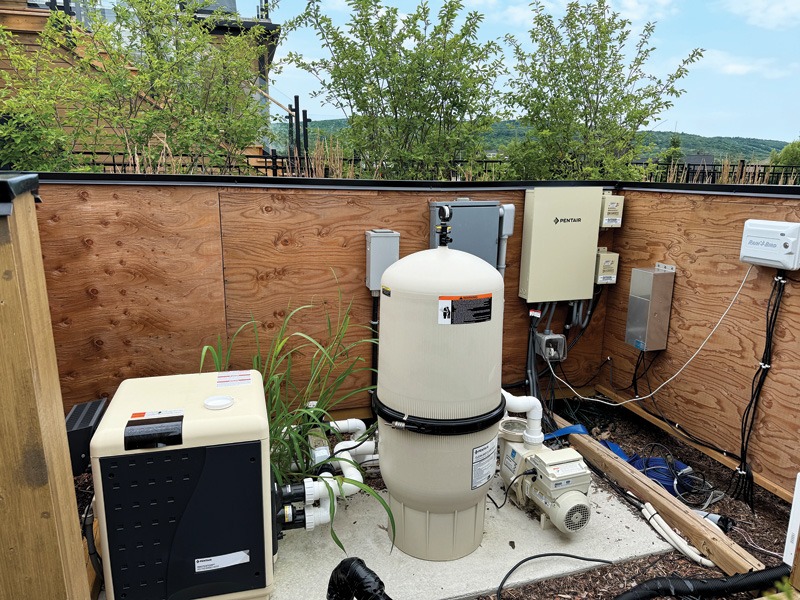
Mechanical routing for water, gas, and electrical services was co-ordinated alongside the pool shell and equipment layout, reducing the need for major adjustments later.
Safety and usability were prioritized through clearly defined circulation zones, code-compliant fencing, and smooth transitions between pool decking and nearby patios. Collaboration between pool builders, landscape designers, and other trades ensured that elevations, finishes, and service routes were aligned before construction began.
Materials and systems selection
Material selection for the project balanced durability, constructability, and long-term performance.
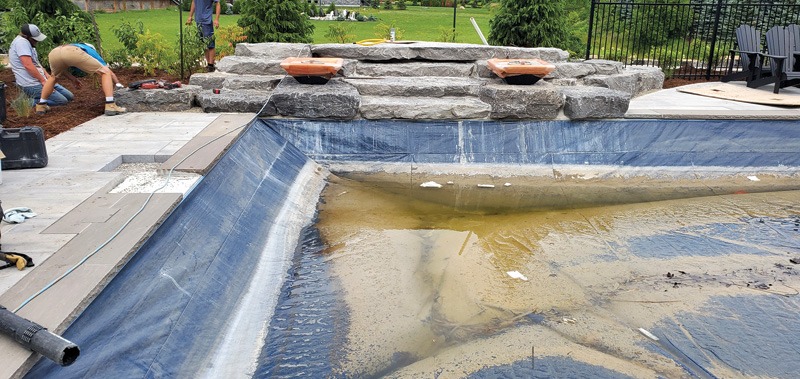
The pool was built with a vinyl-lined system, providing flexibility in choosing finishes and a reliable method for large rectangular setups. The selected liner pattern enhanced the overall visual flow of the space while allowing for easy replacement in the future without causing structural issues.
Natural stone played a significant role throughout the project. Slate-grey coping was selected for its compatibility with the pool design. At the same time, surrounding patios used large-format interlocking pavers chosen for their structural stability, drainage performance, and ease of repair if future access is needed.
Hydraulic systems were designed to accommodate both the pool volume and the extra demand from the waterfall feature. Circulation layout focused on balanced flow and ease of maintenance.
Landscape lighting was incorporated across the site to promote safe navigation and increase usability during evening hours. Conduit routing was planned early to prevent conflicts with irrigation and drainage infrastructure.
Construction process and sequencing
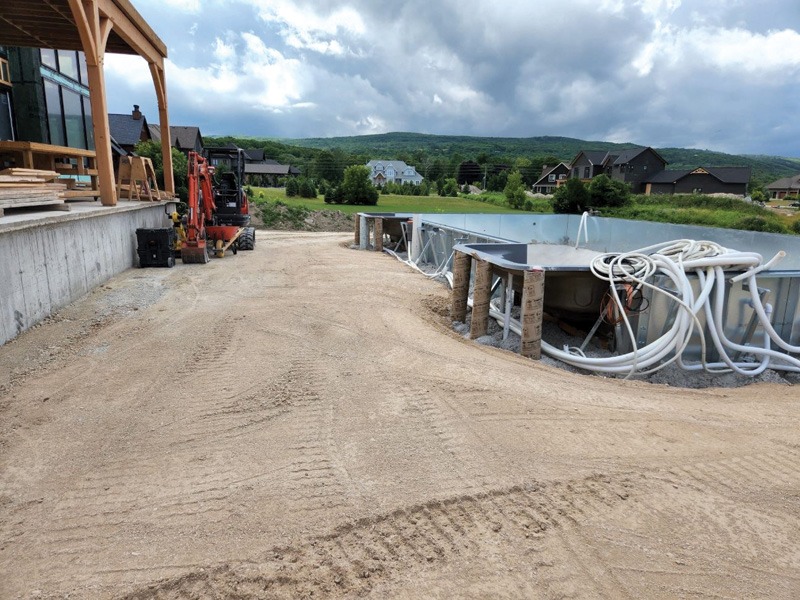
Construction started with a detailed layout and excavation to establish reference elevations for the pool, patios, and stone features. Due to the scale of the hardscape installation, early accuracy was essential. Even minor elevation differences could have caused challenges throughout the site.
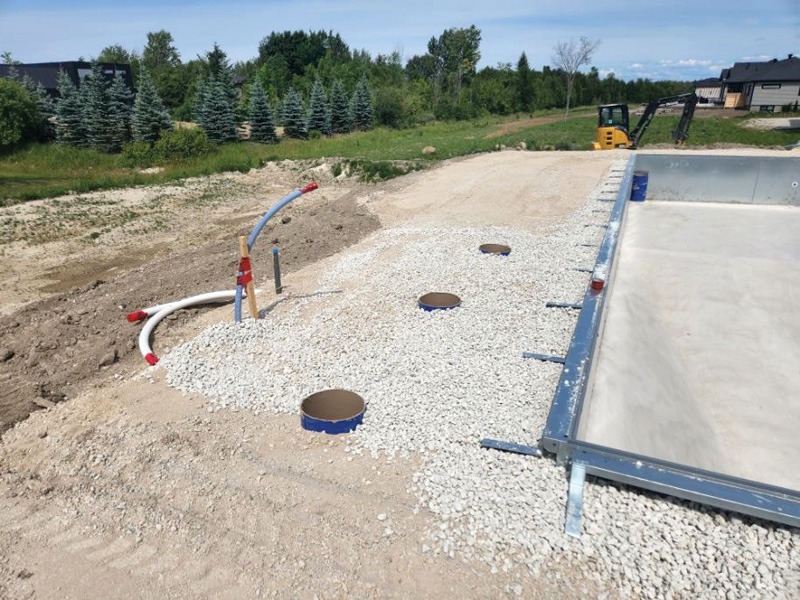
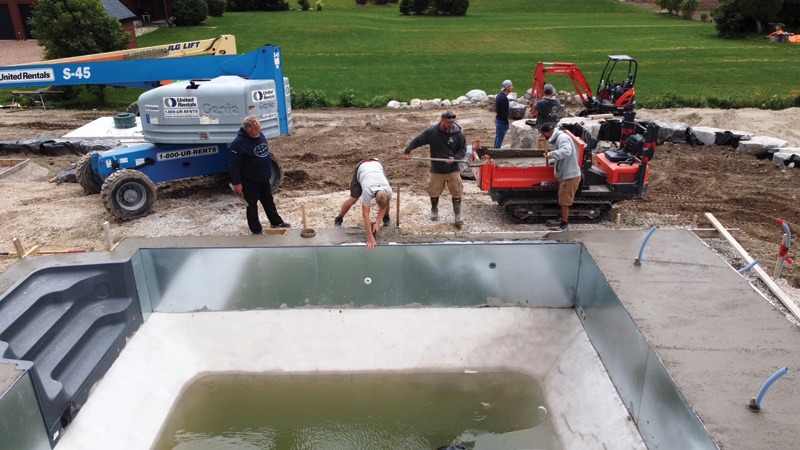
Pool wall panels were installed and secured, followed by base preparation for patios and armour stone installations.
Careful attention during liner placement ensured proper alignment with fittings and step units, reducing the need for post-fill adjustments. Mechanical systems were installed in parallel, enabling early pressure testing and inspection.
Stonework and hardscape installation was carried out in stages, working closely with pool construction to ensure access and protect finished surfaces.
Weather conditions required flexibility in scheduling, especially during heavy rain and snowfall, which are common in the area.
Throughout the process, consistent communication among trades helped identify potential conflicts early, enabling sequencing to be adjusted without compromising quality, safety, or project timelines.
Technical challenges and problem-solving
Integrating fire features within a water element presented some of the project’s more complex technical challenges.
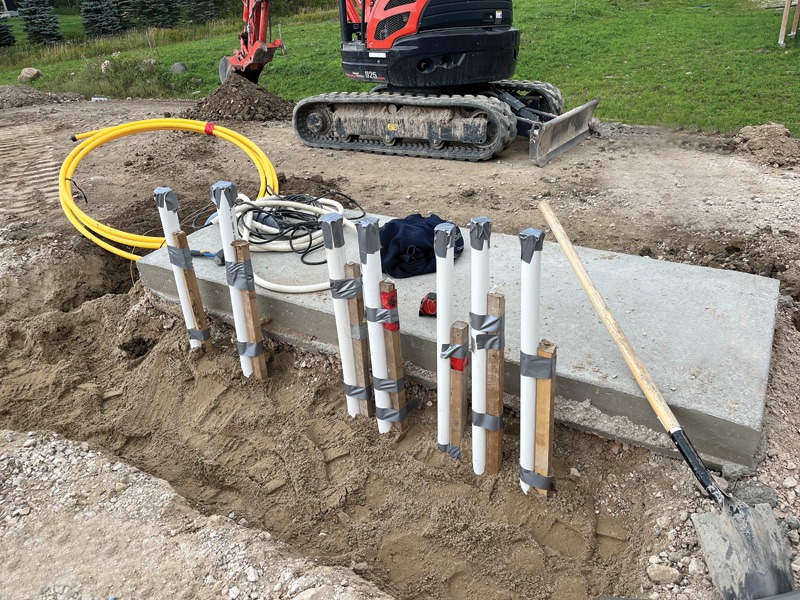
Gas and electrical services had to be routed securely while maintaining clear separation from pool plumbing and structural components—this required close coordination among all involved trades.
Soil variability beneath armour stone installations also prompted adjustments to foundation preparation in certain areas. Instead of relying on uniform assumptions, the team responded to site conditions as they arose, reinforcing base structures and modifying installation methods when needed.
Drainage co-ordination required further refinement during construction. Minor grade adjustments were made to ensure water was diverted away from the pool and hardscape areas, reducing the risk of saturation and long-term maintenance issues.
Backyard integration
A key measure of the project’s success was how well the pool blended into the wider backyard setting.
Patios, walkways, and gathering spaces were designed to work as parts of a cohesive outdoor system, with matching levels and seamless transitions between areas.
Drainage strategies were integrated throughout both hardscape and landscaped areas, ensuring runoff was managed effectively without depending solely on the pool deck.
Lighting was co-ordinated across the site to enhance both esthetics and safety, with fixture placement aligned with circulation routes and main activity zones.
Plantings and grading further helped stabilize site edges, soften transitions between built elements, and protect the long-term integrity of the hardscape installations.
Final result
Following completion, the pool system performed as intended. Circulation and filtration systems met operational expectations, and the integrated water and fire features functioned reliably.
Client handover included detailed instructions on system operation and ongoing maintenance requirements. Seasonal considerations specific to the region and anticipated bather loads were also reviewed.
Providing clear guidance on care and operation helps reduce the likelihood of unnecessary service calls and supports the long-term performance of
the installation.
Key takeaways for pool professionals
- Early collaboration between pool, landscape, and mechanical contractors can greatly reduce construction conflicts.
- Soil conditions should be checked regularly, especially when heavy stone elements are involved.
- Clear communication between trades helps keep the project on track and supports efficient sequencing.
- Proper drainage planning makes long-term maintenance easier and protects the surrounding hardscape.
Author
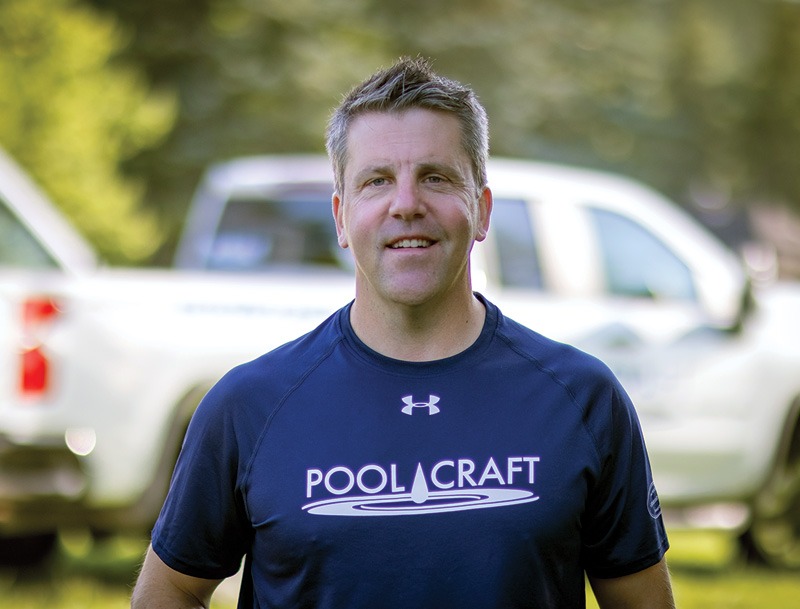
With more than 20 years of experience in the industry, Jason Mitchell is the president of Pool Craft. This full-service pool company specializes in all aspects of pool planning, installation, and backyard design in Richmond Hill, Ont. Pool Craft is the parent company to Stone Craft, the landscape silo and Timber Craft, the carpentry silo. Mitchell can be reached via email at jason@poolcraft.ca.
Photo Essay: Turning raw earth into refined outdoor living
Sign up for our newsletter
Get all the latest news and features from Pool & Spa Marketing. Submit your email below to get our twice-monthly newsletter.
Products

Read the Latest Issue