Beyond the deep end: Designing pools for every purpose and person
Over the last decade, the pool and spa industry has experienced a gradual trend towards improved personalization, increased accessibility, and defined user experience. From competition decks to activity pools, there is no single-sized approach to every facility. While that may feel daunting, it is a positive change that has shown significant improvements to risk prevention, whether by surfacing pool edges with cushioned material to lower concussion occurrences or by transforming expensive wading pools into splash pads to improve access to a greater population.
There is a type of pool for every use imaginable: lap, competition, plunge, L-shaped, activity, endless current, therapy, combined recreation, wave, kiddie, surf, and more. Beyond the standard kinds, there are also lazy rivers, zero-depth entries, and custom builds. This article will explore three popular yet different types and the associated trends: competition, activity, and kiddie pools.
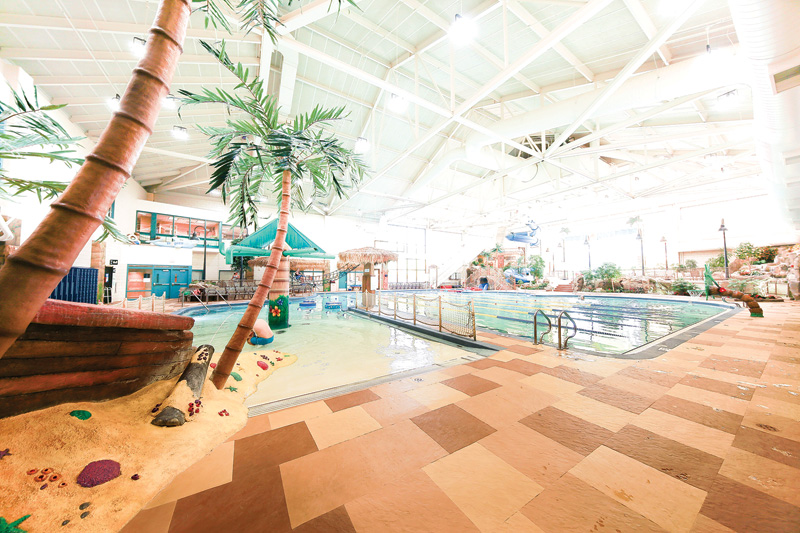
Competition pools
There are four common sizes of competition pools:
- Long course metre (LCM) pools are typically 50-m (164-ft) long and often called Olympic-sized, but the term is reserved for those that meet World Aquatics standards.1
- Short course yard (SCY) pools are 22.86-m (25-yd) long.
- Short course metre (SCM) pools are 25-m (82-ft) long.
- Water polo pools range between 25- and 30-m (82- and 98-ft) by 20-m (65-ft) wide.
Eight swim lanes are typical for competition pools, which translates to 25-m (82-ft) wide, but the exact width varies depending on the amenity’s footprint. Schools and colleges often use SCY pools, whereas professional arenas and international competitions will use LCM or SCM pools.
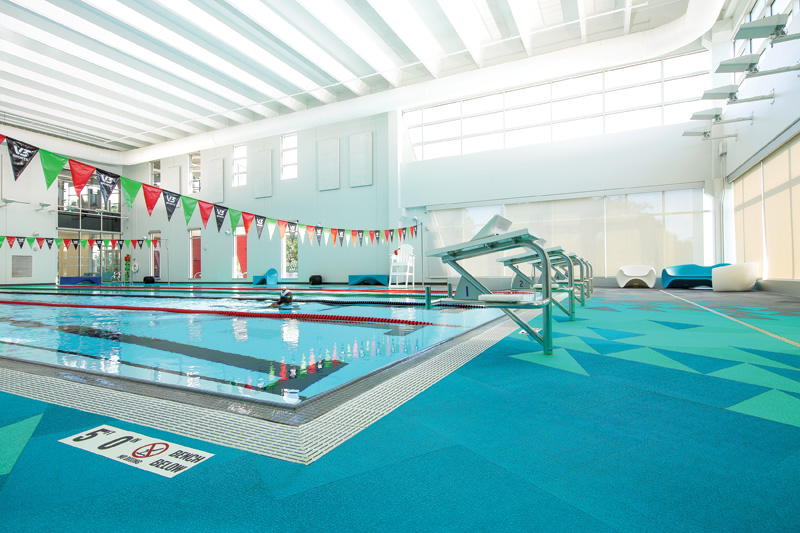
Today, many schools show interest in customizing their spaces to reflect their individualized brands and mascots. Some choose to renovate bleachers or surrounding spaces with school colours, but others are replacing old ceramic tile pool decks with customized safety surfaces which can incorporate logos, depict characters such as mascots, use team colours, or portray specific words, such as rally chants, directly into the floor design. In addition to beautifying the area, these spaces are more personable, and students can feel greater school spirit.
Activity pools
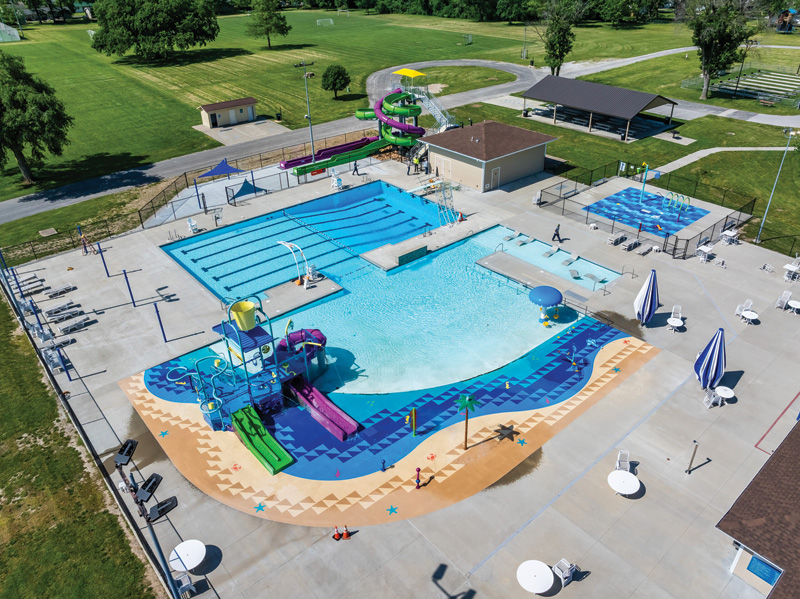
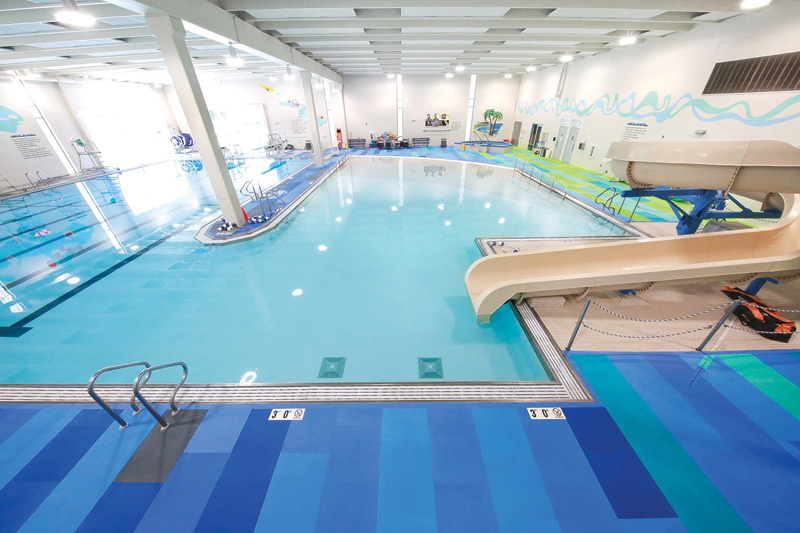
Activity pools are popular with municipalities since they can be customized and engage a wide range of guests with different mobility types. They can also be zoned for intended activities and fit easily into different unique programming trends such as dive-in movies or water aerobics classes. Zoning spaces can be as simple as colour-coding areas, using lane lines and buoy float lines, or it can include more prominent wayfinding tools such as signage.
Zero-depth entries provide a gradually sloped surface leading from a dry deck into a shallow depth of water that progressively gets deeper. Occasionally, spray features, jets, and toys will be installed where there is no depth of water present or in shallower areas; essentially functioning as small splash pads. Surfaces can also integrate games, shapes, or activities into these areas before the depth of water increases to add additional engagement, create themed designs, and provide improved safety. In states and regions without special variances or surface colour requirements, the surface itself can be a visual signal to guests. As the water deepens, the floor tile colours can gradually darken in a gradient pattern to add theming to an overall immersive experience without impacting overall safety.
Lazy rivers, wave pools, basketball hoops, Lilypad walks, obstacle courses, and floating animal buoys are also common activity pool features that provide guests with multiple ways to engage in a space while still having their own dedicated zones.
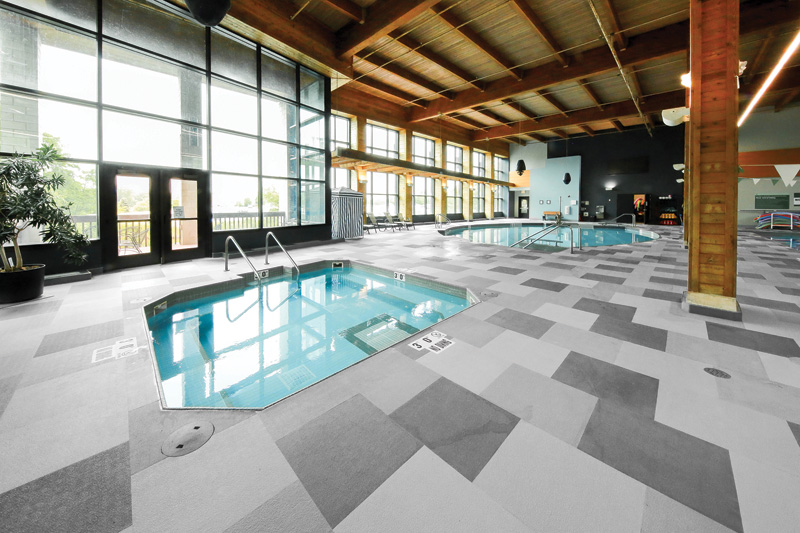
With the ever-increasing trend towards personalization, high-end resorts are choosing custom-built activity pools tailored for their anticipated guest type. Warm, inviting neutral palettes are often implemented to inspire relaxation. Plunge pools, hot tubs, and spas complement main amenities and offer quiet spaces for guests to have a more private experience. Kid-centric activities are more often being nestled away from adult zones with dedicated play spaces to avoid disruptions.
Overarching brand elements can also be incorporated into several surfaces such as walls, floors, and ceilings. When done thoughtfully, facilities create a cohesive, photogenic, and tasteful space that feels welcoming.
Kiddie pools
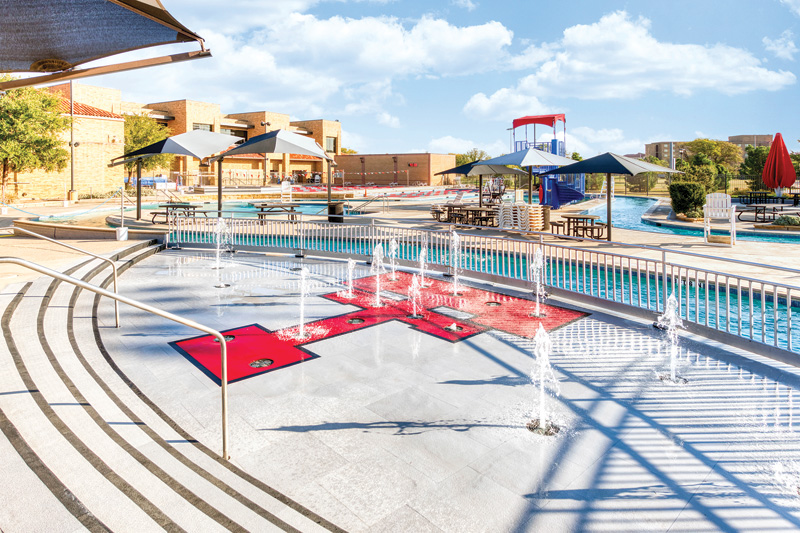
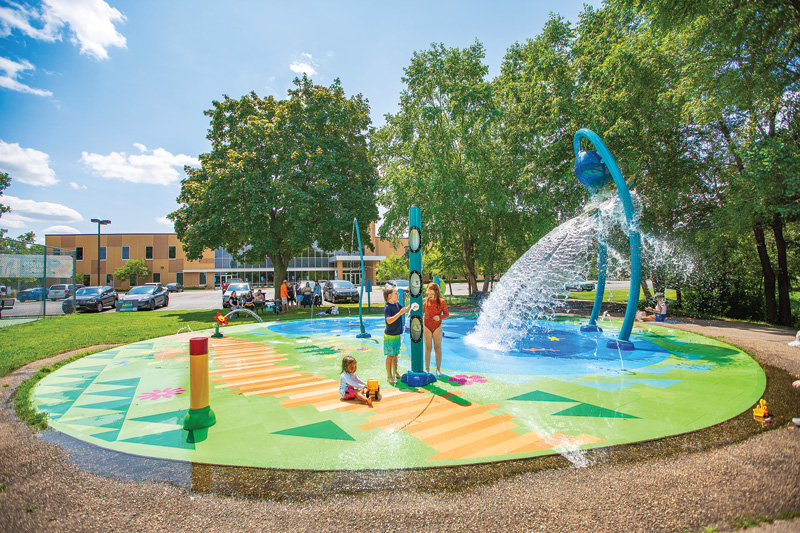
Over the last decade, the popularity of kiddie pools has declined. They are expensive to maintain as they age and are overly geared for toddler-aged children, which limits the amenity’s overall use and offers low playability. To solve this issue, they are being transformed into splash pads, which offer greater engagement for more people and have a lower associated maintenance cost. Splash pads also offer more inclusive play, which is critical for facilities to consider when it comes to holistic community engagement.
While the conversion costs vary based on scope and footprint, operators can expect to reduce risk and save money over time. Lifeguards are not required since splash pads do not have standing water, water use is lessened, fewer chemicals are needed, open dates can last longer throughout the season, and this type of amenity attracts different users, which can improve neighbourhood desirability.
These kiddie pools turned into splash pads are often focal points for communities and many owners are investing into safety products such as safety surfacing to better protect visitors. NSF/ANSI/CAN, Standard 50 for Interactive Water Play Venues is a solid reference to use as the renovation is being planned.
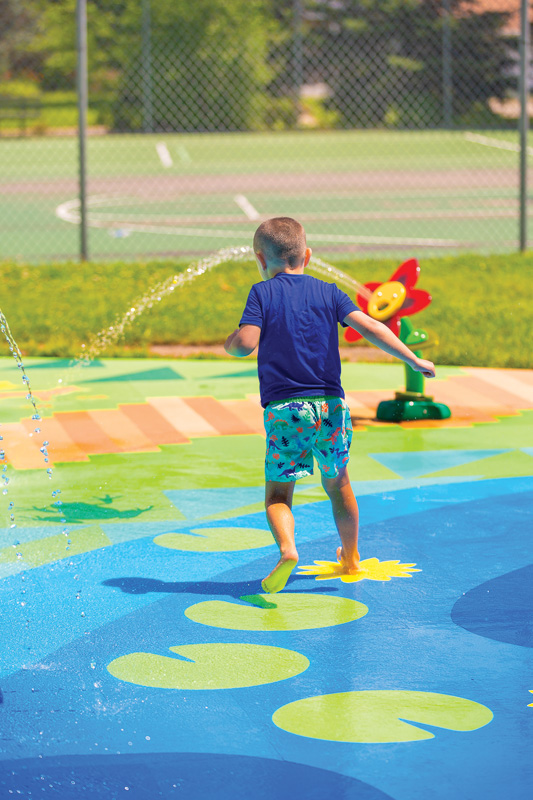
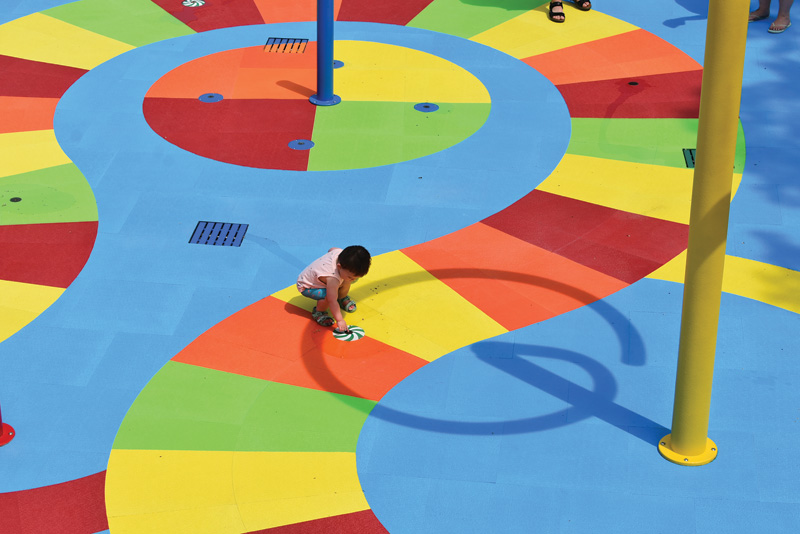
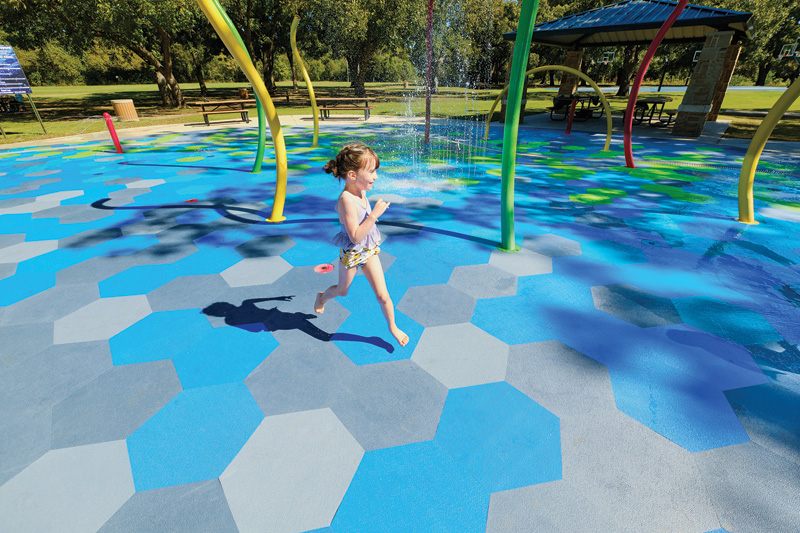
From a surface design perspective, patterns that invoke themes and games are gaining popularity and becoming a staple for splash pads across the world. In the past, surfaces had a history of being treated as background, necessary elements and nothing more. However, with new innovative products now on the market, flooring has become a play feature that every guest can engage with at the same time for a significantly lower investment. This means higher playability with no wait time to have fun.
For example, a 185-m2 (2,000-sf) area with a surface that includes games and patterns can engage upwards of 40 guests at the same time, whereas a frog slide that costs the same or more can only engage one to two children at a time. In addition to the number of guests able to engage together, a safety surface includes all ages and abilities; whether walking, hopping, rolling, or crawling. With these innovations, facilities often see more multigenerational play with longer visits since parents and caregivers can engage as well. They do not have to just stand by and watch. Everyone wins, and everyone has the same equal opportunity to make positive memories to last a lifetime.
Safety in and around pools
Indoor pools are a fantastic way to offer consistent experiences to guests and minimize complications associated with inclement weather or natural interruptions, such as animal traffic or pests. However, these types of facilities often experience challenges related to air quality, acoustics, and product longevity.
Chris Farlow, CPO advisory council member, notes in an article written for the Pool and Hot Tub Alliance (PHTA), “reducing the amount of disinfectant needed to maintain a safe pool is a great way to help keep the formation of DBPs [dibutyl phthalates] low. While requiring every swimmer to shower before swimming may not be realistic, having a clean, well-stocked, and inviting shower and changing room, along with signage, can help increase the number of guests that do. A similar approach should be taken for restroom facilities. Having a well-marked and conveniently located restroom along with space for a diaper changing station can help reduce waste in the pool and potential downtime… In addition, having swim diapers available for guests is a best practice, as regular diapers do not offer enough containment of waste after they become saturated with water.”2
Indoor aquatic amenities also require air handling systems with adequate filtration adjusted for the total area to keep air circulating. ASHRAE Standard 62.1-2004 requires four to six air changes per hour, with the handling system maintained regularly to ensure proper working order. Regular inspections are a positive, proactive approach to minimize extensive repair operations. Large open ceilings often feature destratification fans that circulate air and assist with regular air changes. Some indoor facilities also feature retractable roofs that can be opened in pleasant weather and closed to protect the space or when out of use.
Water quality can affect guest experience primarily through cleanliness and chemicals. Proper chemistry uses oxidation in controlled amounts to sanitize the pool and balance the water so it is not in either a corrosive (acidic) or scaling (alkaline) state. When the water chemistry is off, it can lead to excessive oxidation, corrosiveness, or both, which in turn can damage features or cause accelerated colour fading.
Some examples of pool water kept outside of common ranges include:
- Free available chlorine (FAC) is too high, potentially causing high oxidation.
- Combined chlorine (CC) is too high, potentially causing a corrosive state.
- Low pH causes high levels of hypochlorous acid (HOCL) which potentially causes high oxidation.
- Total alkalinity (TA) is too low, potentially causing a corrosive state.
- Calcium hardness is too low, potentially causing a corrosive state.
- Langelier Saturation Index (LSI) is too low, indicating a potentially corrosive state.
Proper maintenance and evaluation of system performance goes a long way, but chemical shocks can quickly wear out equipment or fade colours from structures and surfaces if left out of range for too long as well. Extreme chlorine values may also negatively impact guest health and cause burns and rashes. Regular water testing and accurate logging best practices can be followed to avoid undesirable outcomes. ANSI/APSP/ICC-11 2019, the PHTA guidelines for chemical operational parameters, and local health codes are useful to reference when setting facility metrics.
Water safety goes beyond drowning prevention and is often a complex network of systems working together without guests noticing, so they can focus on fun. One way facilities can improve a major safety touchpoint is via safety surfacing on the pool deck itself. Installing an NSF/ANSI/CAN 50-certified surface is often implemented since these surfaces are third-party verified for use on pool decks. They meet rigorous criteria for slip-resistance, impermeability, UV resistance, cleanability, and chemical resistance. Plus, it includes cushioning for splash pads, which can be useful for activity pools that include spray fixtures located on the zero-depth entry application area.3
Notes
3 Current certified products can be found on NSF International’s website, (with the filter applied “Product Type: Surfacing for Interactive Water Play Venues”)
Author
Briana Valente serves as a marketing manager for Life Floor. She has been with Life Floor since 2018 and has more than seven years of experience in the aquatics industry. She works extensively with industry publications, conferences, and workshops that bring meaningful education to individuals spanning municipalities, resorts, waterparks, and more. She holds a bachelor’s in marketing from the Carlson School of Management at the University of Minnesota
Sign up for our newsletter
Get all the latest news and features from Pool & Spa Marketing. Submit your email below to get our twice-monthly newsletter.
Products
Read the Latest Issue