
The AHI dealership in action: Seven use cases that build your competitive moat
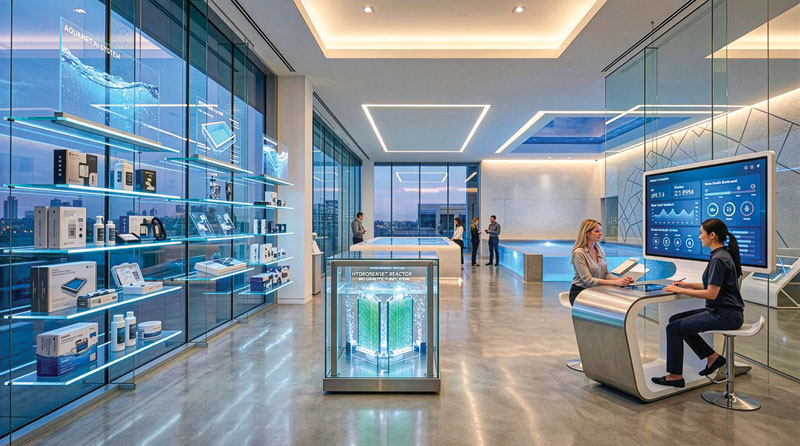
Bluewater Pool & Spa is a fictional dealership. The scenarios that follow are not. Every situation in this article is drawn from real challenges facing independent dealers across Canada—the staffing gaps, the knowledge drain, the customers lost to convenience, and the service calls that required three visits when only one was needed.
What is different in each scenario is one variable: the team at Bluewater has suited up. They have invested in paid AI tools and learned the four skills—prompt engineering, concept engineering, context window management, and the discipline to use AI as a collaborator rather than a search engine.
Three team members will be followed throughout a single day to explore what the Intelligent Dealership experience looks like when they are fully engaged in their roles.
Lisa owns Bluewater and has 22 years in the business. She built it from a single service van to a full retail location with a team of 11. She is strategic, time-pressed, and tired of fighting fires instead of building the business.
James is Bluewater’s lead service technician. He has seven years of experience and is reliable and thorough. But with two senior techs retired in the past 18 months, he is now fielding questions from junior techs that used to go to people with decades more experience.
Priya started on the retail floor three months ago. She is sharp, customer-focused, and eager to learn—but came from outside the industry. She does not have the product knowledge or the water chemistry intuition that takes years to develop—or did not.
The retail floor
Use case 1: The always-on expert
(7:45 a.m.)—Priya arrives early to prepare for the day. She reviews her AI assistant’s “morning briefing”—a concept she learned in her first week. She has loaded the assistant with Bluewater’s product playbook, the regional water profile for their service area, and the seasonal context. It is early June: pools are opening, and customers are coming in with green water, winterized equipment, and a season’s worth of questions.
(9:15 a.m.)—A customer walks in with a water sample and a problem. Her hot tub water has a chemical smell, and her skin is irritated after use. She has been using the same products for three years, but nothing has changed.
Three months ago, Priya would have fumbled this. She might have recommended a shock treatment—the default answer for “something smells wrong.” But her AI assistant, briefed on the situation in 30 seconds using a prompt template, identifies the real issue: combined chloramines in an enclosed hot tub. The smell is not too much chlorine—it is not enough free chlorine, combined with inadequate ventilation and organic load from regular use. The AI recommends a specific oxidation treatment from a specific product line, with dosing, timing, and a follow-up protocol.
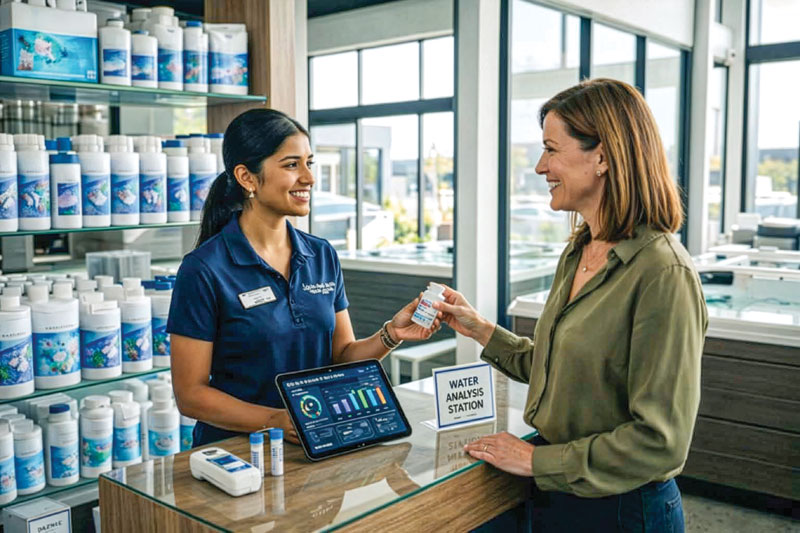
Moat this buildsEvery associate on the floor operates at an expert level regardless of tenure. Customers get consistent, accurate guidance no matter who is on shift. The big box down the road has shelf-stockers, while Bluewater has augmented experts. |
The service van
Use case 2: The veteran in every truck
(10:30 a.m.)—James is at a customer’s home facing an equipment problem. The pool’s variable-speed pump is cycling on and off erratically—running for four minutes, shutting down for several minutes, and then restarting. The display shows no error code. The homeowner has already called another service company, which replaced the capacitor. However, the problem persists.
Two years ago, James would have called Dave, their senior tech with 28 years of experience. Dave would have recognized the symptom pattern immediately: thermal overload protection cycling, likely caused by restricted water flow that creates excessive back pressure. Check the impeller for debris, then plumbing for a partially closed valve. The problem is: Dave retired eight months ago.
James activates his AI assistant using voice mode—allowing him to be hands-free and eyes on the equipment. He describes the symptoms: the cycling pattern, the lack of error codes, and the failed capacitor replacement. The AI, loaded with equipment diagnostic knowledge, reaches the same conclusion Dave would have: thermal overload and restricted flow. It walks James through a diagnostic confirmation sequence—check the pressure gauge reading against the pump curve, inspect the impeller, and verify all valves are fully open. Then, James finds the issue: a partially closed return-side valve that the homeowner’s landscaper accidentally bumped into two weeks ago.
First-call resolution. Problem solved. The customer does not need a third visit from a third company. James’s diagnostic capability just grew, and he will recognize thermal cycling patterns for the rest of his career.
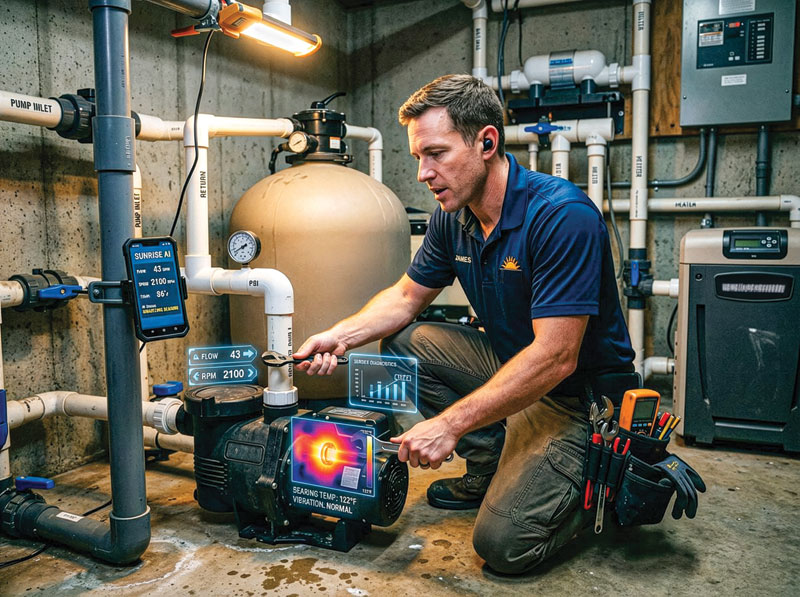
Moat this buildsDave’s 28 years of diagnostic intuition did not retire with him. It rides in every service truck. Because of this, first-call resolution rates climb, callbacks drop, and customer confidence compounds. |
The back office
Use case 3: The strategic analyst
(12:15 p.m.)—Lisa spends her lunch reviewing inventory for the upcoming peak season. Historically, this has been a gut-feel exercise—order what was ordered last year, adjust for what is expected to happen, and hope it is close.
This year, Lisa uses her AI assistant to analyze three years of data exported from her point-of-sale (POS) system. She has provided the data in a structured format and asked for a seasonal demand analysis by product category, cross-referenced with weather patterns and her service call records.
The AI identifies a pattern Lisa had not seen: a consistent spike in oxidizer product sales 10 to 14 days after the first heat wave of the season, correlated with a corresponding spike in service calls for cloudy water. Her current ordering pattern has her restocking these products two weeks too late. She has been losing sales to competitors when her shelves are empty during the exact window when demand peaks.
Lisa adjusts her purchase orders. She also creates a targeted marketing campaign—drafted by AI, refined by her—to send to customers in her database five days after the first forecast of a heat wave, proactively offering water chemistry checks and seasonal treatment packages.
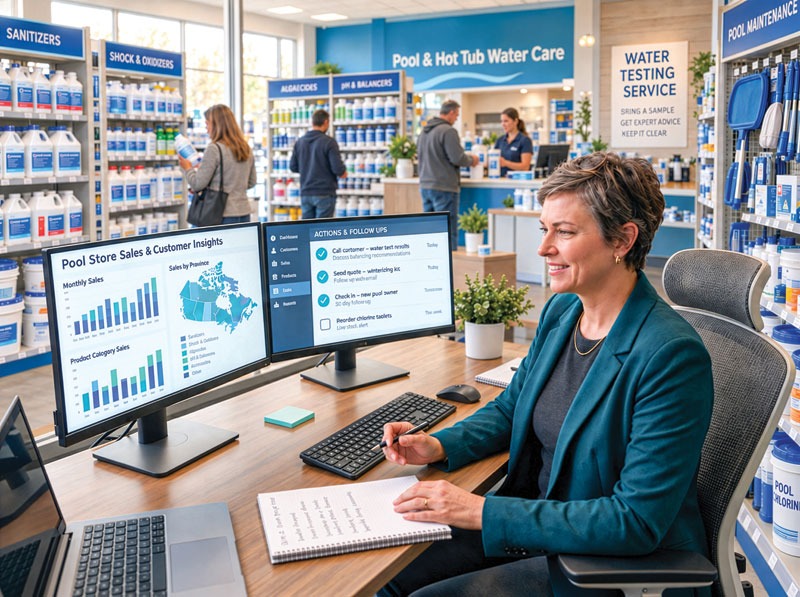
Moat this buildsThe owner shifts from firefighter to strategist. Data-informed decisions replace gut instinct. Inventory optimization reduces waste and captures previously missed revenue. The business operates on intelligence, not inertia. |
The training room
Use case 4: The accelerated apprentice
(1:30 p.m.)—Bluewater has a new hire starting next week—a second technician to support James in the field. Under the old model, onboarding took eight to 12 weeks of ride-alongs, shadowing, and gradual progression to solo calls. That timeline assumed a senior technician was available to mentor the new hire. With Dave retired and James stretched across a full-service schedule, the old model is broken.
Lisa has built an AI-assisted onboarding program. It is not a replacement for hands-on experience—the new hire will still ride with James for the first two weeks. But between ride-alongs, the new tech works through scenario-based training with the AI assistant: diagnostic simulations, product knowledge challenges, equipment identification exercises, and customer communication practice.
The AI presents realistic scenarios drawn from Bluewater’s actual service history. In one example, a homeowner reports a persistent foam problem in their hot tub. They have drained and refilled twice. The new tech must decide what questions to ask, what tests to run, and what the diagnosis is. The new tech works through the problem. The AI coaches in real time, nudging when the tech goes off track, confirming when they are right, and explaining the reasoning behind each diagnostic step.
Traditional onboarding takes about 12 weeks to reach basic competence. With Augmented Human Intelligence (AHI)-assisted onboarding, the new tech is handling routine solo calls by week three. Not because corners were cut—because the learning was concentrated, scenario-based, and available 24 hours a day instead of only when a senior tech was free.
Moat this buildsFaster onboarding means faster revenue capacity. In a market where finding skilled technicians is the constraint, compressing onboarding from months to weeks is a structural advantage. |
The marketing desk
Use case 5: The ghost home recovery engine
(2:45 p.m.)—Lisa’s database contains 4,200 addresses with pools or hot tubs. Of those, 1,750 have not purchased anything in more than 18 months. These are ghost homes with dormant revenue—families who moved away, customers who drifted to Amazon, and relationships that went cold.
Historically, recovering these addresses meant mass mailings—generic postcards that generated a 2 per cent response rate on a good day. Expensive, impersonal, and inefficient.
Lisa uses her AI assistant to segment the dormant addresses into clusters based on their purchase-history patterns, equipment age, and neighbourhood characteristics. The AI drafts personalized reactivation messages for each segment—not generic “we miss you” notes, but contextually relevant outreach. Addresses with aging heaters get maintenance reminders. Addresses with salt systems get cell inspection offers. Addresses that go dormant after a move receive “welcome to the neighbourhood” introductions and complimentary water testing.
Early results from the pilot show an 11 per cent response rate on the first wave—more than five times the old approach. Sixty-three dormant addresses were reactivated in the first month. At an average annual customer value of $450, that is more than $28,000 in recovered annual revenue from a single campaign.
Moat this buildsSystematic, AI-powered customer recovery at scale. Every dormant address becomes a recoverable asset. The database transforms from a list into an intelligent growth engine. |
The owner’s office
Use case 6: The strategic advisor
(4:00 p.m.)—Lisa is preparing for a quarterly review with her team. She needs to assess performance, identify emerging issues, and set priorities for the upcoming peak season. Under the old model, this meant hours of spreadsheet analysis, gut-feel assessments, and a meeting that often devolved into operational firefighting.
Lisa spends 30 minutes with her AI assistant, feeding it the quarter’s data: revenue by category, service call volume and resolution rates, customer acquisition and retention numbers, inventory turn rates, and staff productivity metrics. She asks for a strategic analysis focused on one question: “What’s the biggest constraint limiting our growth this quarter, and what’s the highest-leverage action we can take to address it?”
The AI identifies the constraint: service capacity. Bluewater’s retail performance is up 12 per cent year-over-year. But service revenue remains flat despite growing demand because James can handle only six calls per day. The backlog is growing. Customers are waiting four to seven days for service. Some are calling competitors. The bottleneck is not demand—it is throughput.
The AI recommends three prioritized actions: accelerate the onboarding of new technicians using the AI-assisted program (already underway), implement AI-guided triage to route simple calls to junior staff while James handles complex diagnostics, and introduces a proactive maintenance subscription that smooths demand across the season instead of concentrating it in peak weeks.
Moat this buildsThe owner operates as a strategist with an AI-powered analytical capability that would normally require a management consultant. Decisions are data-driven, priorities are constraint-focused, and |
The customer’s backyard
Use case 7: The digital extension
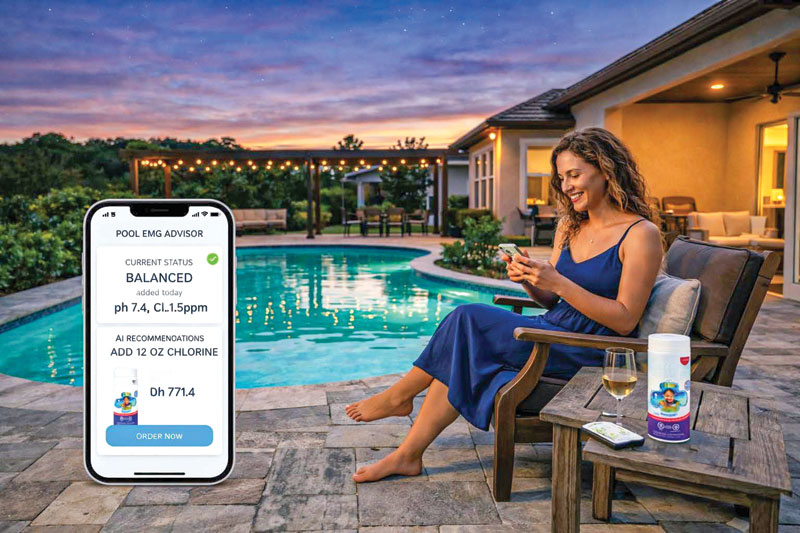
(6:30 p.m.)—After hours, a homeowner sits beside her pool with her phone. The water looks slightly hazy—not bad enough to call the dealership, but noticeable. Under the old model, she would ignore it until it became a visible problem, then drive to the store—or, increasingly, search Amazon for whatever chlorine had the best reviews.
But this homeowner is a Bluewater subscriber. She opens the consumer-facing AI advisor on her phone, a tool provided through her relationship with the dealership. She describes what she sees and enters her latest test strip results. The AI, configured with Bluewater’s product line and regional water profile, identifies early-stage chloramine buildup and recommends a simple oxidation treatment, along with a specific product line with exact dosing for her pool size.
The product recommendation links directly to an order, and she places it. It will be ready for pickup tomorrow morning—or, in the subscription model, it is already included in her monthly package.
The dealership just made a sale at 6:30 p.m. on a Tuesday, with zero staff involvement. The customer got expert-level guidance from her backyard. The product recommendation was brand-specific, dosing-accurate, and dealer-linked. Amazon was never under consideration.
Moat this buildsThe dealer relationship extends into the customer’s home, is available on their schedule, and recommends the dealer’s products, driving revenue through the dealer’s channel. This is the digital extension of the expertise advantage—the thing Amazon structurally cannot replicate. |
Seven use cases, one moat
Each of these scenarios adds a layer to the competitive moat. In the first, the retail floor delivers expert-level guidance regardless of who is on shift. In the second, the service van carries the veteran’s knowledge in every truck. In the third, the back office runs on intelligence instead of inertia. In the fourth, training compresses from months to weeks. In the fifth, marketing recovers dormant revenue at scale. In the sixth, the owner operates as a strategist rather than a firefighter. In the final and seventh case, the customer relationship extends into the backyard.
To the customer watching Priya diagnose their hot tub with the confidence of a veteran, it looks like magic. But behind the counter, it is four skills, a configured AI assistant, and a dealership that decided to suit up.
None of this requires science fiction. It requires a decision to invest in capability rather than wait for conditions to improve. The tools exist, the skills are learnable, and the competitive window is open.
The final article in this series, “Sage, Rocky, and the Knowledge Harvest,” will introduce two purpose-built applications that take everything described and embed it into platforms designed specifically for backyard leisure. These articles have shown what the Intelligent Dealership can do with general-purpose AI tools, configured by skilled humans. Now imagine what it can do with AI tools purpose-built for this industry from day one—with 53 years of domain expertise already built in. The suit gets an upgrade.
Author

Dennis Gray is president of Backyard Brands Inc., serving independent Canadian pool and spa dealers across a national network. He has more than 40 years of experience developing and marketing advanced water-care technologies. He is the architect of the Augmented Human Intelligence (AHI) platform, currently deployed across more than 260 dealerships. This is the third in a four-part series for Pool & Spa Marketing.
Sign up for our newsletter
Get all the latest news and features from Pool & Spa Marketing. Submit your email below to get our twice-monthly newsletter.
Products


Read the Latest Issue