
The next pool renovation cycle: PVC membranes emerge as an alternative finish
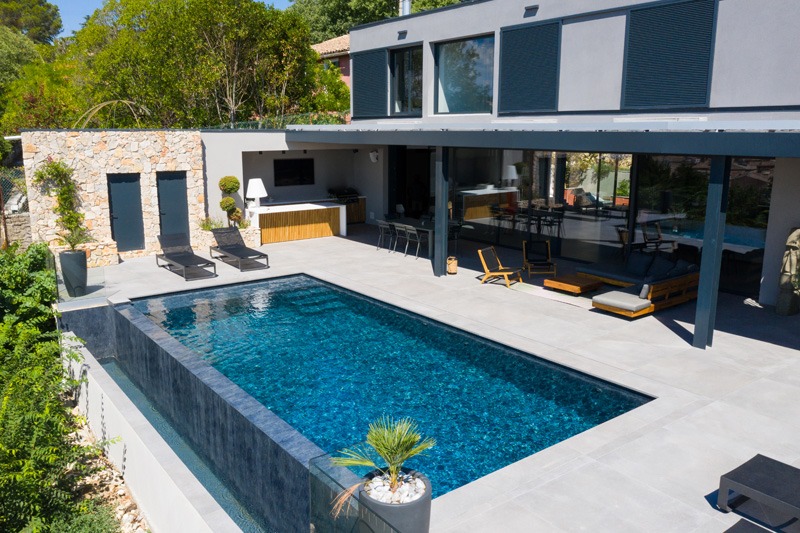
The pool industry in North America is entering a new renovation cycle. Millions of residential pools from the 1980s, 1990s, and early 2000s are reaching a point where interior finishes are no longer just cosmetic concerns but also functional issues. Cracked plaster, persistent staining, rough surfaces, and recurring repairs are prompting homeowners to ask an important question: Is there a better long-term solution?
Although reinforced polyvinyl chloride (PVC) membranes have not yet become the standard in all construction projects, their increased use in commercial renovation work is steadily building market confidence. As these projects demonstrate durability and performance in challenging environments, they are beginning to influence discussions around residential renovations.
The commercial renovation segment presents a significant opportunity. Each year, hundreds of commercial pool projects move forward across both new construction and major renovation work.
Reinforced PVC membrane systems account for a small proportion of commercial projects. They are frequently chosen as long-term repair solutions for cracked or deteriorated concrete vessels, especially when reliable waterproofing performance is essential.
For builders and service professionals, replacing interior finishes is often the initial step in a broader renovation discussion. It is also where the industry has the greatest opportunity to move beyond tradition and adopt modern technologies that offer longer service life, enhanced performance, and more consistent results. Increasingly, reinforced PVC membranes are being considered as one option in renovation projects where longevity and dependable waterproofing are priorities.
“There are many concrete swimming pools that were built in the 1980s and 1990s, and we are seeing exponential growth in the number of these pools being renovated or resurfaced,” says Carl St-Jean, owner of Piscines Bayto and Béton Decorum in Quebec. “With concrete pools, the need to resurface the interior is common after three to five years, but unfortunately, traditional resurfacing methods are not always ideal.
“Repainting requires sandblasting the pool, which generates a significant amount of dust. It also requires several consecutive days of dry, sunny weather to complete the work, which can be challenging in the spring when many homeowners want to renovate their pools in time for summer.”
St-Jean states that the refinishing process usually takes two to three days of good weather, followed by about seven more days of favourable weather for the coating to cure before refilling the pool.
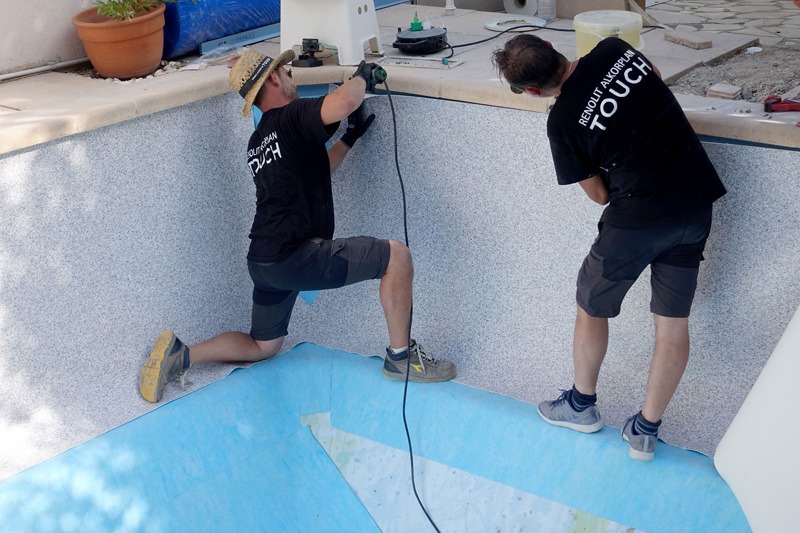
“When we are approached about this type of concrete resurfacing or renovation, we often recommend a reinforced PVC membrane because the installation process can be completed in just a few days,” he says. “The renovation process is cleaner because it does not involve sandblasting dust, and the membrane can last 20 to 25 years or longer. Reinforced PVC membranes are also completely watertight.”
St-Jean notes that these characteristics influenced the company’s decision to use reinforced PVC membranes inside the plunge pools it manufactures, markets, and installs.
“The plunge pools we manufacture are constructed as monolithic cement shells with plumbing pre-assembled into the walls, so no drilling or on-site assembly is required,” he says. “They arrive at the jobsite finished with a reinforced PVC membrane, creating a durable surface that is ready to be filled with water upon installation.”
Renovation cycles by pool type
Concrete and plaster pools
Structural shells often last for decades, but plaster finishes usually need resurfacing every seven to 10 years, depending on water chemistry, usage, and climate. Renovation is most often prompted by surface roughness, staining, or cracking.
“Cracking is a natural characteristic of concrete,” explains St-Jean. “You see it in bridges, highways, and sidewalks because concrete has very little flexibility, so some degree of cracking is inevitable.”
Due to these surface and waterproofing challenges, reinforced PVC membrane systems are most often used in this sector, where they can act as both the interior finish and a watertight lining over the existing structure.
Vinyl liner and steel wall pools
The structural wall system itself can last for decades, but renovation cycles are usually prompted by liner aging. Over time, liners may lose elasticity, fade, develop seam fatigue, or become punctured. Replacement cycles are typically cited as occurring every seven to 10 years.
Rather than serving as a direct replacement for standard vinyl liners, reinforced PVC membrane systems are often chosen as a premium upgrade in steel-wall pool renovations. They deliver a more durable, technically advanced interior finish for owners looking to elevate both performance and appearance.
Fibreglass pools
Fibreglass shells also have structural lifespans measured in decades. Structural issues rarely prompt renovation and are more often triggered by gelcoat wear, oxidation, discolouration, or surface blistering.
Since fibreglass pools are manufactured as complete shells with finished interior surfaces, reinforced membrane systems are typically not used in this type, except in specialized conversion or repair cases.
Interior finishes: The renovation trigger
Most renovation projects begin with a surface problem. Homeowners notice discolouration that persists, plaster that feels rough underfoot, or cracks that reappear soon after repairs. Over time, repeated acid washes and patch repairs become frustrating, costly, and disruptive.
Premature plaster deterioration usually results from a combination of factors rather than a single failure point. Aggressive water chemistry—especially low calcium hardness, low alkalinity, and low pH—can cause etching and roughness. Improper startup procedures and inconsistent curing practices may also impact long-term durability. Additionally, minor structural movement in aging shells can lead to recurring cracks in the plaster finish.
In vinyl pools, renovation triggers are typically related to material aging, UV exposure, liner tears, or punctures rather than chemical erosion. In steel wall systems, corrosion can also become a long-term concern. Fibreglass pools are more often prone to esthetic gelcoat wear—oxidation, fading, or blistering—rather than structural cracking of the shell itself.
For pool professionals, these issues often serve as the starting point for broader renovation discussions, prompting evaluation of how the interior finish should perform in the coming decade rather than merely restoring the original surface.
Key criteria when evaluating interior pool finishes
- Waterproofing reliability (is the system decorative or also a waterproof barrier?)
- Chemical resistance and tolerance to real-world fluctuations in balance
- Ability to accommodate minor structural movement
- Slip-resistant performance in wet areas
- Surface hardness and wear properties
- Expected lifespan and total cost of ownership
- Installation duration and operational downtime
Moving beyond tradition in pool finishes
For decades, plaster finishes have been among the main choices in the residential pool market, largely because they were well-known. Builders stuck to proven methods from the past, and homeowners accepted relatively short surface lifespans as part of owning a pool.
Comparing service life across common pool interior finishes
- Standard plaster finishes are usually expected to last five to 10 years before major refinishing is needed, with premium aggregates sometimes prolonging that period.
- Vinyl liners are typically replaced every seven to 12 years, depending on exposure and maintenance.
- Fibreglass shells generally provide decades of structural durability, but gelcoat refinishing might be needed eventually.
- Reinforced PVC membrane projects are built as long-lasting interior systems, easily exceeding a 20-year lifespan with consistent maintenance when properly installed and cared for.
As understanding of renovation cycles improves, focus is increasingly shifting toward the long-term performance of interior finish systems.
That mindset is evolving as pool interiors benefit from advances in modern materials science, much as other areas of residential construction do. Homeowners no longer accept solutions based solely on tradition; they want to understand durability, maintenance needs, and long-term ownership costs.
In Europe, this move away from traditional plaster finishes started decades ago, driven by the need for more reliable waterproofing and longer-lasting interior surfaces. Today, many North American renovation projects are beginning to adopt a similar approach—assessing interior finishes not only for appearance but also for their long-term performance.
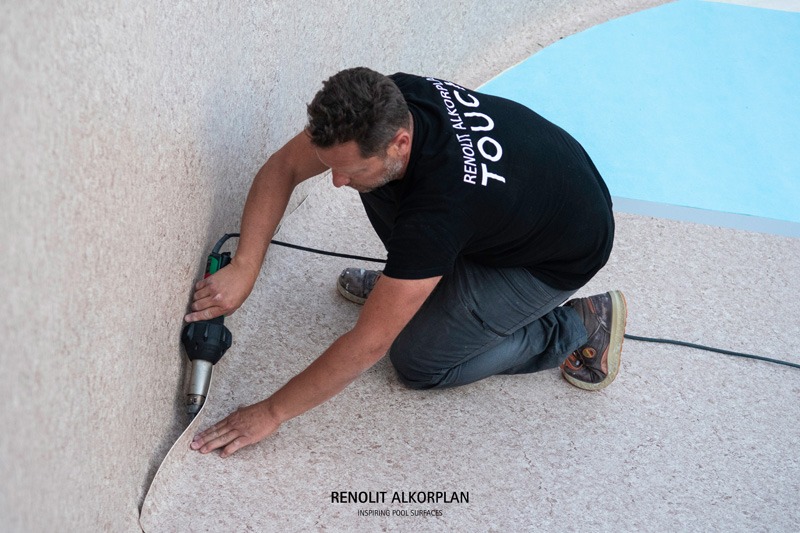
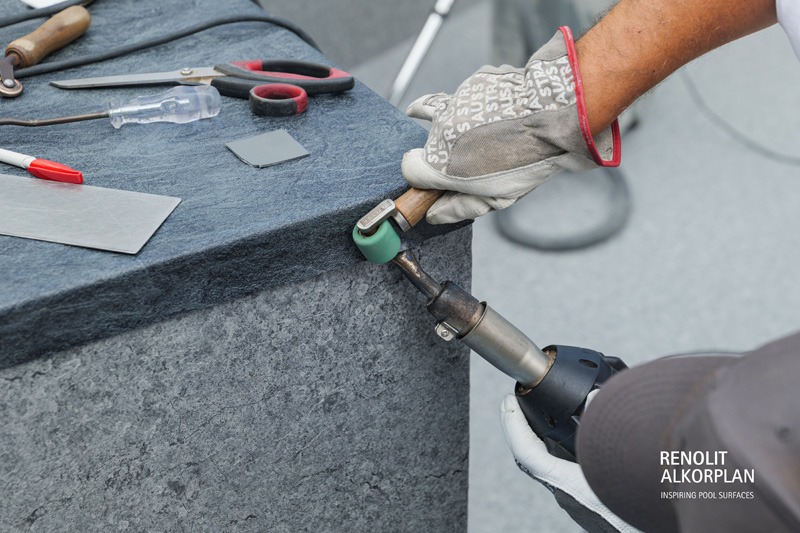
In this market, reinforced membrane systems are generally regarded as specialized interior systems rather than optional upgrades. Structured training programs, standardized detailing procedures, and clear expectations for substrate preparation and welding techniques support their installation. This focus on process control and installer training has helped establish consistent long-term results—an approach that is gradually gaining traction in North America.
Why reinforced PVC membranes are practical in renovations
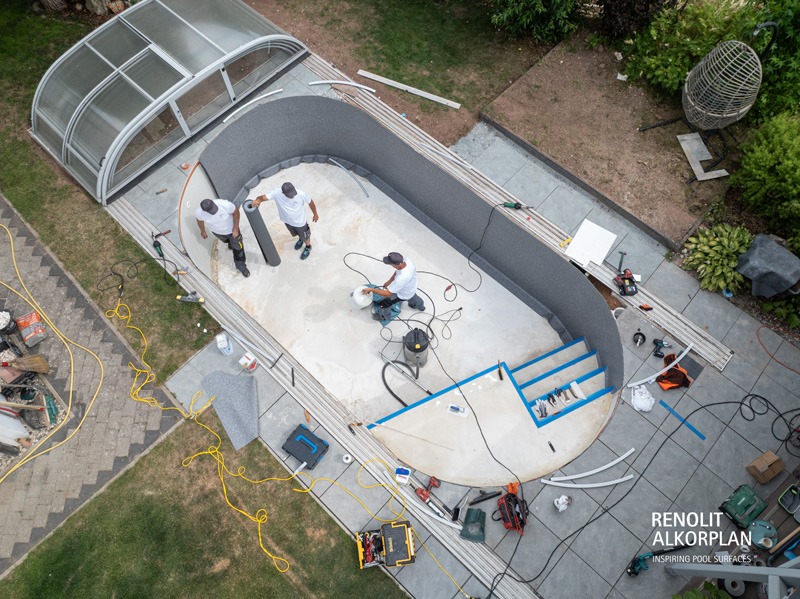
Reinforced PVC membranes are especially suitable for renovation projects because they serve as a complete interior system instead of just a coating applied directly to the shell. Installed over a prepared concrete substrate, the membrane forms an independent waterproofing layer that relies less on the condition of the existing surface.
From a practical perspective, this offers several benefits for renovations:
- The membrane can cover minor substrate imperfections that might otherwise show through rigid finishes.
- It accommodates small structural movements that often happen in older pools.
- It creates a continuous surface across walls, floors, steps, benches, and transitions.
Technical considerations when evaluating membrane systems
- Structural integrity of the existing shell
- Moisture conditions and preparation requirements for the surface
- Proper membrane-compatible fittings
- Geometry complexity (steps, benches, tight corners)
While membrane systems can better tolerate minor imperfections and limited structural movement compared to rigid finishes, any underlying structural issues must be resolved before installation. For homeowners who have experienced recurring plaster problems, this predictability is a key advantage. Instead of hoping the next finish will last longer, reinforced membranes provide clearly defined performance expectations and service life.
Where esthetics and performance come together
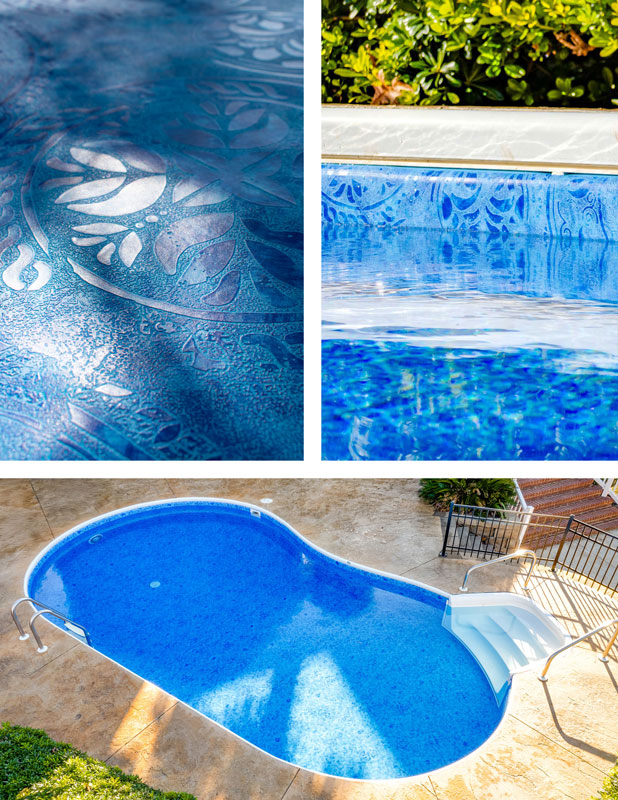
One of the most common misconceptions about performance-driven solutions is that they restrict design flexibility. In reality, modern reinforced PVC membranes offer a range of colours, patterns, and surface textures, enabling builders to achieve both visual enhancements and functional improvements during a renovation.
Interior finish replacement is frequently combined with wider esthetic upgrades, including:
- Cleaner, more modern visual styles
- Updated steps, benches, and tanning ledges
- Surfaces designed to be truly slip-resistant
Instead of viewing interior finishes as an afterthought, reinforced membrane systems can make them a deliberate element of the overall renovation plan. Builders can align the pool interior with surrounding decking, coping, and architectural features, thereby improving durability and safety.
St-Jean highlights that reinforced PVC membranes provide both high performance and a variety of esthetic choices that can enhance modern outdoor living areas.
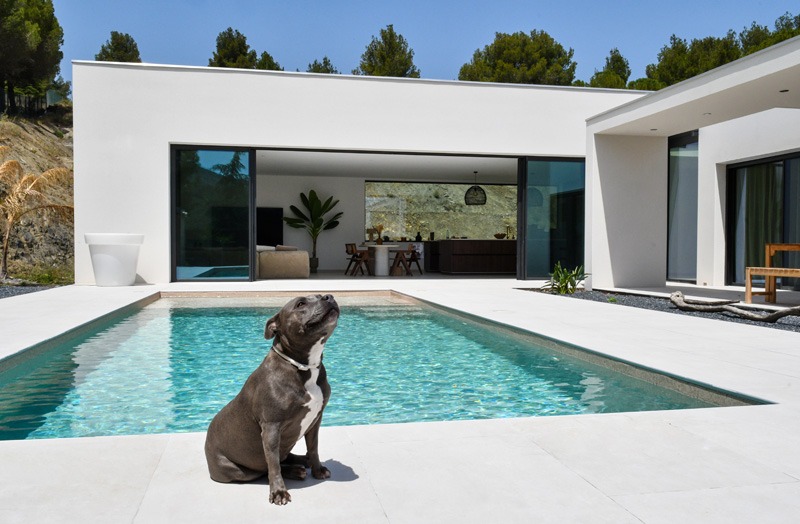
“Our company often handles turnkey projects and complete backyard renovations where the entire outdoor space is designed as a single environment,” says St-Jean. “We are seeing strong interest in darker, textured finishes that give the pool interior a natural stone appearance. These types of surfaces are being specified more frequently in both renovation projects and new pool builds.”
This ability to blend esthetics with performance reflects broader trends in residential renovation, where upgrades are increasingly expected to offer both visual appeal and lasting functionality.
| Lifecycle comparison of common interior finish approaches | |
| Traditional plaster refinish | Reinforced PVC membrane system |
| Longer renovation timelines | Faster installation, typically three to five days |
| Shorter service life | Longer service life |
| More frequent surface treatments or refinishing | Predictable maintenance requirements |
| Repeated disruption from future resurfacing | Fewer full-surface renovations over time |
Service and maintenance benefits that professionals appreciate
Beyond installation, reinforced PVC membranes can also impact long-term service considerations. Many service professionals value the predictability these systems provide for routine maintenance.
A reinforced membrane provides a uniform, non-porous surface, making water chemistry easier to stabilize than in aging plaster finishes that gradually erode and become more reactive over time. Fewer surface-related issues can lead to fewer callbacks, fewer complaints about staining or roughness, and clearer maintenance expectations for homeowners.
From a business perspective, this predictability can help service companies build stronger long-term relationships with their clients. When pool owners understand what to expect from their interior finish—and those expectations are consistently met—confidence and trust tend to grow.
Different interior finishes have distinct maintenance characteristics. Plaster surfaces are porous and chemically reactive, making them more susceptible to fluctuations in water balance and long-term etching. Vinyl liners are less chemically reactive but can still age or suffer physical damage. Fibreglass surfaces are non-porous but may oxidize or become dull over time. Reinforced membranes offer a uniform, non-porous surface designed for predictable maintenance routines, helping to reduce surface-related callbacks when properly installed and maintained.
Evaluating lifecycle cost when making renovation decisions
One of the most effective ways builders can position reinforced PVC membranes during renovation discussions is through lifecycle cost analysis. While the initial cost may be higher than a basic plaster refinish, the long-term economics can tell a different story.
Plaster refinishing often takes several days for preparation, application, and curing before the pool can be refilled and restarted. Vinyl liner replacement can be relatively quick when the underlying structure is sound, while fibreglass resurfacing timelines vary depending on the extent of repairs. Reinforced membrane installations are frequently scheduled within predictable three- to five-day installation windows.
When homeowners see a renovation as a long-term investment rather than a quick fix, the value becomes more apparent. Builders who take the time to explain the total cost of ownership—not just the initial price—position themselves as advisors instead of simple installers.
A new chapter in pool renovation
As the renovation market grows, interior finishes are becoming a crucial decision in any project. The industry is no longer limited to repeating past solutions. Today’s technologies enable builders and service professionals to deliver upgrades that enhance durability, safety, esthetics, and long-term performance.
Reinforced PVC membranes reflect this broader trend. They demonstrate an evolving method for evaluating pool interiors—moving away from traditional choices toward solutions based on engineering, installation expertise, and real-world performance.
Common misconceptions include:
- That membranes are merely “liners” instead of reinforced, welded interior systems
- That installation requires little or no specialized training
- That water chemistry management becomes irrelevant
For professionals willing to rethink how renovations are approached, interior finish replacement is no longer just a repair. It can be an opportunity to deliver a pool designed for the next generation of ownership—one that lasts, performs reliably, and maintains its appearance over time.
Installation practices also vary across interior finish systems. Concrete resurfacing and plaster application typically depend on regional subcontractor expertise and manufacturer training. Vinyl liner installation is often supported through distributor-led education and on-site apprenticeships. Specialized crews usually perform fibreglass repair and refinishing. Reinforced membrane systems, however, are commonly supported through manufacturer-led technical training programs that focus on substrate preparation, detailing, welding techniques, and quality control—highlighting the system-based nature of the installation.
As renovation activities continue to grow across North America, choosing interior finishes is shifting from tradition toward long-term performance. Builders and service professionals who understand the strengths and limitations of different interior finish systems—and can clearly communicate those differences to clients—will be better positioned to guide renovation decisions and deliver durable results.
Author

Tony Jordan has more than 35 years of experience in the manufacturing, sales, and application of polyvinyl chloride (PVC) reinforced pool membranes for commercial and residential use. He is the business development manager at RENOLIT and can be reached at tony.jordan@renolit.com. For more information, visit www.renolit-alkorplan.com.
Sign up for our newsletter
Get all the latest news and features from Pool & Spa Marketing. Submit your email below to get our twice-monthly newsletter.
Products
Read the Latest Issue