
Thinking beyond seasonal service: Building year-round revenue
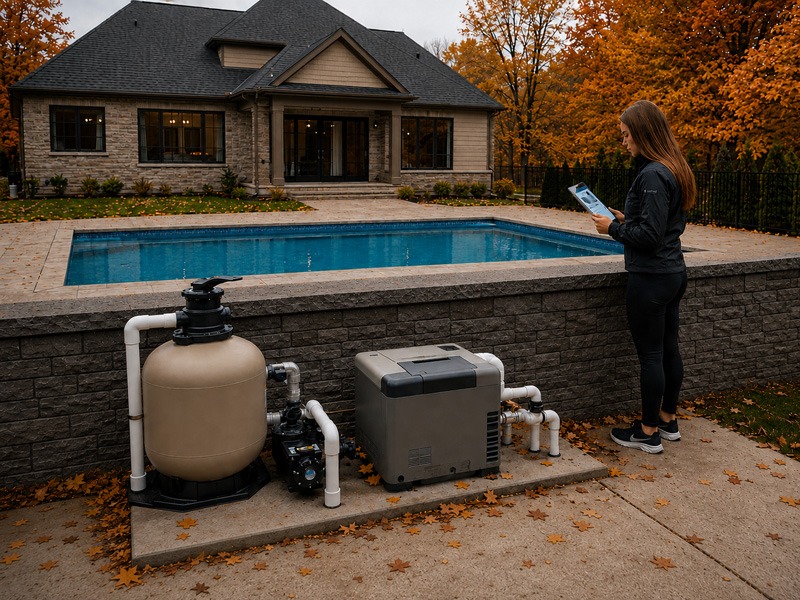
As the pool season transitions toward fall, many service businesses are already preparing for the busy closing rush. But if revenue models still rely heavily on openings and closings as their primary revenue drivers, businesses are likely riding a familiar rollercoaster—strong seasonal peaks followed by stretches where technicians have idle hours and cash flow becomes less predictable.
The most successful pool and spa service companies have solved this problem. They do not wait for the phone to ring; they have built systems that generate consistent monthly revenue year-round by turning one-time customers into long-term service relationships.
What does that look like in practice? Consider a pool store that shifted from primarily seasonal, one-time pool sales to building ongoing customer relationships.
The changes made include:
- Expanded recurring maintenance and repair services
- Created loyalty and membership programs
- Used water testing and customer data to drive repeat chemical purchases
- Expanded into equipment, parts, and other year-round pool needs.
The outcome is more than higher sales—it is a fundamentally different business model. Instead of relying solely on seasonal pool sales, the business generates revenue year-round. Pool dealers can achieve similar results by turning one-time customers into ongoing service customers through maintenance plans, chemical programs, equipment care, and annual opening and closing services.
When pool and spa service offerings focus only on openings and closings, the short-lived revenue spikes in the spring and fall are often followed by longer periods of low activity. Scheduling becomes unpredictable, inventory planning is harder, and customers may only hear from their dealer twice a year—making it easy for a competitor to step in.
Expanding into recurring, value-added services helps address all three challenges at once: stabilizing cash flow, keeping teams productive, and keeping the business top of mind with customers year-round.
Companies that introduce recurring maintenance plans often find their revenue becomes far more predictable, reducing their dependence on the seasonal highs of openings and closings.
Here are four simple ways to boost pool service revenue, no matter the season.
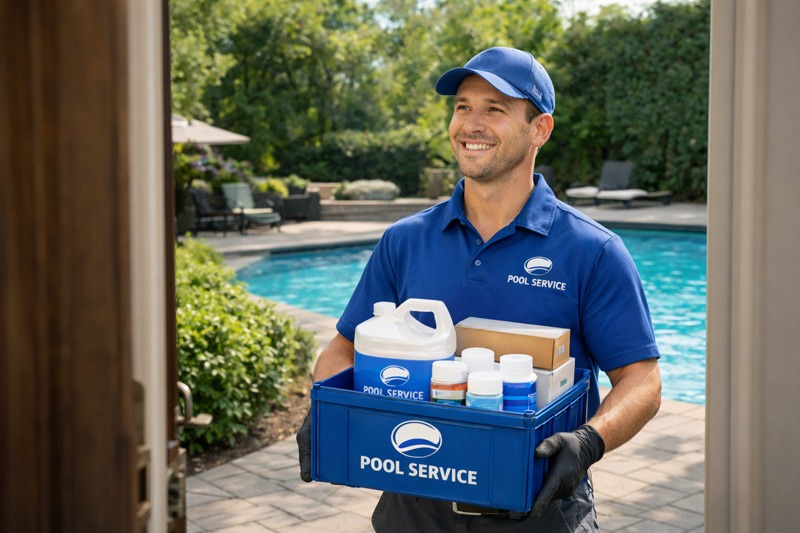
Turn chemicals into recurring revenue
Today’s pool owners expect convenience—and many are already buying their chemicals elsewhere simply because it is easier. A scheduled delivery program puts businesses in that role, generating predictable sales while ensuring customers use the right products for their specific water chemistry.
The success of scheduled delivery programs highlights a broader reality: customer expectations have changed. Pool owners increasingly expect convenience, and pool stores are adapting by making pool care easier, faster, and more digital.
- Online ordering and pickup: A habit formed during COVID-19 that has stuck. Customers want to order chemicals and parts online.
- Automatic replenishment: Subscription or recurring chemical programs help customers avoid running out of essential products.
- Digital water testing: Customers expect faster, more accurate water testing, with recommendations sent directly to their phones.
- Mobile communication: Text notifications for service appointments, water results, and order updates are becoming more common.
- One-stop service: Customers prefer a dealer who can handle everything—from water testing and chemical balancing to maintenance, repairs, and equipment replacement.
- Faster service: Customers expect quick responses, easy scheduling, and transparent pricing.
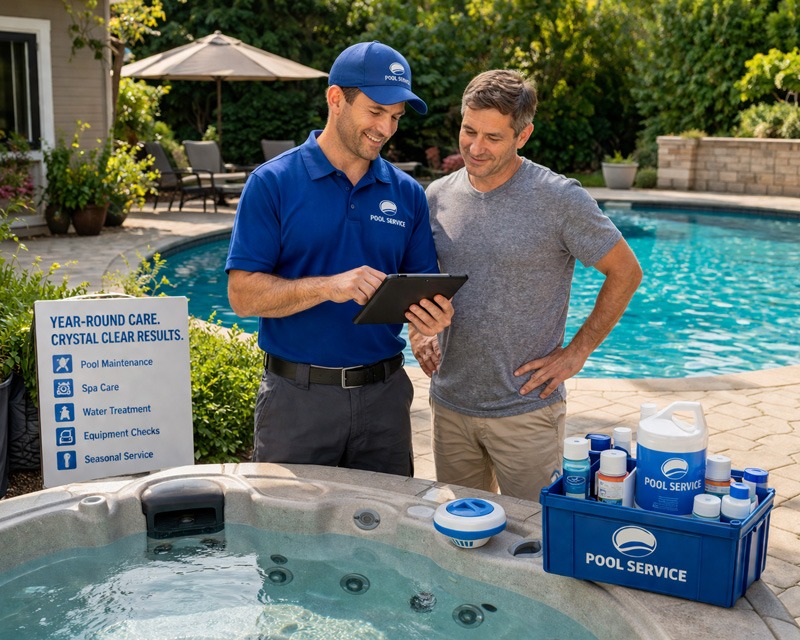
Weekly or monthly deliveries create a steady revenue cadence and a natural touchpoint that keeps a company highly visible between service visits. The right business management software can make this operationally simple by helping:
- Optimize technician routes to reduce drive time and fuel costs
- Track inventory levels and trigger automatic replenishment actions
- Automate billing so collections happen without manual follow-up
Adding a chemical delivery service not only increases recurring revenue but also strengthens customer loyalty. Since customers already purchase chemicals throughout the season, scheduled delivery makes that process more convenient while keeping the business connected with the customer.
Sell plans, not visits
A customer who calls once for a repair is worth something. A customer on a monthly maintenance plan is worth far more—and they are also far more likely to call first when something bigger breaks down.
Recurring plans—whether weekly cleanings, biweekly water checks, or monthly system inspections—provide businesses with predictable income and customers with the peace of mind that their investment is being properly cared for. Structured contracts also reduce the back-and-forth of scheduling as the appointment is already on the calendar.
Look for software that includes the ability to:
- Manage recurring appointments without having to manually reschedule
- Maintain a detailed service history for every customer account
- Set up automatic billing tied to each plan tier
The most common objections customers have to pool maintenance plans are that they can maintain the pool themselves, the service is too expensive, or they prefer to call when a problem occurs.
Successful companies overcome these objections by focusing on the value of convenience, preventive maintenance, and peace of mind rather than simply selling pool cleaning. They clearly explain what is included, offer flexible service options and tiered plans, break costs into predictable monthly payments, and demonstrate how regular service can prevent costly repairs and extend equipment life.
Many also build trust through electronic door hangers, before-and-after photos, transparent pricing, and clear communication.
Building a Year-round Revenue Model
| Instead of focusing on a single service, successful pool and spa businesses combine several recurring revenue streams to keep customers engaged year-round. The article identifies five key building blocks: |
| Recurring maintenance plans provide predictable income and reduce scheduling uncertainty. |
| Scheduled chemical delivery creates regular customer touchpoints while generating recurring sales. |
| Hot tub service programs extend service opportunities because hot tubs require year-round care. |
| Bundled service packages increase the perceived value of services while raising the average transaction size. |
| Seasonal upgrade work—such as safety cover installations, resurfacing, liner replacements, tile work, and lighting upgrades—helps keep technicians productive beyond opening and closing season. |
Build a service that goes beyond the basics
Hot tub owners are a particularly valuable segment—their equipment requires consistent care, and many do not fully understand what that entails. Between water chemistry management, filter maintenance, and seasonal tune-ups, there is meaningful service revenue available if it is easy to access.
The key is looking beyond the value of a single service call. Dealers may assume individual hot tub service calls are not worth the time and travel. However, because hot tubs are used year-round, they provide an excellent foundation for recurring service relationships.
Proactive education is a good starting point: a quick tip sheet, a seasonal reminder email, or a brief checklist at the point of service can position a team as the trusted expert. From there, bundled service packages covering a hot tub owner’s core needs for a flat monthly or seasonal rate simplify their decision-making and increase the likelihood they will commit. Hot tub customers typically want someone to handle everything for them, so offering quarterly tune-up packages that can provide pool pros with immediate revenue growth. Pool professionals who implement hot tub service programs often find customers appreciate having routine maintenance handled for them, creating another reliable source of recurring revenue.
The good news is that building a recurring hot tub service program does not have to be complicated. A typical quarterly hot tub service package might include three or four scheduled visits per year, with technicians performing a full water test and chemical balancing, filter inspection and cleaning, water-level checks, inspection of pumps, heaters, jets, and other equipment, and a general leak and safety check.
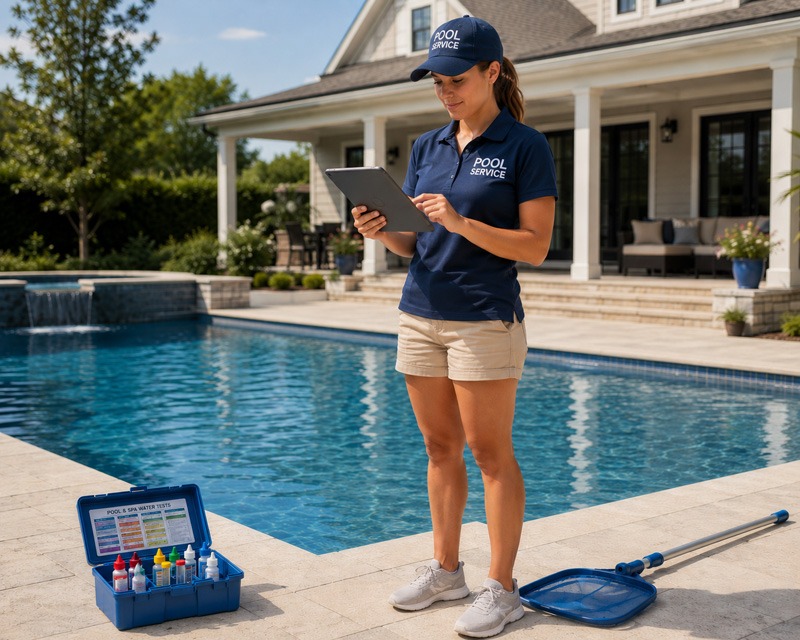
Sell more with bundled services
Bundling is one of the most effective options in a service business’s pricing toolkit—it reduces friction for customers, increases the perceived value of individual services, and raises the average transaction size without requiring additional sales effort.
Rather than selling individual services one at a time, dealers can package them into solutions tailored to different customer segments. For example:
- Premium concierge plan: Full-service weekly pool care, hot tub maintenance, opening and closing, chemical delivery, equipment monitoring, and discounted repairs. Target higher-income customers who value convenience.
- New pool owner package: Bundle the first year of maintenance, water chemistry education, opening and closing, and equipment orientation into the initial pool purchase. This helps convert new customers into long-term service customers from day one.
A “summer care package” combining chemical delivery, a mid-season inspection, and a filter cleaning is easier to say “yes” to than three separate line items. Customers appreciate the simplicity of having multiple maintenance needs addressed through a single, easy-to-understand package.
Good service management software can help identify which services customers are already pairing together, build those combinations into formal offerings, and track labour and parts costs to ensure the bundles remain profitable.
Keep revenue flowing year-round
Preparing for closing season does not have to mean looking ahead to another lengthy slowdown. With the right mix of recurring services, scheduled deliveries, and thoughtfully priced bundles, businesses can continue generating revenue well beyond the seasonal rush while strengthening customer relationships and maximizing technician utilization.
Maintaining year-round revenue also means identifying opportunities that naturally fit each season. While recurring service provides a steady income stream, fall is an ideal time for safety cover installations, resurfacing, liner replacements, tile work, and lighting upgrades that prepare customers for the following summer.
The shift is not complicated. It begins by giving customers a reason to stay engaged throughout the year. In turn, service revenue becomes more predictable, customer loyalty grows, and the business is better positioned for long-term success.
The key is to start small and build momentum. Over the next month, create one easy-to-understand package that bundles services such as opening, closing, water testing, priority service, and discounted repairs into a monthly fee. Then begin offering it to existing customers during the fall closing season as an easy way to enroll them for the following year.
Author

Rachael Pritz is the vice-president of RB Retail & Service Solutions. She has been active in the pool industry for more than 20 years, which has given her comprehensive expertise in the trade. Pritz worked at a local pool store while pursuing a master’s degree at the University of Pittsburgh. With her technical skills and industry knowledge, she joined the launch of RB Retail & Service Solutions in Pittsburgh in 2003. She can be reached at rachael@rbcontrolsystems.com.
Sign up for our newsletter
Get all the latest news and features from Pool & Spa Marketing. Submit your email below to get our twice-monthly newsletter.
Products
Read the Latest Issue