
Why augmented human intelligence is the pro channel’s advantage
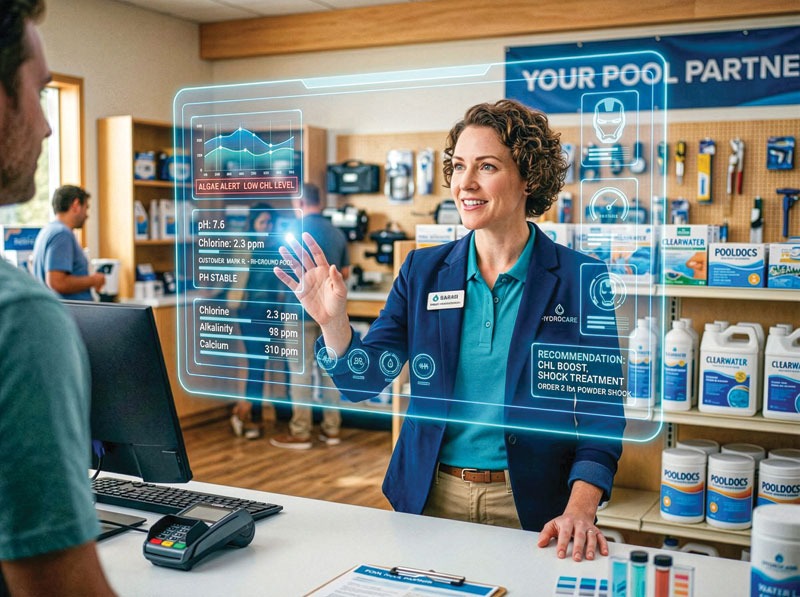
Tony Stark is not the strongest or fastest member of the Avengers, nor can he fly without his suit. What sets Iron Man apart is not raw power. Still, his decision-making is supported by an artificial intelligence (AI) system—J.A.R.V.I.S (Just a Really Very Intelligent System)—that enhances, rather than replaces, his judgment. The system analyzes information in real time, manages complex tasks, and provides immediate access to technical knowledge. The outcome remains driven by the individual—the technology extends capability, but the decision-making stays human.
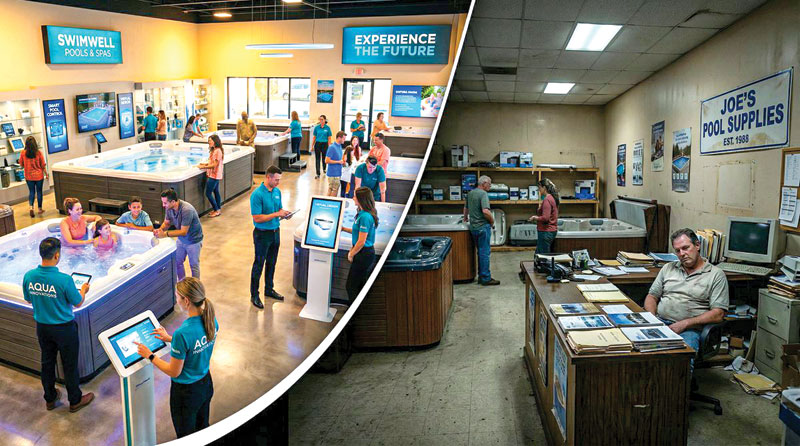
Strip away the Hollywood, and this is the most important business model shift of the next decade. Every independent backyard leisure dealer in the professional channel is about to face a choice between three futures.
Future 1: Replacement
AI replaces teams through automated chatbots, algorithmic scheduling, and commodity service. The dealer becomes a warehouse with a sign out front and an algorithm behind the counter.
Future 2: Augmentation
Similar to Iron Man’s suit, AI becomes the system that supports the team—elevating each technician, retail associate, and service advisor to perform at a higher level from the outset. Humans remain at the centre, and the technology amplifies what they can do.
Future 3: Complacency
This is the one nobody talks about at conferences because it is too uncomfortable to name. The dealer who decides this is all hype, that their customers value the handshake, a handwritten invoice, and the same phone number from the Yellow Pages. The dealer who faces tomorrow with yesterday’s tools, trusting that tradition will outlast transformation. No AI replacement. No AI augmentation. Just a slow, steady erosion of market share as tech-savvy competitors quietly overtake them. There is no dramatic implosion—just the gradual shrinking of the mailing list, the thinning of foot traffic, and the slow realization that their most loyal clients have slipped away, now reordering chlorine on a smartphone with free next-day delivery. The end does not arrive with a bang, but with the silence of missed opportunity.
The first future eliminates jobs, the second eliminates the knowledge gap, and the third eliminates the dealership slowly enough that business owners can pretend it is not happening.
The second future is described as augmented human intelligence (AHI), and for the professional channel, it may represent the most significant competitive advantage to emerge in a generation.

This is not a better search engine
It is important to address the biggest misconception first, because it is the one costing dealers the most. Most people who have tried AI tools, such as ChatGPT, Google’s Gemini, and/or Microsoft Copilot, treat them like a more conversational Google search. Ask a question; get an answer and move on. In this case, AI is mildly impressive and moderately useful, but a novelty that wears off. If this is a dealer’s experience of AI, they have only seen a fraction of its potential.
The data on this is significant. According to Microsoft’s 2025 Work Trend Index, 75 per cent of knowledge workers now report using AI, nearly double the rate from just six months prior. More importantly, 60 per cent of those workers say they lack the skills to use AI effectively. Three-quarters of the workforce has the tool, but fewer than half understand what it can actually do.
Consider this in terms of competitive advantage. If a dealer and four competitors all have access to the same AI technology—but only one has learned to use it beyond the basics—they are operating with capabilities the others do not yet recognize. At that point, the competition is no longer on equal footing.
“Any sufficiently advanced technology is indistinguishable from magic,” science fiction writer Arthur C. Clarke wrote in 1973. In a dealership setting, that can look like a second-year associate diagnosing complex water chemistry issues, such as chloramine lock, organic contamination, and falling pH, etc., with the diagnostic precision of a 30-year veteran. To the customer at the counter, the difference is difficult to distinguish.
It is not magic or simply a search tool. It represents a fundamentally different way of working, where the human provides judgment, empathy, and accountability. In contrast, the AI provides pattern recognition, recall, and computational speed at a scale no individual can match.
Returning to the Iron Man analogy: the suit does not make Tony Stark less important; it enhances his ability to perform at a higher level. That is the promise of AHI—not for superheroes, but for pool technicians, retail associates, and dealership owners looking to compete more effectively, regardless of scale.
The early adopter window is closing
The strategic implication is significant. A Harvard Business School study of 758 management consultants at Boston Consulting Group found those using AI completed tasks 25 per cent faster and produced results 40 per cent higher in quality. Junior consultants—the least experienced—saw a 43 per cent improvement in performance, representing a substantial gain in capability at the entry level.
Applied to a dealership setting, the impact is clear. A new retail hire or junior technician—typically requiring months to reach basic competence—could operate at a significantly higher level early on with the right tools and training. This is not simply a productivity gain; it represents a structural competitive advantage. At present, few in the backyard leisure industry are operating at this level.
The same Harvard study identified two effective approaches to AI use: “centaur” and “cyborg” models. In the centaur approach, workers divide tasks strategically—relying on AI for speed and analysis while retaining human judgment for decision-making. In the cyborg approach, AI is fully integrated into the workflow, with continuous collaboration between the individual and the technology.
Both approaches proved effective. A third approach did not: accepting AI output without review. In those cases, the study found performance was 19 per cent lower than for workers who did not use AI at all.
The distinction is clear. AHI is not about handing off decisions to technology, but using it to support them. The individual remains responsible for judgment, while the system contributes speed, analysis, and recall. As with Iron Man, the technology supports the decision-making—it does not replace it.
The exponential gap
AI capability is advancing at an accelerating pace, with improvements compounding over time rather than progressing in a straight line. What the technology can do today is already significantly ahead of where it was just months ago, and that rate of change continues.
This is contributing to a widening gap between early adopters and those slower to respond. Microsoft’s Work Trend Index refers to early adopters as “frontier firms” organizations restructuring around AI-human hybrid supported teams. Among these firms, 90 per cent of AI power users report more manageable workloads, and 85 per cent begin their day using AI tools.
The impact is also reflected in workforce outcomes. Employees who have developed AI proficiency are seeing measurable gains in value, with wage premiums increasing from 25 per cent to 56 per cent within a year. The market is increasingly recognizing AI fluency as a critical skill, reinforcing an exponential gap in which early adopters advance while traditional dealerships fall behind.
For dealerships, the window remains open. Adoption across the industry is still limited, meaning those who move now are not gaining a marginal advantage, but a structural one. In an environment where capabilities are advancing rapidly, those advantages can compound over time.
Flip the script: The human is the hero
The dominant narrative around AI is often built on a single assumption: that its primary value lies in replacing human labour. Much of the discussion around automation, efficiency gains, and job displacement reflects this perspective.
In commodity industries, that premise applies—particularly where work is repetitive and cost-driven. However, the backyard leisure market operates differently; it is not a commodity industry, or at least it should not be. The professional channel is built on expertise, relationships, and accountability. The reason independent dealers exist alongside Home Depot and Amazon is that expertise has value. These businesses continue to differentiate themselves by offering informed guidance, service continuity, a level of trust that extends beyond the transaction, and the value of being able to look a homeowner in the eye and say, “If this does not work, I’ll fix it.”
Viewed through that lens, the question shifts. It is not how to replace people with AI, but how to use these tools to enhance their capabilities and strengthen the value they deliver.
This is where the script flips, and AHI emerges as an approach that combines human judgment with technological support to improve performance, consistency, and service outcomes.
Three principles of augmented human intelligence
- The human remains central. AI provides data, recommendations, and pattern recognition, while the individual brings judgment, empathy, and accountability. In a retail setting, the associate determines how to respond to a customer, while AI can provide technical guidance in real time. Trust remains with the individual.
- Knowledge compounds, not retires. When experienced technicians retire, decades of diagnostic knowledge often leave with them. AHI captures that expertise and makes it accessible across the team. Rather than being lost, that knowledge can be retained and built upon, with each diagnosis, solution, and insight contributing to a growing base of institutional experience.
- The competitive advantage is human, not technical. Large retailers can adopt the same software and tools, but they cannot replicate team-specific expertise or localized knowledge. Independent dealers differentiate themselves through experience grounded in their market, their customers, and their day-to-day operations. AI can support and extend that expertise, but it does not replace it.
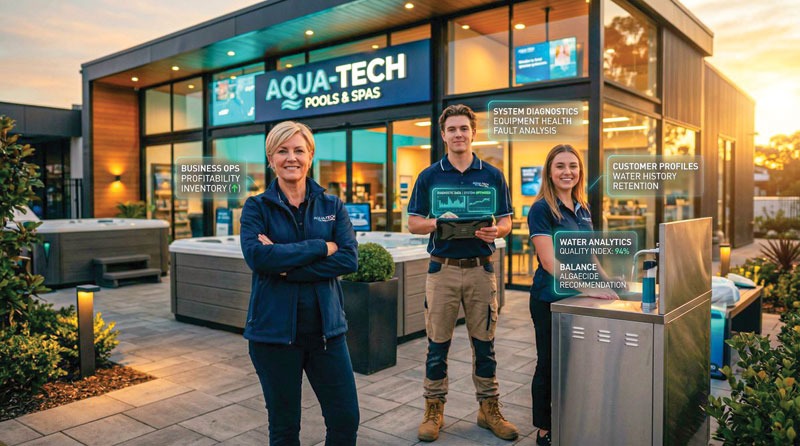
The AHI team: owner, technician, and retail associate—each supported by AI, each responsible for delivering value within their role.
The risk of standing still
It is important to consider the opposing view. Some dealer owners may question the relevance of AI, noting that their businesses have operated successfully without it and that customers continue to value personal service. There is also a degree of caution shaped by experience.
That perspective reflects practical experience, not resistance. Dealers have seen technologies introduced with high expectations that did not deliver long-term value—tools that went underused, platforms that prioritized reporting over customer needs, and training initiatives tied to systems that quickly became outdated.
What is different in this cycle is the pace of adoption. Competitors are already integrating AI into their operations. Mobile service companies are using it to optimize routing, automate communication, and streamline routine service calls. Large retailers are applying AI to scale recommendations based on purchasing patterns, rather than relying solely on technical expertise. Amazon’s algorithm does not need to understand water chemistry; it just needs to know what other pool owners with the same postal code purchased.
At the same time, staff are increasingly turning to general-purpose AI tools in the field. In areas such as water chemistry, these tools can provide broad guidance, but they are not tailored to specific products, regional conditions, or established service protocols. In some cases, that lack of context can lead to inaccurate or incomplete recommendations.
The issue is not whether AI will enter the business—it already has. The more important question is whether it is adopted in a way that reflects a dealer’s expertise, product knowledge, and service standards, or remains a generic tool with limited alignment with the operation.
Research such as the Harvard study reinforces this distinction. Workers who rely on AI output without verification can perform worse than those who do not use it at all. In a specialized field, the use of unconfigured tools can introduce risk rather than reduce it. For dealerships, the priority is not simply adoption, but ensuring that AI is applied in a controlled and informed way that supports, rather than undermines, service quality.
Four skills to building an ‘Iron Man’ advantage across teams
Becoming an intelligent dealership does not require a computer science degree, specialized technical training, or dedicated IT roles. It requires the existing team to develop a set of practical skills closer to effective communication arts and problem definition than to engineering.
In practice, the value lies in clearly identifying what is needed and communicating that effectively to the system. As with Iron Man, the advantage comes not from understanding the underlying technology, but from applying domain knowledge—whether in water chemistry, equipment, or customer service—in a way that allows the technology to support decision-making at a higher level.
Skill 1: Choosing the tools (paid versus free)
This is a foundational decision that is often misunderstood at the dealership level.
Entry-level AI tools, such as free versions of ChatGPT, Gemini, or Copilot, demonstrate the potential of the technology, but they are limited in capability. They typically rely on less advanced models, have usage constraints, and do not retain information between sessions. They also do not offer the same level of data control, meaning inputs may be used to improve broader models. As a result, each interaction begins without context, limiting their effectiveness in a service environment.
Paid AI tools, typically ranging from $15 to $30 per user per month, operate at a more advanced level. They offer improved response speed, greater context capacity, stronger reasoning capabilities, and more consistent data handling. They also support persistent configurations, enabling the system to retain information about products, processes, and terminology over time.
From an operational standpoint, the cost is modest relative to typical service revenue. For most dealerships, the investment is less than the value of a single service call per month, making the return measurable in practical terms.
Skill 2: Prompt engineering
Prompt engineering is the skill of communicating effectively with AI, much as an experienced manager provides direction to a new employee with clarity, context, and specificity.
The difference is reflected in the outcome. The “Google approach”—a general query such as “my pool is cloudy, what do I do?”—typically yields broad, nonspecific guidance. The result is generic advice that may apply in principle but lacks the detail needed for a specific situation.
By contrast, the “Iron Man” approach reflects how experienced technicians think: “I’m a pool technician in Calgary. The customer’s 40,000-L (10,566-gal) vinyl-lined pool has been cloudy for three days after a heavy rainstorm. Total chlorine reads 5 parts per million (ppm), free chlorine reads 0.5 ppm, and the pH is 7.8. Last treatment was a calcium hypochlorite (cal hypo) shock four days ago. The diatomaceous earth (DE) filter was last backwashed two days ago. What’s the most likely cause, and what’s the correct treatment sequence using the dealer’s product line?”
The result is a specific, actionable diagnosis—combined chloramine problem with organic contamination from storm runoff—along with a product-specific treatment sequence, dosing calculations, and an expected timeline to resolution.
The underlying technology is the same. The difference lies entirely in a person’s skill at communicating what they need. That is the gap between searching and collaborating, between using AI as a search engine and using AI as a thought partner.
Experienced technicians already think in structured, contextual ways. Developing prompt engineering skills across the team makes that instinctive expertise explicit, transferable, and scalable.
Skill 3: Concept engineering
This is where AI moves beyond a general-purpose tool and begins to support competitive differentiation. Generic AI can define terms such as “algae.” Still, it does not account for how those issues manifest in a specific market, how customers commonly misunderstand them, or how they relate to a specific phosphate removal system that the dealership offers, but its competitors do not. It also lacks the context to interpret how customers describe problems in practice—for example, “my pool keeps turning green” may indicate an underlying issue rather than a surface condition.
Concept engineering is the practice of teaching AI to think within the dealership’s domain knowledge. It involves defining the concepts, relationships, and decision frameworks that underpin day-to-day expertise, and structuring them so the system can apply that knowledge consistently in real time.
As with Iron Man, the advantage comes from how the system is informed. The technology becomes more effective when it reflects specific operational knowledge—whether related to equipment, chemistry, or customer scenarios—rather than relying solely on general information.
In this context, a dealership that has concept-engineered its AI tools has cloned its best person’s decision-making framework and made it available to every team member. AI does not replace expertise; it extends it. When properly configured, it allows experienced decision-making approaches to be applied more consistently across the team, supporting performance and service quality at every interaction.
Skill 4: The context window
This is a common limitation that many AI users do not initially recognize—and it helps explain why results can appear inconsistent.
AI systems operate within a defined “context window,” which determines how much information they can retain during a conversation. It can be understood as the system’s working memory. Entry-level tools typically handle a smaller volume of information, while more advanced versions offer significantly greater capacity.
When a conversation exceeds that limit, earlier information may be dropped to make room for new input. As a result, the system can lose important context, affecting the accuracy and consistency of its responses. For general tasks, such as drafting or summarizing, this may have minimal impact. In technical applications—such as diagnosing equipment issues or performing multi-step treatment processes—maintaining context is critical to reliable outcomes.
Managing this effectively involves practical habits: knowing when to begin a new interaction, clearly defining key details at the outset, and reinforcing important information as needed. As teams become more familiar with these practices, consistency improves and the technology becomes more dependable in day-to-day use.
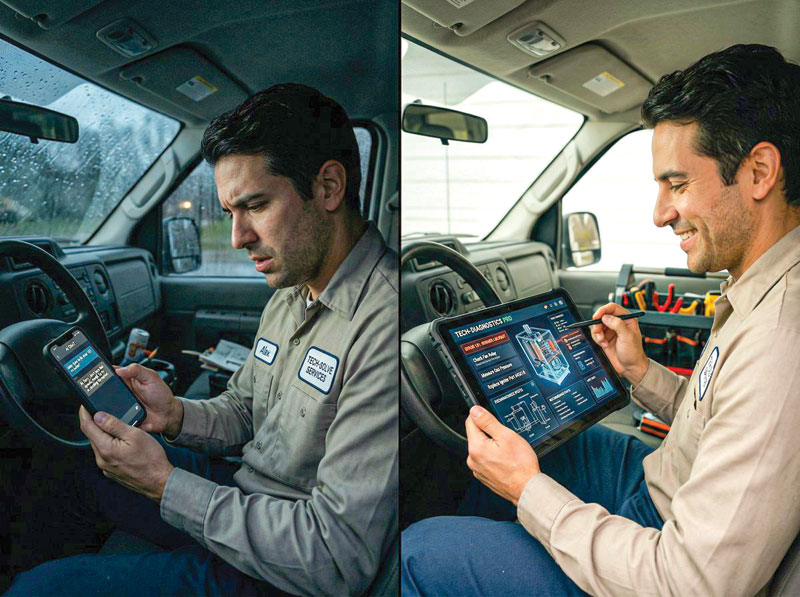
The intelligent dealership: A day in the suit
Here is what an AHI-equipped dealership can look like in practice.
Sarah has been on the retail floor for eight months. Before AHI, a customer presenting with a complex water chemistry cascade—high combined chlorine, falling pH, and persistent cloudiness after a storm—would have required calling Robert, the store’s senior technician. Robert retired in November. Under the previous model, Sarah may have needed to say, “Let me have someone follow up with you,” which would have delayed the interaction and potentially lost the customer to another retailer.
Under the AHI model, Sarah opens her AI assistant—her equivalent of J.A.R.V.I.S—and provides the relevant details: water volume, test results, filter type, recent treatments, and regional water source. Within seconds, she receives a diagnosis aligned with what an experienced technician would provide, along with a product-specific treatment sequence, dosing guidance, and follow-up protocol. She walks the customer through the solution with confidence and schedules a follow-up water test for Thursday.
The customer leaves with the product, with confidence, and with a reason to return on Thursday. They also leave with a story about the dealership where a relatively new associate diagnosed the issue in minutes.
To that customer, Sarah presents with the confidence of a seasoned technician. This is not a replacement of expertise, it is an example of augmentation. Sarah brings interpersonal skills, empathy, and trust that technology cannot replicate. What she lacks in experience is supported by AI-driven pattern recognition. The individual remains responsible for the interaction; the system supports the outcome.
Sarah is not using AI as a search tool. She is not entering a general query reviewing broad results. She is working with a system informed by her domain, her products, and her regional conditions. The interaction is collaborative rather than transactional. That is the distinction, and that is AHI.
Sarah diagnoses a complex water chemistry cascade with AI-supported confidence—the customer sees a 10-year veteran.
“We do not build systems that know instead of people. We build systems that know because of people.” This is the AHI principle.
This approach is already applied in practice. Platforms built on this model are in use across Canadian dealerships and are designed to support industries where expertise and applied knowledge are central to performance. The technology is available, the methodology is established, and adoption remains in its early stages.
The remaining factor is whether dealerships choose to implement it.
What comes next
The backyard leisure industry is facing a knowledge gap. As experienced tradespeople retire, fewer new entrants are stepping in to replace them, creating pressure on training and knowledge transfer.
However, that expertise need not be lost. With the right approach, it can be captured, structured, and made accessible across the team at key points in the customer interaction.
This is not a shift toward replacing people with technology. It is an approach that uses AI to support and extend human capability, helping teams deliver more consistent, informed, and confident outcomes.
In this model, the dealership becomes the environment where that capability is applied in practice. The future of AI is human.
Author’s note: This article is the first in a four-part series. Part 2, Becoming AI-Fluent, focuses on practical strategies for prompting and context management. Part 3, The AHI Dealership in Action, examines seven real-world use cases across dealership operations. Part 4, Sage, Rocky, and the Knowledge Harvest, explores tools designed to support knowledge retention and long-term competitiveness.
Author

Dennis Gray is president of Backyard Brands Inc., supporting independent Canadian pool and spa dealers across a national network. He has more than 40 years of experience developing and marketing advanced water-care technologies. He is the architect of the Augmented Human Intelligence (AHI) platform, currently deployed across more than 260 dealerships.
Sign up for our newsletter
Get all the latest news and features from Pool & Spa Marketing. Submit your email below to get our twice-monthly newsletter.
Products

Read the Latest Issue