
Tech is the new service: Digital tools are reshaping how retailers compete

In an industry where trust, expertise, and personalized service are crucial, pool and spa retailers maintain a distinct advantage over big-box competitors. In today’s digital-first environment, however, customers increasingly expect a seamless experience—whether browsing a website for chemicals, visiting a store for water testing, scheduling service, or checking inventory for immediate pickup. This is where today’s modern retail technology can help ensure these businesses continue to maintain their competitive advantage.
How AI enhances pool and spa retail experiences
Artificial intelligence (AI) has the potential to enhance both online and in-store customer experiences through instant, personalized support. AI-powered chatbots can manage routine inquiries, such as store hours, water test results, or service scheduling, reducing wait times and allowing staff to focus on high-value, face-to-face interactions. In pool and spa retail, these tools could even guide customers through common troubleshooting questions, such as cloudy water, and suggest suitable treatment options available in-store.
While broad adoption is still emerging, signs of AI-driven personalization are already visible. Industry-wide, retailers are beginning to integrate automated water testing systems that instantly generate chemical recommendations linked to in-store inventory or point-of-sale data. Others are beginning to incorporate intelligent product suggestions within their e-commerce platforms to refine the checkout experience.
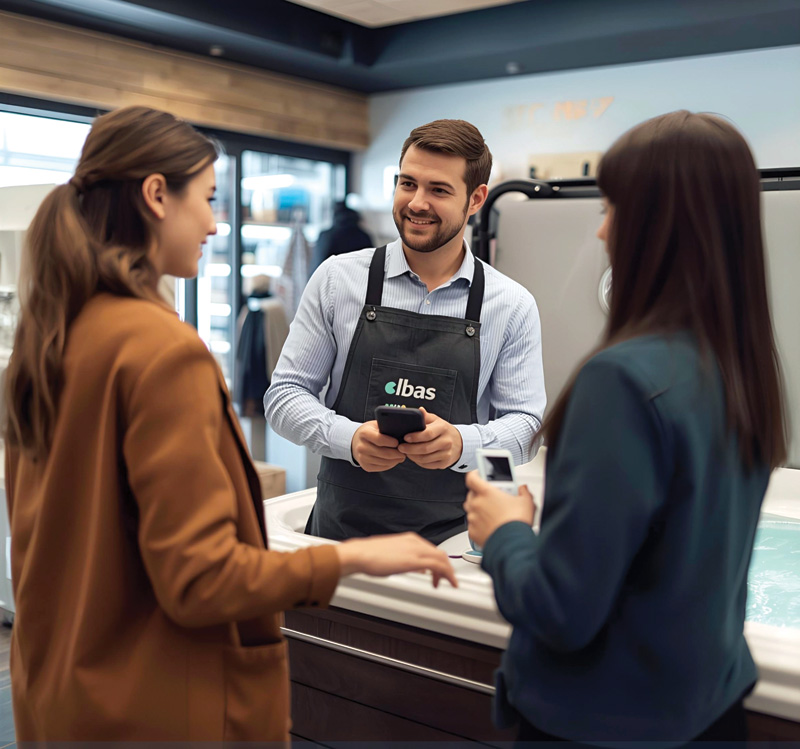
The rapid evolution of retail expectations and technology has made it essential for pool and spa retailers to meet customers wherever they are. Fortunately, today’s digital tools empower these businesses to stay ahead of competitors and thrive. From mobile point-of-sale (POS) systems to real-time inventory access, customer data management, instant communication tools, and seamless payments, such technology enables pool and spa businesses to adapt while gaining efficiency, customer loyalty, and profitability.
AI-based analytics can help pool and spa retailers move beyond manual forecasting by analyzing multiple data sources, such as historical sales, service schedules, weather patterns, and even water testing trends, to more accurately predict product demand. For instance, when forecasts indicate a hot, dry summer, predictive systems could anticipate increased sales of stabilizers, algaecides, and replacement parts. These insights help businesses optimize inventory, preventing stockouts during peak season while reducing excess inventory in slower months.
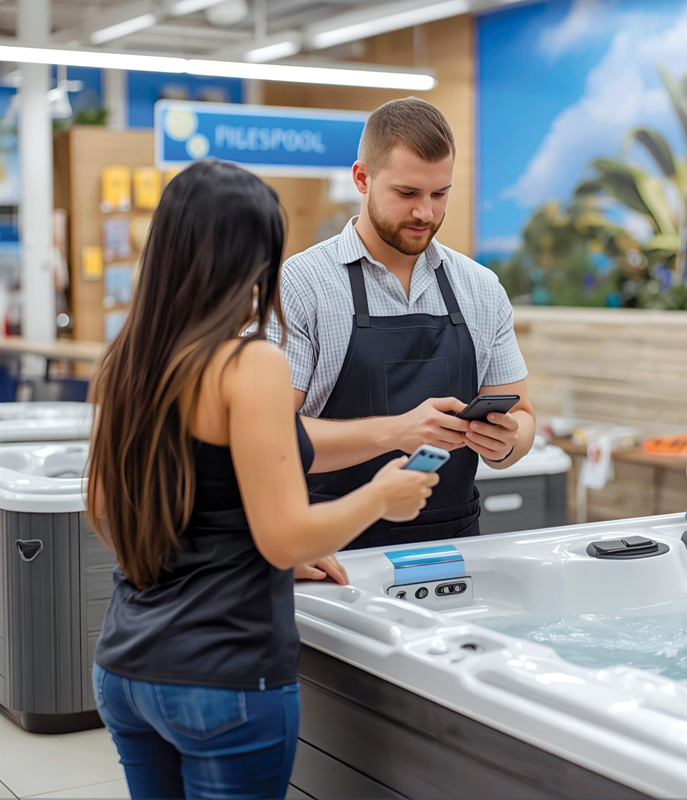
The rise of mobile point-of-sale and service
Mobile POS has become a game-changing tool for specialty retailers. It enables staff to process sales from anywhere within or outside the store—an advantage in a busy, seasonal industry. This technology eliminates checkout lines, providing customers with the fast and flexible service they expect. Staff can answer questions, recommend products, check inventory, complete sales, and email receipts without leaving the customer’s side. With real-time access to customer data, employees can also make informed product suggestions on the spot. Mobile POS provides speed, information, and convenience to create the best possible in-store experience.
Personalizing promotions and outreach
Within the retail sector, AI-enhanced POS systems can take personalization even further by tailoring promotions and product suggestions based on purchase history and timing. Rather than sending generic promotions, retailers can segment customers intelligently, for example, reminding a spa owner to replace filter cartridges at the typical six-month interval. This level of personalization supports convenience and encourages repeat purchases through timely, relevant engagement.
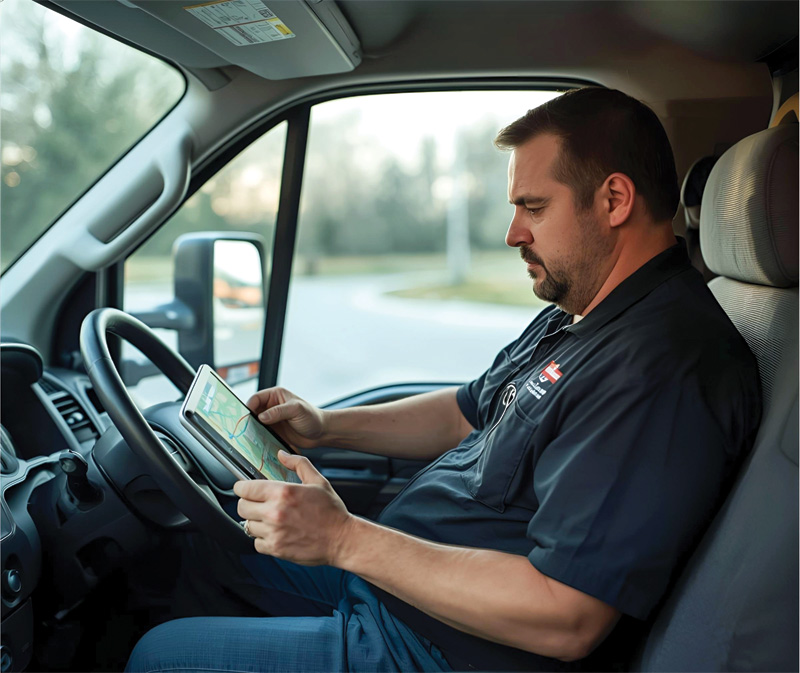
Mobile service technology also supports technicians in the field while saving valuable time in the office. Service staff can easily view scheduled jobs, customer information, equipment profiles, notes, directions, and stored photos. With instant updates between the office and the field, technicians can record water test results, process payments on-site, track truck inventory, and complete physical counts directly from a phone or tablet. The system can even generate electronic service reports, complete with before-and-after photos and test results, for customers. Integrated software ensures that all service and customer information is updated and accessible at any time, from anywhere.
AI could also streamline water testing interpretation, transforming raw readings into actionable insights. While modern testing equipment already provides detailed data on chlorine, pH, alkalinity, and stabilizer levels, AI could instantly analyze results, flag anomalies, and recommend corrective actions. For instance, if chlorine levels consistently drop faster than expected, predictive logic could suggest checking for phosphates or higher bather loads, helping technicians make faster, more accurate recommendations.

Maximizing access to everything, from anywhere
For business owners, having instant access to operational information at any time and from any location provides full visibility into daily activities. This same visibility is also essential for staff, enabling them to deliver superior service. Retail and service teams need data on the go to work efficiently and support customers effectively. With remote access, staff can review customer and service history, manage calls and inquiries in the field, and instantly retrieve warranty or purchase records, whether in-store or on-site. Accessing everything from anywhere makes it easier to create a better experience for both customers and employees.
AI-powered monitoring tools could help anticipate service needs before problems arise. By analyzing data from connected equipment or historical service logs, predictive algorithms could identify early signs of wear or inefficiency, for example, detecting a pump drawing higher amperage than normal and alerting staff to recommend maintenance before failure occurs. This proactive approach enhances customer satisfaction and reduces costly downtime.
Communication tools that meet modern expectations
Outdated communication methods are being rapidly replaced by digital tools that meet customer expectations for fast and mobile-friendly interaction. Integrated communication systems within business software help streamline and professionalize these exchanges by offering:
- Text messaging to provide real-time updates and reminders for customers and staff
- Digital contracts and waivers for efficient, paperless agreements
- Email receipts and contracts for professional, streamlined documentation
By adopting modern digital communication tools, businesses can track interactions across staff and channels in one centralized location, enhancing professionalism, improving efficiency, and fostering customer trust.
AI-driven communication tools are poised to elevate customer interaction across channels. Intelligent chatbots, accessible through websites or text messaging, can instantly respond to frequently asked questions such as, “Why is my pool cloudy?” or “When should I schedule my next service?” These systems help customers find quick answers while reducing staff workload.
By integrating AI into customer communication, retailers can automate routine messaging, deliver timely updates, and even analyze tone and sentiment to identify satisfaction trends. This enhances responsiveness, consistency, and trust, key elements in building long-term relationships.
Seamless payments: Electronic funds transfer, cards on file, and more
Similar to other digital tools, seamless payment options have become a standard expectation for fast, secure, and repeat-friendly transactions in today’s business environment. Customers now expect flexible digital payment methods, and specialty retailers and service providers are increasingly using them to simplify billing and accelerate cash flow. These tools can:
- Store electronic funds transfer (EFT) and credit card information securely
- Automate recurring billing for services
- Process payments in the field via mobile devices
By adopting modern payment solutions, businesses can reduce administrative time, minimize overdue balances, and eliminate the need to chase checks or phone calls—streamlining billing while lightening workloads for everyone.
New tech enables omnichannel marketing and why it matters
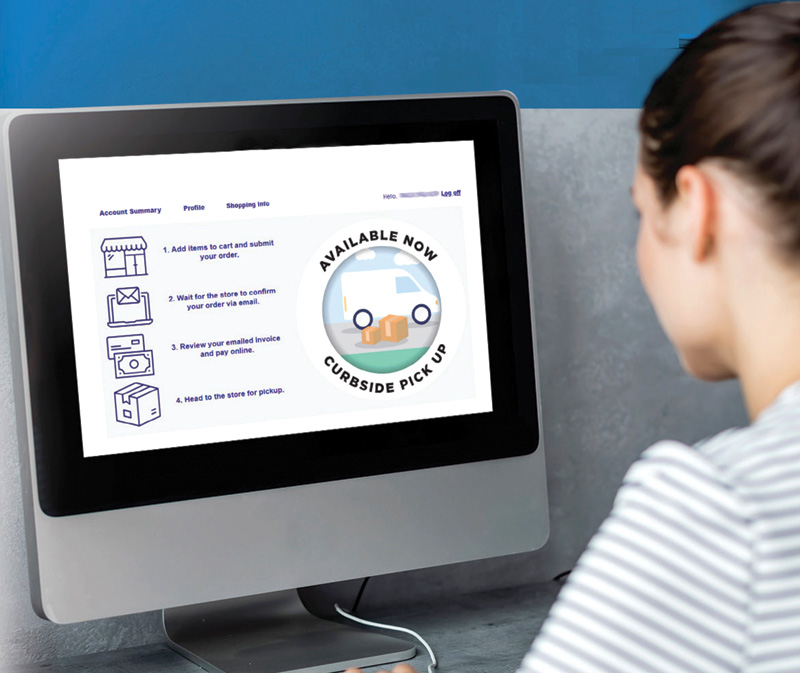
The business world is embracing the concept of omnichannel marketing, and it is especially relevant for pool and spa businesses. Omnichannel marketing is the practice of creating a unified customer experience across all touchpoints: store, website, email, social media, phone calls, and even text messages. Unlike multichannel marketing, which simply involves being present on multiple platforms, omnichannel marketing integrates these platforms so that customers enjoy a consistent, personalized experience at every step.
Automating ad targeting for local markets
AI is also reshaping how omnichannel marketing strategies reach customers. Instead of relying on broad, generalized campaigns, AI can help optimize ad targeting through data-driven insights. Local geo-targeting ensures promotional messages reach homeowners within a service area who have shown interest in pools, spas, or outdoor living products. Seasonal timing allows campaigns to adjust automatically, for instance, increasing visibility during spring pool openings or fall spa cover promotions. Behaviour-based targeting further refines engagement, allowing follow-up offers to align with demonstrated customer interest. Together, these applications improve marketing efficiency and return on investment (ROI).
This matters because pool and spa customers are not impulse buyers; they research, compare, and often require follow-up support. Whether investing in a hot tub or maintaining pool chemistry, they expect both convenience and expertise, online and in person. As a result, omnichannel marketing is no longer optional. Customers demand a consistent experience across every interaction, making it a top priority moving into 2026.
Here is how omnichannel marketing helps pool and spa businesses:
- Build trust and repeat business through consistent, helpful communication
- Increase sales by making it easy to buy online, schedule service, or check inventory
- Capture more local leads through Google, social media, and email
- Stand out from large competitors that lack personalized service
The digital future of retail is already here. Businesses that adapt are better positioned to gain efficiency, strengthen customer loyalty, and improve profitability. Integrated digital tools now play a key role in unifying operations, streamlining service, and delivering consistent customer experiences. For pool and spa businesses, embracing these technologies is not simply about keeping pace with change; it is about ensuring long-term competitiveness in a rapidly evolving market.
AI represents the next stage in digital transformation for the pool and spa industry. What began as simple automation and e-commerce integration is evolving into predictive, adaptive, and hyper-personalized customer engagement. In the near future, AI will not only accelerate transactions and improve marketing precision but also anticipate needs, automate complex decisions such as service scheduling or warranty processing, and deliver tailored water-care or maintenance reminders at scale.
For independent retailers, this emerging technology offers the opportunity to compete effectively with large online and national competitors, while maintaining the personalized expertise, local trust, and human connection that define the industry’s greatest strengths.
Author

Rachael Pritz has been active in the pool industry for more than 20 years, which has provided her with all-encompassing expertise in the trade. She worked at a local pool store while pursuing a master’s degree at the University of Pittsburgh, Pa. With her technical skills and industry knowledge, she joined the launch of RB Retail & Service Solutions in Pittsburgh in 2003. She can be reached at rachael@rbcontrolsystems.com.
Sign up for our newsletter
Get all the latest news and features from Pool & Spa Marketing. Submit your email below to get our twice-monthly newsletter.
Products



Read the Latest Issue