
How proactive maintenance prevents costly mid-season closures
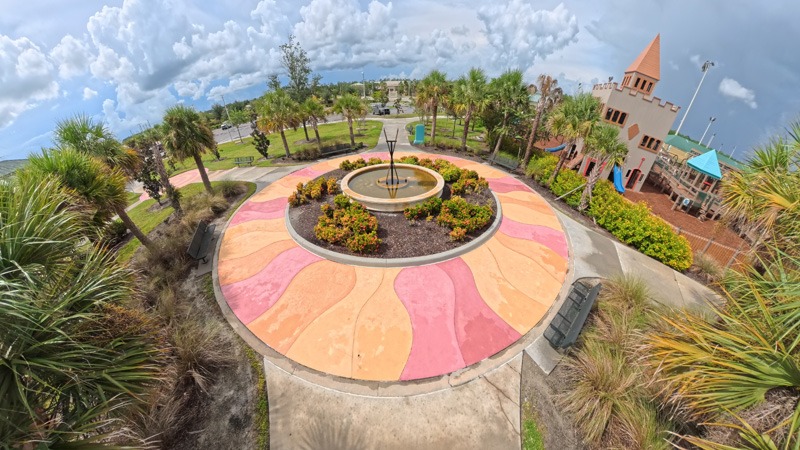
One of the most challenging events a facility can endure is a mid-season closure due to unexpected maintenance. The headaches include lost revenue, disappointed guest reviews, missed opportunities, and scheduling conflicts with suppliers and contractors.
Every guest interacts with surfaces in some way, which is why paints, coatings, and surfaces are important to maintain well and clean often. Proactive, diligent maintenance with the right products in the right spaces is key to improving operational efficiency and avoiding unplanned closures.
Jake Round, amusement sales manager at Baynum Solutions, advises that “a good maintenance walk should separate what looks worn from what is actually at risk.”
“Fading, chalking, peeling, rust staining, cracking, exposed substrates, failing seams, and moisture-holding areas can all tell a bigger story. The real value is knowing which items are cosmetic, which are actively deteriorating, and which could create safety concerns, corrosion, water intrusion, larger repairs, or in-season downtime if they are not addressed,” he adds.
Tools should be used to assess site conditions, comparing original conditions with measurements regularly, and manufacturer wear specifications should be reviewed when products are nearing the end of their life. Photos should be taken and stored for reference as a historical database and for warranty coverage, when applicable.
Different coatings and surfaces can create a strong synergy across a facility, in different areas, without competing with one another. For example, outside amenity areas with high shoe traffic can be a great place for concrete; inside amenity areas surrounding play zones, non-slip coatings can be suitable; and play spaces can leverage safety surfacing to better protect guests.
Round adds, “Product selection should always be based on the environment. Wet areas, UV exposure, chemical exposure, heavy traffic, and moving structures all require different considerations. When budgets require phasing, start with the areas where failure creates the most risk or future cost.”
Tom Maellaro, vice-president of business development for MRT, agrees that “maintenance should not wait until a surface fails. Regular inspections, touch-ups, and planned recoating cycles help protect the original investment and keep facilities looking intentional instead of reactive.”
Concrete and decorative concrete
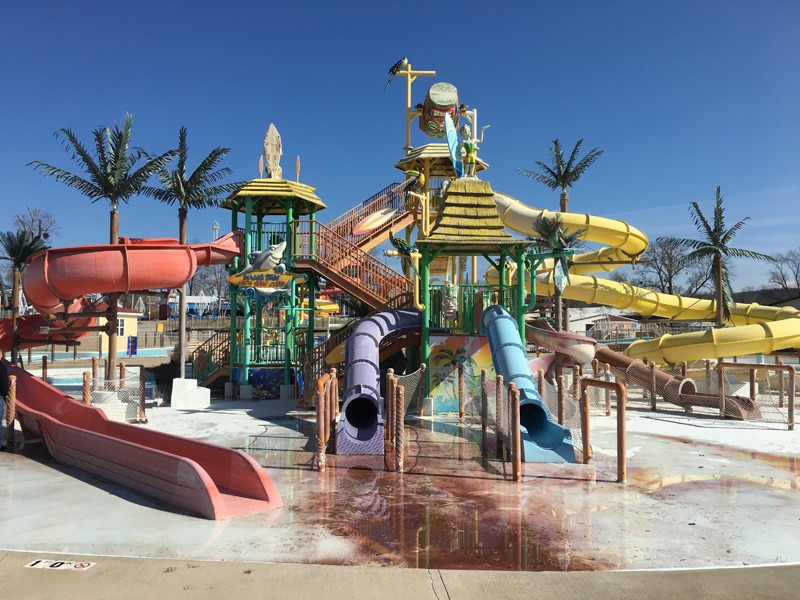
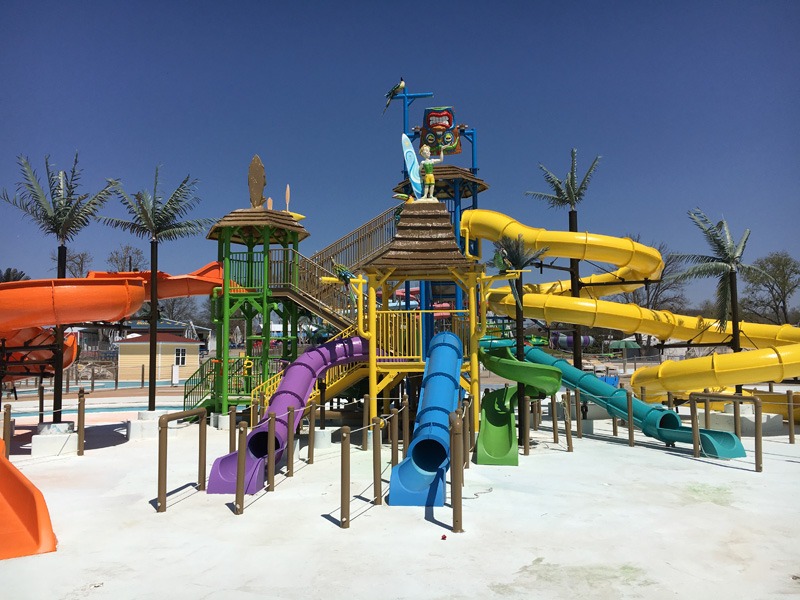
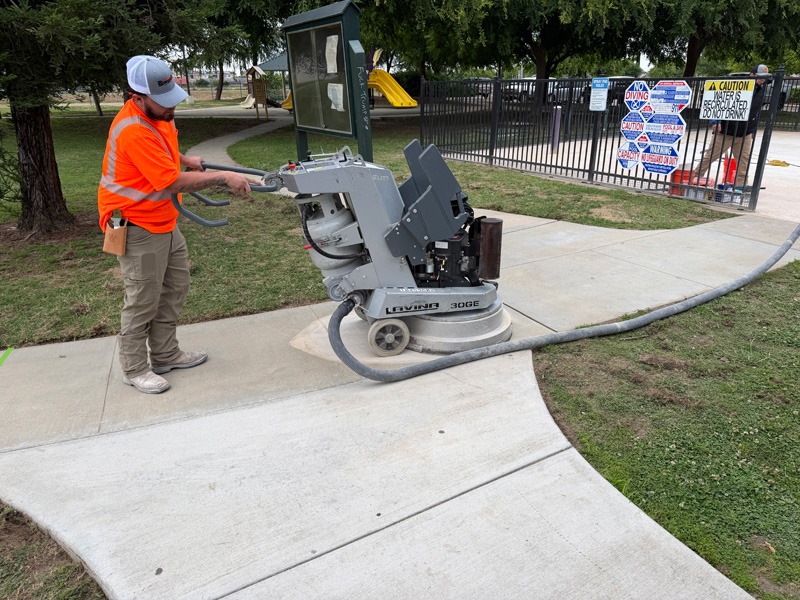
Concrete can be used in aquatic environments, both leading up to the attraction and as the foundation itself, but it must be poured correctly and should always be used in the right areas for foot traffic.
“A properly poured concrete foundation is the backbone of both safety and performance for any aquatic amenity. It doesn’t just support static weight; it must constantly withstand dynamic kinetic forces from rushing water and heavy pump vibrations,” says architect and concrete expert Pablo Aviles Gonzalez Jr., who has extensive experience designing and building entertainment venues, theme parks, and water parks. “Getting the mix and reinforcement right is crucial for long-term stability, while precise sloping prevents water from pooling in areas where guests walk. Additionally, the right slab finish is essential to ensure that safety-surfacing systems, like non-slip tiles and foam cushioning, bond perfectly and last for years.”
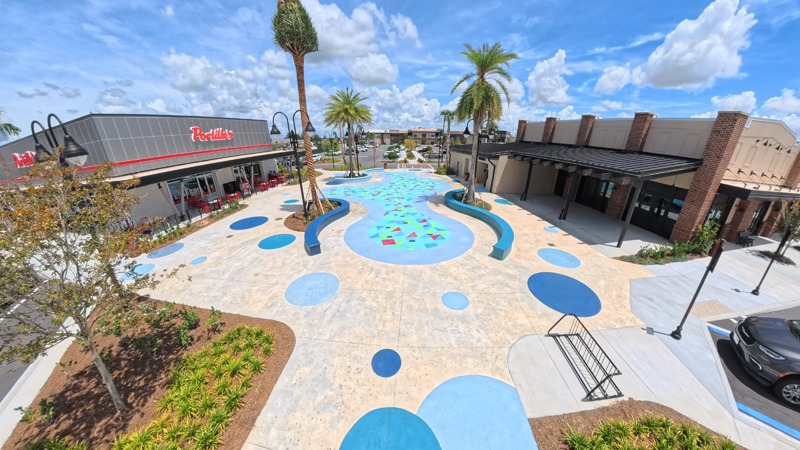
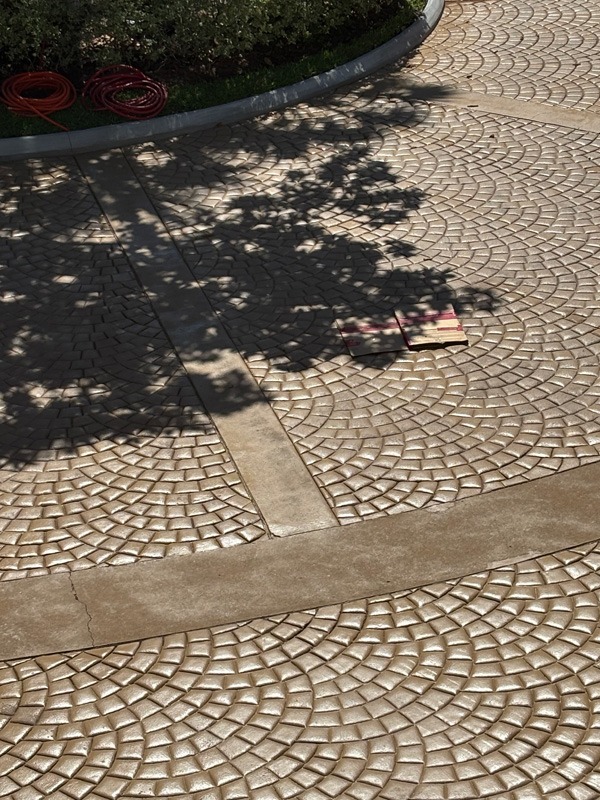
Decorative concrete can provide lovely visuals for areas where rough-and-tumble play is not necessary and where something artful can be developed.
“Decorative concrete proves that structural materials can also be highly creative. Since it is so customizable in colour, texture, and virtually any design characteristic, it allows us to blend thematic elements directly into the attraction, elevating the overall guest experience,” says Gonzalez Jr. “Beyond esthetics, it is a high-performance solution built to excel in wet, high-traffic conditions where alternative materials would either fail or demand incredibly high maintenance costs.”
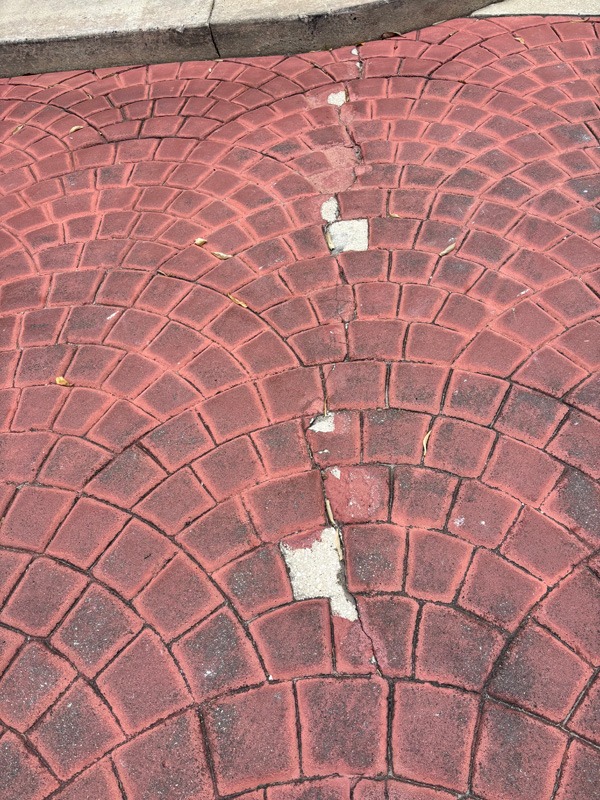
For example, exterior walkways outside of an amenity are heavily used by people wearing their street shoes, which can carry pebbles embedded in the tread and scratch a softer surface. For any repairs, a licensed professional should assess the damage and provide recommendations, as concrete work can range from simple patchwork to full-scale demolition and repour.
Pros
- Resistant to cuts/user-inflicted damage
- Durable
- Critical for stable foundations
Cons
- Abrasive
- Hard
- Stains easily
- Must be sealed regularly if exposed
- Semi-porous
- Can crack with ground movement
Safety surfacing
Safety surfaces are often used at amenities encouraging high-speed play, such as splash pads and water parks. These kinds of surfaces can provide greater peace of mind for guests and staff, enhance the space’s beauty and comfort, and enable a range of plays appealing to people of all abilities and ages. Choosing the right safety surface for aquatic play areas often comes down to overall performance and budget. Phasing can help mitigate budget concerns by starting with installations on high-risk areas such as slide exits, splash pads, and pool coping. By phasing safety surfacing projects, money can be saved over time by reducing injuries and subsequent lawsuit costs, resulting in a net positive return on investment.
NSF/ANSI/CAN Standard 50, Equipment for Pools, Spas, Hot Tubs and Other Recreational Water Facilities, outlines the criteria a safety surface must meet to be considered an acceptable, certified surface. Jonathan Keller, chair for the NSF/ANSI/CAN 50 task group on aquatic safety surfacing, co-chair for the NSF/ANSI/CAN 50 task group on pool perimeter finishes, and co-lead of a task group on surfacing in aquatic play environments under ASTM F24.61 Standard Practice for Aquatic Play Equipment, adds “Our task groups have determined that aquatic surfaces should be slip-resistant, cushioned, UV resistant, impermeable, easy to clean, and chemical resistant because those are the key criteria that make the greatest positive difference for facility staff and end-users alike.”
Safety surface repair work is typically straightforward due to the product’s modular design, but the manufacturer or installer should be consulted, as product specifications may vary.
Pros
- Cushioned
- Slip-resistant
- Modular
- Improves esthetics
- Increases accessibility
Cons
- Can be expensive
- Sharp edges—such as metal bike components—can damage it
- Not all safety surfaces meet industry standards
Coatings
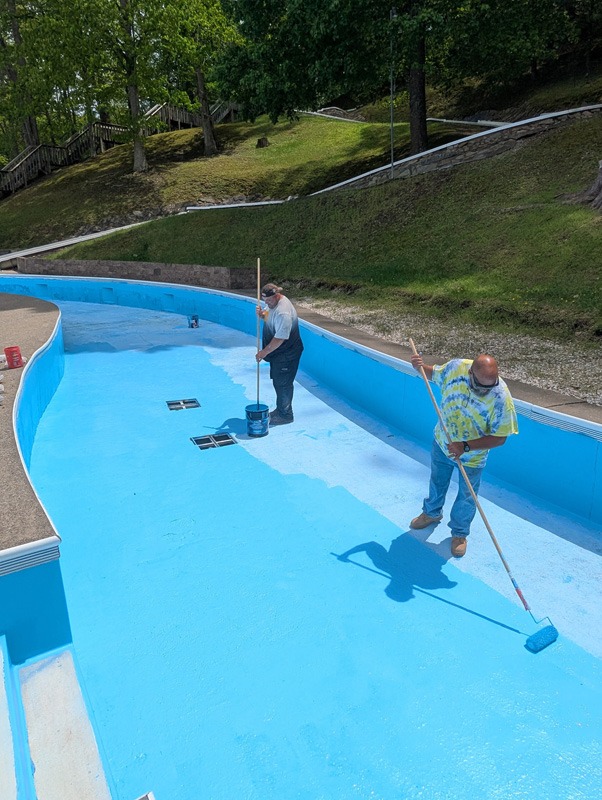
Coatings can support ancillary amenities, such as walkways and areas that become wet but are not considered play spaces, such as entry points, locker rooms, and bathrooms. These types of products are often budget-friendly, offer a fast-turn solution, and are easy to apply; however, they must be applied properly to achieve the best possible results.
“The success of any coating system usually starts before the coating is ever opened. Cleaning, profiling, repairing cracks, confirming compatibility, and respecting environmental conditions are what separate a cosmetic refresh from a surface that performs,” says Maellaro.
Without proper preparation, a coating application can fail, delaminate, or bubble. “Across a facility, coatings work best when they’re viewed as part of a larger surface strategy. Pools, decks, courts, walkways, and common areas all have different needs, but the goal is the same: safer, cleaner, more durable, and more inviting spaces,” Maellaro adds.
Repair work often involves properly preparing the substrate to the standard required for the initial application, then reapplying the coating
to specification.
Pros
- Can be applied quickly and easily
- Improves esthetics with custom designs
- Durable
- Can be slip-resistant
Cons
- Installation preparation must be done properly,
or it will not adhere - Does not offer impact cushioning
Other surfaces
Beyond those mentioned above, some products can struggle in harsh aquatic environments because they were created specifically for dry spaces, where they excel in amenities such as playgrounds and childcare rooms.
Pour-in-place rubber surfaces can break down in aquatic environments because the bonding agents are not resistant enough to the harsh combination of UV, pool chemicals, constant water, and foot traffic. Particles can loosen, clog drain lines and pumps, and require patching within a single season, depending on traffic intensity. Brick, pavers, stone, and slate should typically be avoided for water play areas because they are slippery, hard, and difficult to clean, according to the Model Aquatic Health Code (MAHC). Marine-grade wood can be used, but requires regular maintenance to avoid splinters.
In conclusion, paints, coatings, and surfaces should be carefully selected and tailored to the amenity types in which they are being implemented. Round advises, “One thing many parks may not realize is that technical service teams from paint and coating suppliers can often support walkthroughs, help identify problem areas, recommend appropriate systems, and even assist with written specifications. That resource can be extremely valuable when parks are trying to plan, budget, or phase work correctly.”
A solid service team can guide from start to finish, and many guarantee their work with proper warranties.
Regardless of the selected paint, coating, or surface finish, regular, proactive maintenance is essential to creating amenities that guests can enjoy for generations to come.
Author

Briana Valente serves as a marketing manager for Life Floor. She has been with Life Floor since 2018 and adores the aquatics industry. She works extensively with industry publications, conferences, and workshops that bring meaningful education to individuals spanning municipalities, resorts, waterparks, and more. She holds a bachelor’s degree in marketing from the Carlson School of Management at the University of Minnesota.
Sign up for our newsletter
Get all the latest news and features from Pool & Spa Marketing. Submit your email below to get our twice-monthly newsletter.
Products
Read the Latest Issue