
Sustainable by nature: How reinforced PVC reduces chemical and carbon footprints
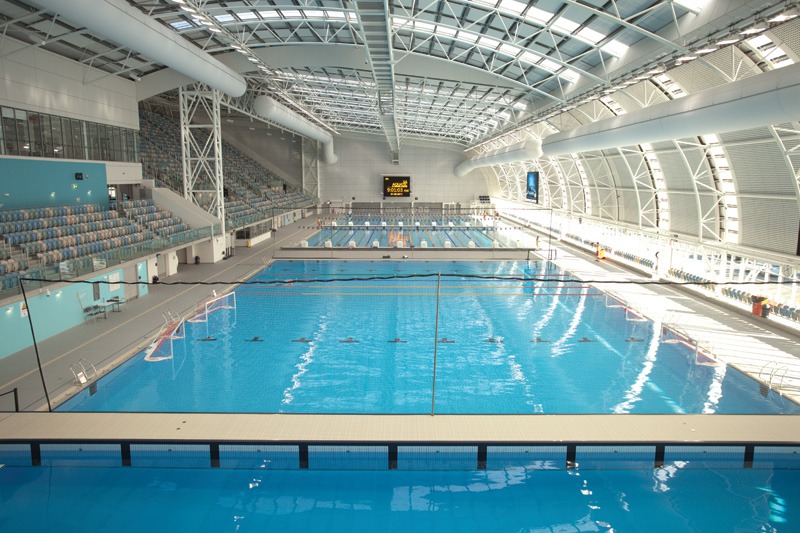
Sustainability in aquatic environments goes far beyond energy-efficient equipment or smart filtration strategies. Increasingly, the materials used to waterproof and finish the interior of a pool influence ongoing maintenance, chemical demand, water conservation, lifecycle carbon emissions, and overall operational costs. Reinforced polyvinyl chloride (PVC) membranes have become one of the most effective ways to minimize both operational and embodied carbon, combining durability, watertight performance, and circular economy principles into a single material system.
Unlike plaster, aggregate, tile, or exposed concrete, which depend on the substrate for waterproofing and degrade predictably over time, reinforced PVC acts as a standalone waterproofing and finishing layer. Its multi-layer thermoplastic construction, fused to a polyester mesh core and protected by UV- and chemical-resistant surface coatings, guarantees long-term stability and minimal surface degradation. This consistency is one of the most powerful tools for sustainability available to aquatic designers.
Lower chemical demand through a non-porous surface
Traditional plaster and grout surfaces become more porous over their service life. Microcracking, etching, roughness, and biofilm adhesion all contribute to increased chlorine demand, necessitating frequent shock treatments. Reinforced PVC removes these vulnerabilities. Its smooth, non-porous surface offers few places for algae and biofilm to anchor, resulting in more stable water chemistry and significantly lower sanitizer demand, often 20 to 30 per cent less chlorine compared to aging plaster pools. Reducing chlorine use directly diminishes environmental impacts related to chemical production, packaging waste, transportation emissions, and facility handling.
Water conservation through independent watertightness
Water loss ranks among the most overlooked environmental and financial costs in aquatic operations. Structural leaks, failed gutters, deteriorated expansion joints, and cracked shells not only waste thousands of gallons of water each year but also demand constant reheating and re-chemicalization. Reinforced PVC membranes are impermeable to liquid and vapour, and because they act independently of the substrate, they preserve watertight integrity even when the underlying concrete is damaged.
The environmental and operational consequences of watertightness become particularly evident when examining real-world renovation projects.
Case study: Restoring a deteriorated pool to full operation
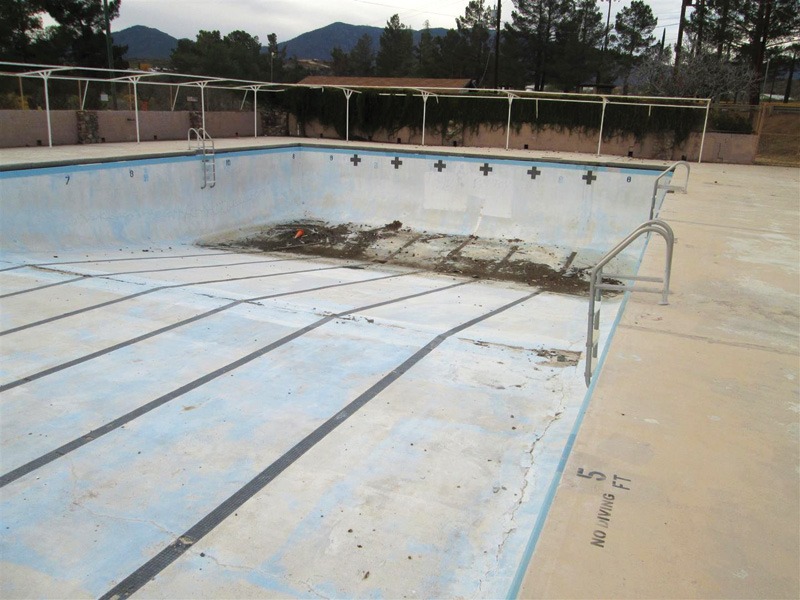
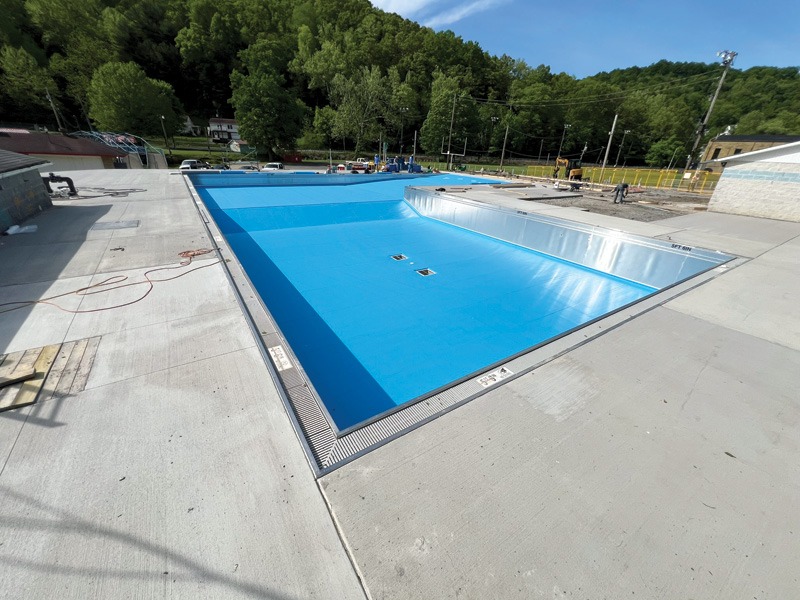
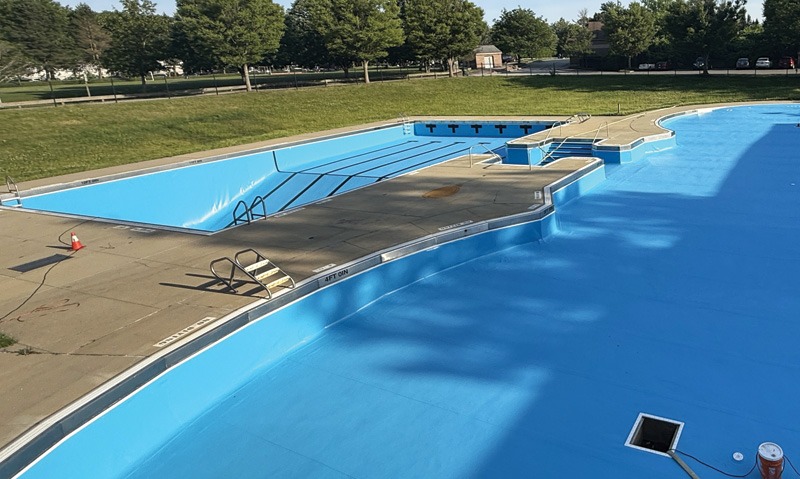
A community pool remained empty for nearly 10 years, from 2014 until its reopening in June 2023. It suffered from continuous water loss, structural failure, and complete breakdown of its mechanical systems. The concrete gutters had failed, large sections of the floor were missing, the perimeter piping system had collapsed, and the facility lacked a functioning filtration system. Before closure, the pool required excessive refilling and constant chemical adjustments to stay open, and even then, the structural issues made operation unsustainable.
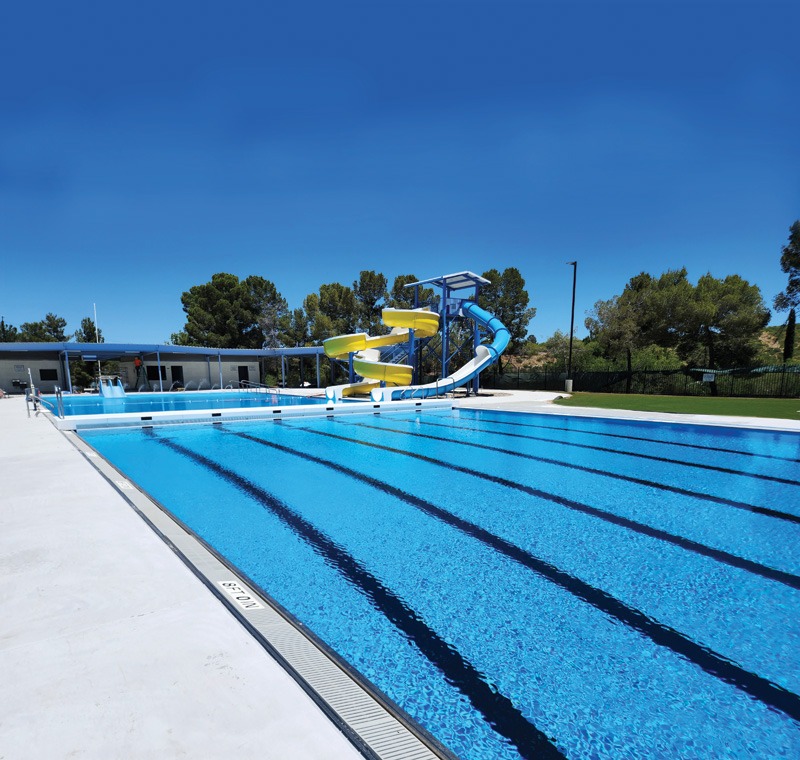
In 2021, renovation plans resumed, and based on community feedback, the project expanded dramatically—doubling its size—and included a zero-entry area, splash pad, new heater, upgraded decking, improved programming space, and a movable bulkhead for competitive swimming.
Natare Pools installed a reinforced PVC membrane system, creating a fully watertight basin that had previously been in a catastrophic condition. With the membrane installed, the community eliminated the need for yearly surface repairs, frequent repainting, and ongoing water-loss fixes, ending the cycle of endless maintenance that had plagued the pool for nearly a decade. The membrane restored the pool’s integrity and significantly lowered its long-term operational and environmental impact.
Case study: A rapid retrofit with reinforced PVC
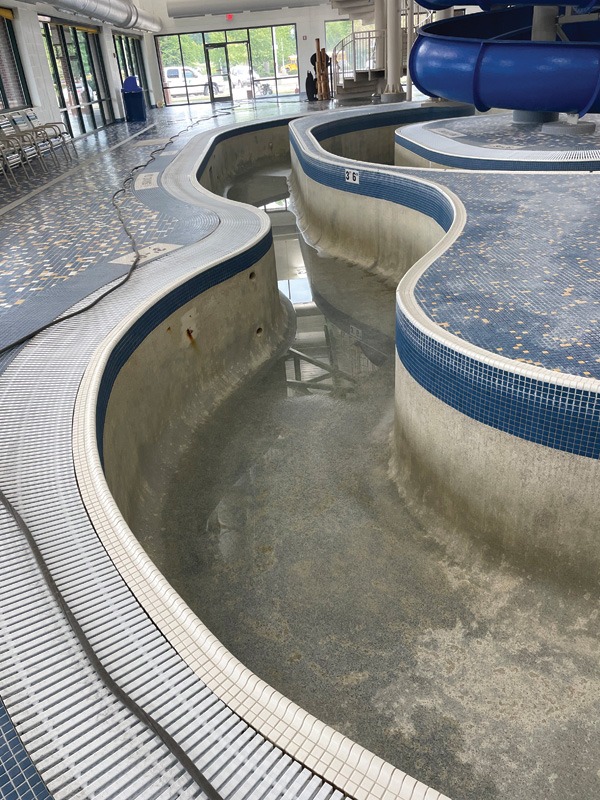
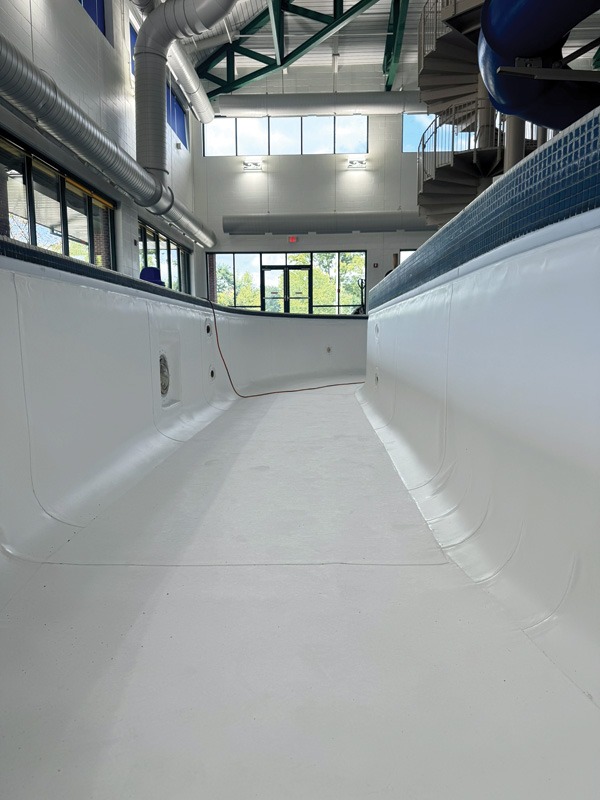
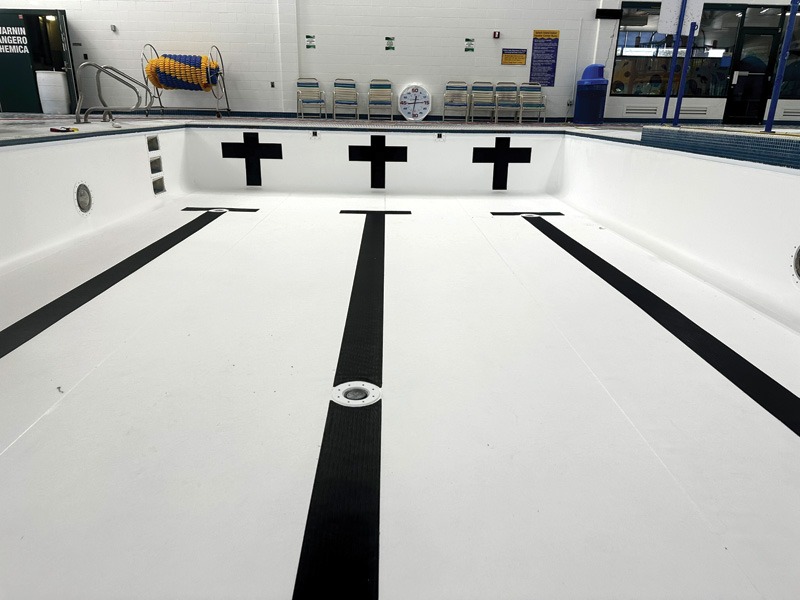
This indoor aquatic facility, covering approximately 700 m2 (7,500 sf), previously had a deteriorating plaster and tile surface that showed signs of failure in several areas, especially in high-wear zero-depth zones and stair areas. Before the renovation, the facility experienced periodic micro-leaks, increased chemical usage, and surface deterioration that required more attention from staff.
During a scheduled one-month maintenance closure in 2024, Natare Pools installed more than 850 m2 (9,000 sf) of reinforced PVC membrane, with precise detailing around curves, stairs, and other complex shapes. The project also included new main drain covers and was combined with upgrades to the HVAC and mechanical systems. The reinforced PVC membrane resolved previous water infiltration issues, stabilized water chemistry, reduced chloramine formation, and created a cushioned, safer environment for young children and high-traffic areas.
The finish now provides long-lasting watertightness, consistent performance, and significantly lower maintenance requirements compared to the original plaster and tile system.
Reinforced PVC supporting sustainability
While the community pool and aquatic facility are primary examples, additional Natare Pools installations offer further measurable proof of the sustainability benefits of reinforced PVC membranes.
Restoring a century-old community pool
- Originally constructed in 1929.
- The structure had deteriorated beyond repair after decades of patching and unsuccessful resurfacing.
- The facility was rebuilt with stainless steel walls, a roll-out gutter system, reinforced PVC lining, and vacuum sand filtration.
- The new system significantly reduced long-term maintenance, eliminated future plaster cycles, and restored structural reliability.
Restoring a long-overdue pool surface
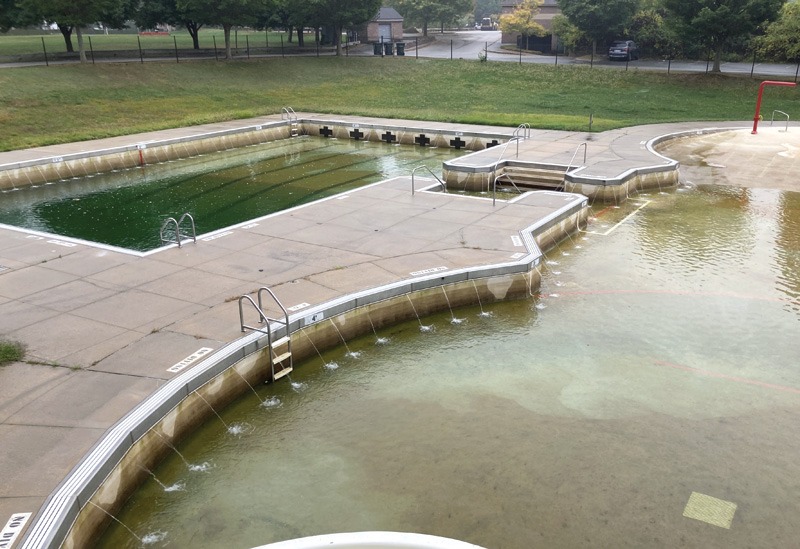
- The pool had not been resurfaced in more than 21 years, and the aging plaster and aggregate finish caused significant water loss through the shell.
- Renovation involved over 1,200 m2 (13,000 sf) of reinforced PVC membrane and 210 m (687 ft) of stainless-steel skirt liner.
- The perimeter includes more than 70 individual skirt sections due to its large, figure-eight layout.
- Construction took place during severe weather—40 per cent of the construction days experienced rainfall—yet the membrane installation was completed successfully, resulting in a fully watertight restoration.
Across all these projects, the common issues before renovation remain consistent: chronic water loss, frequent resurfacing, structural degradation, chemical waste, unstable water chemistry, and rising operational costs. Reinforced PVC membranes addressed all of these concerns.
Extended service life and carbon reduction
Plaster finishes typically require resurfacing every seven to 12 years, depending on the water chemistry and usage patterns. Each resurfacing cycle involves demolition debris, cement-based materials (which emit high CO2 levels), transportation emissions, staff travel, and large amounts of replacement water—all of which add to embodied carbon.
Reinforced PVC membranes are designed to last well beyond 20 years and are typically provided with a warranty that guarantees up to 20 years of watertightness. In public facilities, replacement often occurs before the end of service life for reasons unrelated to performance, such as esthetic preferences or planned renovation budgets. Avoiding just one resurfacing cycle can save:
- Thousands of kilograms of cement-related CO2
- Multiple truckloads of demolition waste
- Weeks of downtime
- Tens of thousands of gallons of refill water
- Chemical rebalancing cycles
- Heater energy used to re-warm fresh water
The long-term carbon savings are substantial and accumulate over decades.
Reinforced PVC and the future of sustainable aquatic materials
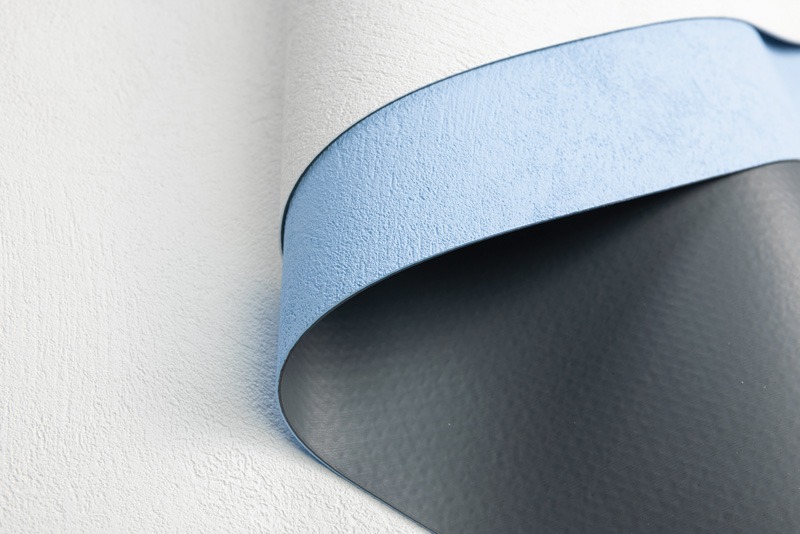
Modern reinforced PVC membranes incorporate increasing amounts of recycled content—up to 60 per cent in certain commercial membrane products—and can be recycled at the end of their service life. Some manufacturers hold certifications that ensure traceability of recycled inputs and verify their compliance with circular economy standards.
A notable example is a membrane developed for an international aquatic venue hosting the Paris 2024 Olympic and Paralympic Games. Made from approximately 60 per cent recycled PVC and designed to be fully recyclable, the membrane performed at the highest level of international competition. This proven performance demonstrates that circular PVC membranes can deliver watertight integrity, structural protection, safety, and durability without compromising sustainability.
These advancements highlight a key message: reinforced PVC membranes are not only durable and chemically efficient but are also emerging as leading examples of circular material innovation in aquatic infrastructure.
Long-term performance through smarter material choices
Across indoor, outdoor, municipal, competitive, and recreational facilities, reinforced PVC membranes reliably address the core environmental and operational challenges of aquatic design: water loss, structural degradation, chlorine instability, ongoing repairs, frequent resurfacing, and unnecessary embodied carbon.
By selecting reinforced PVC, as demonstrated through actual installations at community pools, municipal aquatic centres, and major international competitive venues, designers and facility managers can greatly improve the sustainability, dependability, and long-term performance of aquatic facilities.
Sustainable design truly begins with durable materials. Reinforced PVC is built to last—and the results speak volumes.
Author

Matthew Sands is a sales engineer with RENOLIT and has more than 20 years of specialized experience in construction renovation, product installation, and project engineering. His background includes working for one of Europe’s leading flooring manufacturers and supervising complex renovation projects such as the La Fenice Opera House in Venice and the LAC Cultural Center in Switzerland. At RENOLIT, Sands supports architects, installers, and distributors across North America with technical expertise, field training, and system design guidance. Additionally, he trains international customers through RENOLIT’s Global Training Academies worldwide. He can be reached at matthew.sands@renolit.com.
Sign up for our newsletter
Get all the latest news and features from Pool & Spa Marketing. Submit your email below to get our twice-monthly newsletter.
Popular Articles
-
1
-
2
-
3
-
4
-
5
Read the Latest Issue