
Beyond summer: A deep dive into pool heating solutions
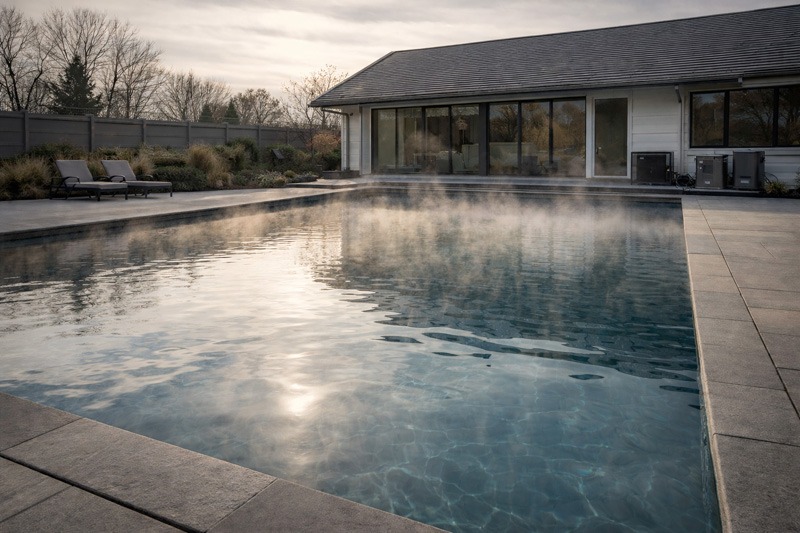
Pool heaters are no longer just a winter essential. From cool spring openings to early mornings and late evenings throughout the season, they play a key role in extending pool use beyond peak summer conditions. To maximize comfort and usability, customers and facilities should understand the range of heaters and pumps available, enabling informed decisions that align with their operating needs.
This is where pool professionals take over. With their expertise and extensive knowledge of the latest technologies, advancements, and maintenance methods, they can guide customers in making a purchase that meets their winter pool-use needs.
This guide serves as a comprehensive resource for everything required to keep pools heated.
Types of heaters
The following outlines the primary types of pool heaters available and the characteristics that differentiate them.
Gas-fired heaters
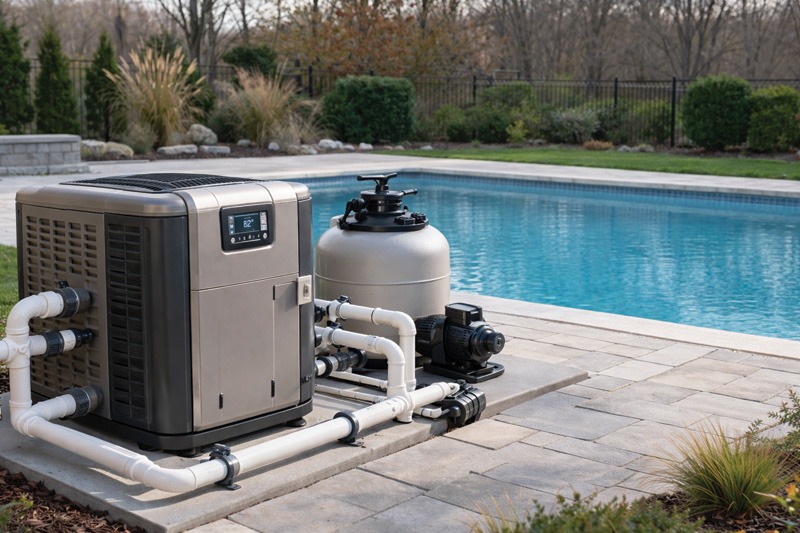
Propane or natural gas heaters are the most common. They heat a pool fairly quickly and can maintain any desired temperature regardless of weather or climate. While operating costs can be higher depending on usage and fuel prices, they remain one of the most reliable and responsive heating options available.
System operation centres on circulating filtered water through a heat exchanger, where combustion-generated heat is transferred efficiently back to the pool1—an approach that supports rapid temperature recovery and consistent output across varying conditions.
The U.S. Department of Energy (U.S. DOE) states, “Sizing a gas pool heater involves many factors. Basically, a heater is sized according to the surface area of the pool and the difference between the pool and the average air temperatures. Other factors also affect the heating load for outdoor pools, such as wind exposure, humidity levels, and cool night temperatures. Therefore, pools located in areas with higher average wind speeds at the pool surface, lower humidity, and cool nights will require a larger heater. Gas pool heaters are rated by Btu (British thermal unit) output. Outputs range from 75,000 Btu to 450,000 Btu.”1
Heat pump
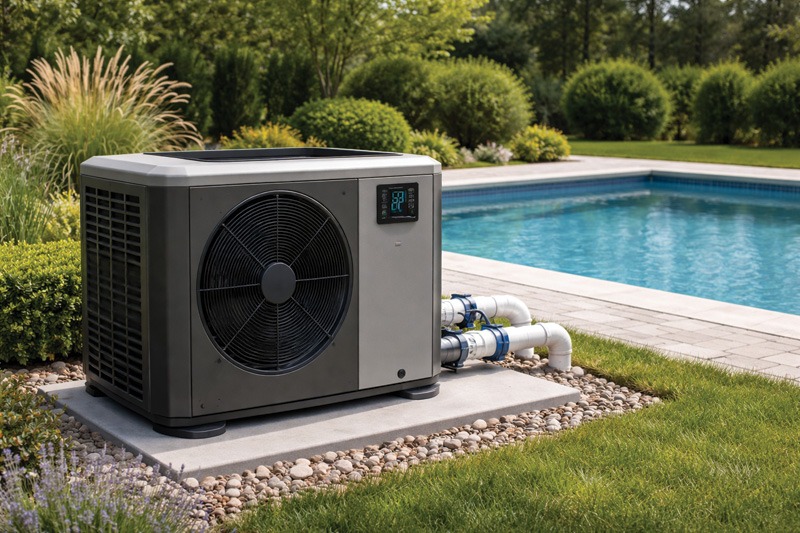
For those living in warmer climates, a heat pump pool heater, also known as a “reverse air conditioner,” is the way to go. It is also more energy-efficient, less costly, and more eco-friendly. Recent technological advancements have even enabled heat pumps to keep water cool when needed. However, the downside of heat pumps is that their efficiency drops once the outdoor temperature falls below 10 C (50 F).
The energy efficiency of heat pump pool heaters is evaluated by the coefficient of performance (COP). A higher COP value indicates greater efficiency.
Solar pool heating
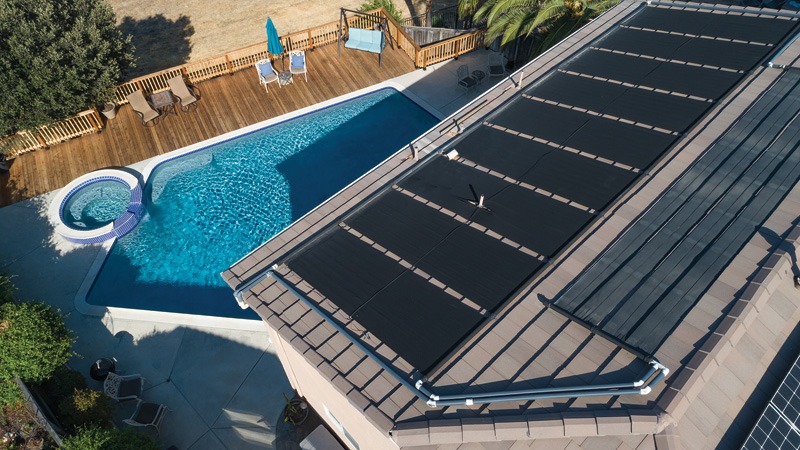
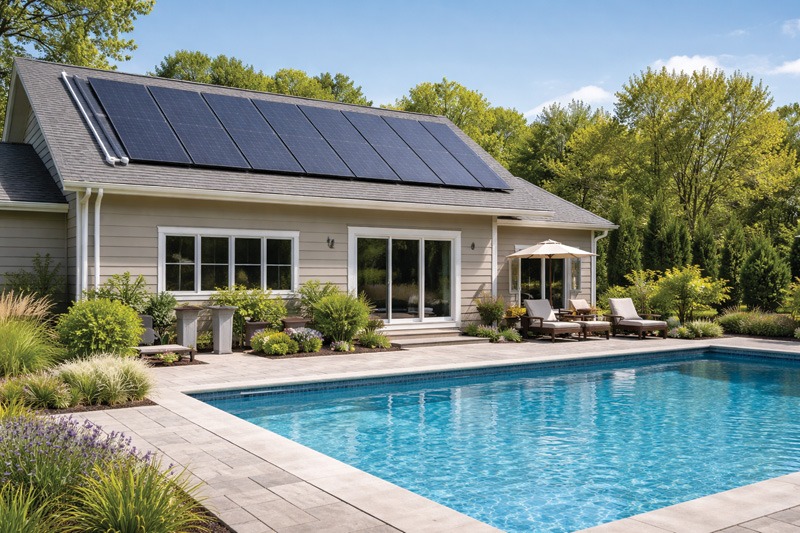
Roof-mounted solar panels are also an alternative solution to pool heating. They are eco-friendly and long-lasting (generally 15 to 20 years).2 However, they can be troublesome when it comes to efficiency, as it heavily depends on the amount of sunlight available.
The solar panels generally need to cover 50 to 100 per cent of the pool’s surface for maximum results, which means there needs to be ample space on either the roof or the ground for installation.
Hybrid pool heater
A hybrid pool heater combines the best qualities of a pool heater and a heater pump. A thermal efficiency gas engine allows the pool to heat up swiftly and stay warm for longer, and its high-performance heat pump aspect contributes to its lower cost. Due to these dual qualities, it is on the higher end of the cost spectrum, but it delivers on performance.
Hybrid pool heaters can also combine solar pool heating with heat pumps. The integration of solar maximizes efficiency in the summer, and the heat pump comes into play in the winter months—making this combination a year-round solution.
Controls and features
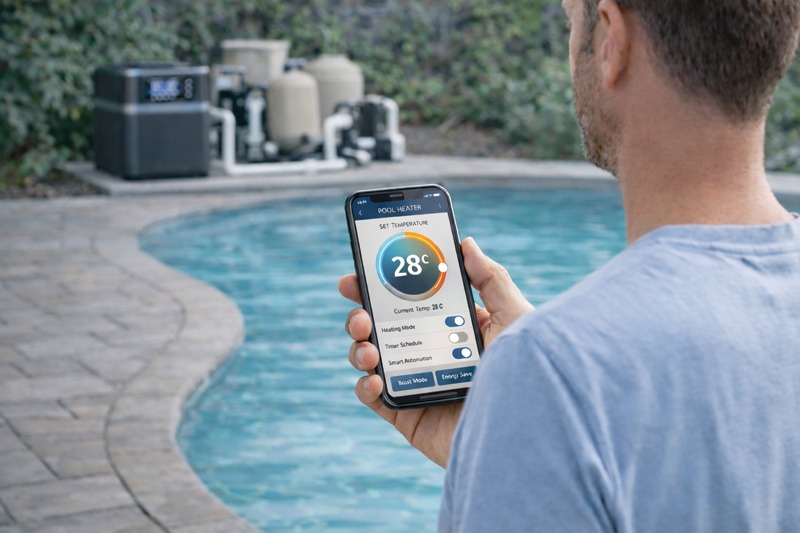
The integration of up-to-date technology and the latest advancements, such as artificial intelligence (AI), into any pool product can significantly enhance its appeal. Customers want something that is efficient, easy to use, and easily accessible, especially with digital controls.
The following outlines several ways AI can enhance pool heater operation and control:
- Predictable trends—Alerting when and how much heating is needed, as well as predicting maintenance needs before failure occurs, further reducing downtime and service costs.
- Learning patterns—Analyzing past and real-time data such as usage patterns, environmental conditions, weather, filtration, etc.
- Efficiency—Controls to preheat the pool in time for peak usage, saving energy.
- Personalization—AI can allow the option of remembering user preferences (such as desired temperatures), as well as multiple profiles.
- IoT integration—With IoT-connected devices, AI can allow remote monitoring and control via apps, automate schedules based on user behaviour, and provide data-driven adjustments for energy and comfort.
AI in pool heating does not replace the heater; instead, it enhances its operation. The heaters become “smart” through AI, which manages when to run them, how much energy to use, and even predicts maintenance needs. This system works in conjunction with other smart technologies.3
Regulation and safety standards
In 2024, pool heaters were classified as energy-using products under the Natural Resources Canada (NRCan) Energy Efficiency Regulations, following the DOE’s introduction of energy efficiency standards for electric pool heaters (it previously had standards for gas-fired pool heaters).4
Additionally, the CSA Group has a standard for gas‑fired pool heaters (CSA/ANSI Z21.56:19/CSA 4.7:19) that covers construction, installation, and operation.6
The Ontario Energy & Water Efficiency Regulation (O. Reg. 509/18) is also a provincial standard that may affect broader appliance efficiency frameworks.7
Conclusion
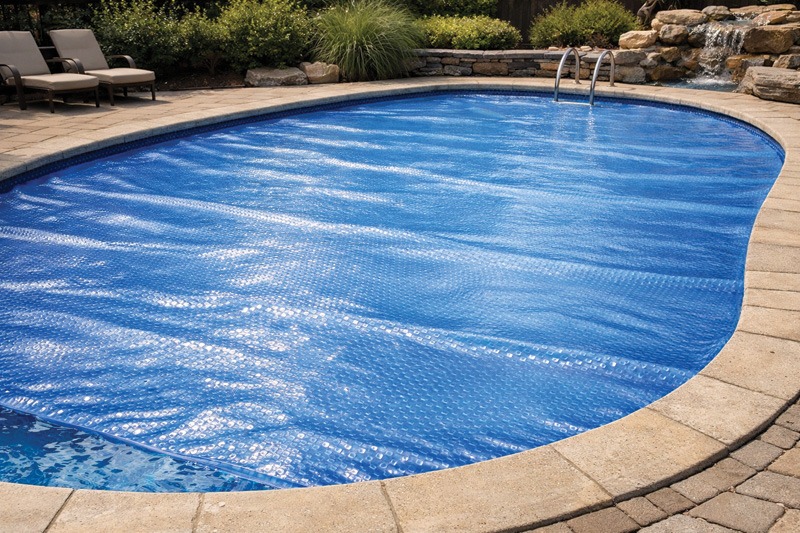
There are various types of pool heaters available for sale, and understanding the customer’s needs, location, and the space around the pool is essential for determining the best option. It is also important to know budget-friendly options such as pool blankets, wind protection for pools, solar covers (or windproof pool covers in general), solar rings, etc. There are evidently many options in the solar realm to explore when it comes to pool heating, but they depend heavily on one key factor: sun exposure.
Integrating AI functionality into pool heaters can further enhance their appeal, making pool maintenance easier year-round. Overall, pool heaters and heat pumps are valuable assets for extending the swimming season, which is their strongest selling point.
Notes
1 Refer.
2 See.
3 Read.
4 Learn more.
5 Refer.
6 Visit.
7 Read more.
Sign up for our newsletter
Get all the latest news and features from Pool & Spa Marketing. Submit your email below to get our twice-monthly newsletter.
Products

Read the Latest Issue