Building your dream team: Why investing in people drives lasting success
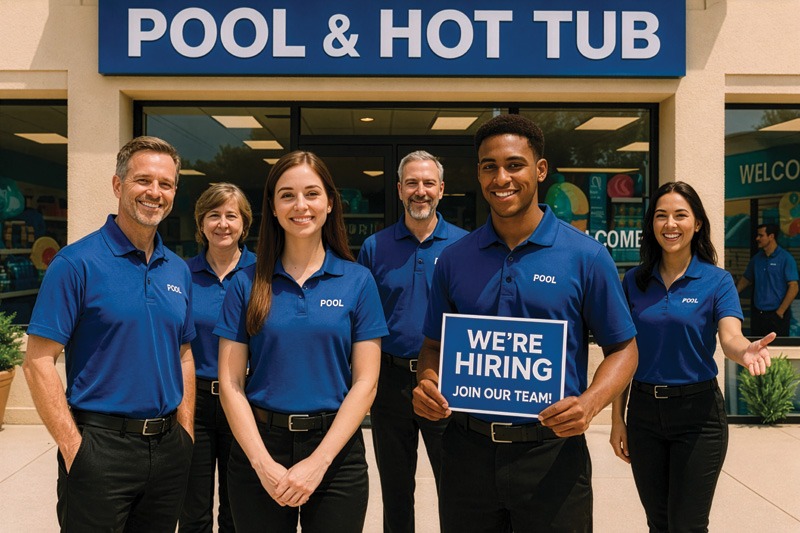
The pool and hot tub industry is more than just sparkling water and backyard enjoyment; it helps craft lasting family memories for customers, goes the extra mile, and is a people-centred business where customers can feel like family. The heart of any successful store or service company lies in its team and the relationships it fosters. Hiring wisely, training thoroughly, and strengthening the brand are key competitive advantages, especially against big-box stores that do not offer new, better, and different products and that cannot match the personalized service and expertise.
Hire for competence, train for excellence
Start strong by hiring individuals who possess the right balance of attitude and innate ability to learn. Look for people who are curious, adaptable, and outgoing. Industry-specific experience is a bonus but not always necessary, as skills can be taught; character, however, cannot.
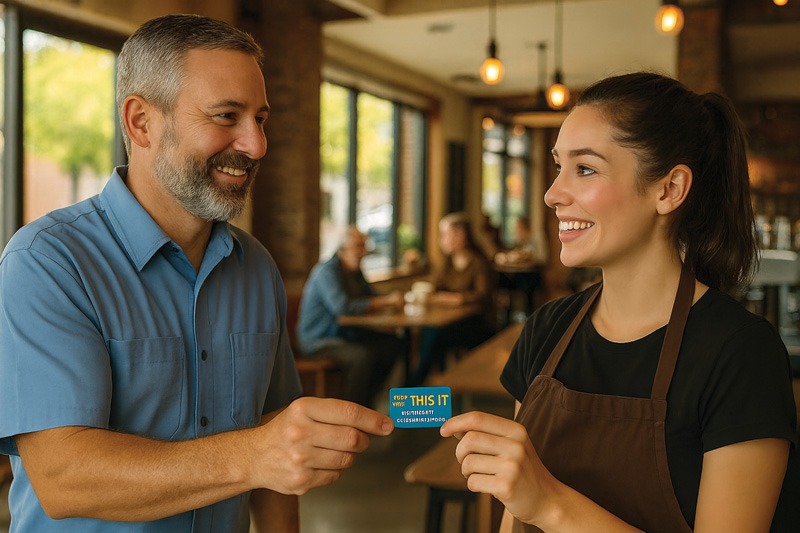
Think creatively when recruiting. It does not have to be limited to job ads or waiting for resumes. Sometimes, the most promising potential employees are already showcasing their skills in everyday settings. Consider the friendly barista who remembers customers’ names and coffee orders, greets them with a smile, and inquires about their recent holiday. This level of genuine customer engagement highlights excellent service.
Hiring managers and business owners can draw inspiration from these moments. Whether stopping for coffee, dining at a favourite restaurant, or browsing a local garden centre, it is crucial to notice exceptional service. When encountering someone who goes above and beyond, ask if they have ever thought about a career in the pool and spa industry. Offer a business card with a friendly message that recognizes their talent and expertise. Passion, personality, and people skills are highly transferable, and the next great team member could be found at a grocery store checkout.
Here is an example of a business card that can be used when recruiting potential employees in the community.
Front of card
Looking for a sign? THIS IS IT.
We’re hiring fun, friendly people to join our Team!
Like hot tubs, sunshine, and good vibes?
No resume? No problem. Just bring your smile.
[Store Name – City/Town]
Apply now: [Short link or QR code]
[Phone number]
Flexible hours • Great team • Cool perks
Back of card
YOU + US = The Future
We’re on the hunt for awesome humans:
- Part-time, full-time, and seasonal
- No experience needed
- Training and good times provided
- Text us, scan the code, or just stop by
Let’s make great things happen!
Once hired, invest in their success. Proper training is not optional; it forms the foundation of the business’s reputation. Ensure every new team member understands both the “why” and the “how” behind the business’s processes and products. Have a company mission statement outlining the company’s purpose and how it operates, along with an internal guideline document that defines the business and its primary objectives.
Train the way they learn
Not everyone learns the same way, so avoid using a one-size-fits-all training approach. Ask new staff members how they prefer to learn and what motivates them. The younger generation now learns from podcasts, artificial intelligence (AI), and TikTok. It is time for businesses to meet them where they are going to learn.
People generally absorb information in one or more of three primary ways:
- Doing (kinesthetic learners)—These learners remember best through hands-on experience. Let them test water, stock products, or walk through a filter clean with a seasoned technician. Take them on-site to teach them how to backwash a filter and explain how a pool functions. Have them read labels, do the math, and add products with guidance. Show them the process for hot tub delivery and setup. Guide them to answer phone calls and help them understand how to respond, then let them try it themselves. The author used to be one of those impatient people who would take over the call and answer for them. However, that approach does not help a new employee learn or build confidence. Instead, it is more effective to guide new team members and support them as they work through challenging questions on their own.
- Seeing/Hearing (auditory/visual learners)—These individuals benefit from videos and diagrams. Managers can use webinars, training presentations, and product demonstration videos to their advantage when onboarding new employees. Supervisors should ask team members which topics they would like to learn about first and provide options that start with the fundamentals.
- Reading/Writing—Provide these learners with access to product manuals, guides, and policy documents they can refer to and study. Show them how to use a catalogue and give them practice tasks. Trainers should involve new employees in every stage of the learning process. Each time a new employee needs to search for a product or part, the trainer should bring them along and demonstrate the procedure. This hands-on approach helps reinforce learning and builds confidence through real experience.
A blended training approach guarantees that all employees are effectively reached, starting with asking the right questions during onboarding.
Make training mandatory and motivating
A customer walks into the store and asks about a product. The staff member responds with confidence, knowledge, and enthusiasm. Why? They have just completed their online training and scored 97 per cent on the post-training quiz. They know the answer.
Many experienced professionals can recall that same feeling from their early days in the industry. The excitement and confidence that come from understanding a customer’s problem and knowing how to solve it. That sense of competence not only motivates employees but also builds customer trust. The more knowledgeable the staff, the more confident they become, which directly improves the customer experience.
However, it is equally important to train employees to be honest with customers. If they do not know the answer, they should feel comfortable admitting it. For example, they might say, “That is a great question. I am still learning, but let me find out for you.” This honesty helps maintain credibility and reinforces trust between the customer and the business.
Manufacturers and sales representatives often provide valuable learning opportunities, including online courses, webinars, and in-person training sessions, which offer valuable insights and practical knowledge. Managers should use these resources and seek support when needed. Pairing a new employee with an experienced team member can also establish mentorship and ensure they know who to approach with questions. Setting clear deadlines for completing training and even offering small rewards or certificates upon completion can further encourage participation.
When employees are knowledgeable, they sell more effectively, offer better service, and display confidence that customers immediately notice. Training is not an optional addition; it is the foundation for building a strong, successful business.
Reward the win, big or small
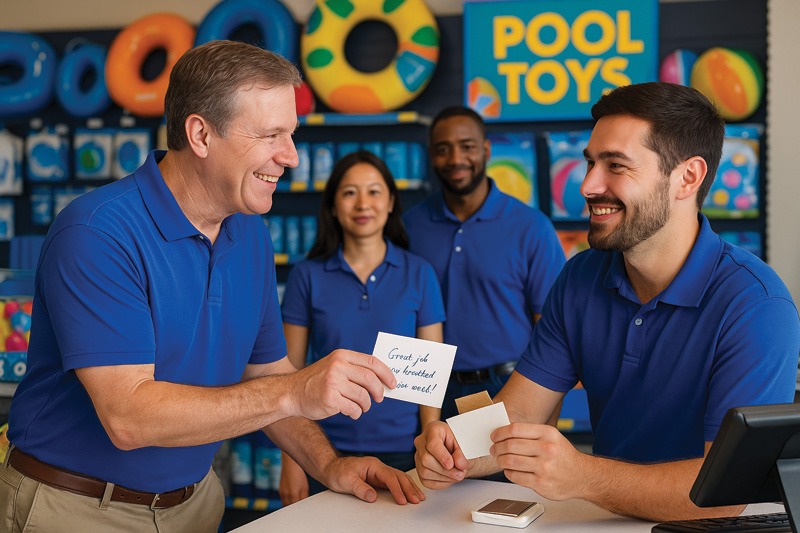
Imagine this: a team member goes above and beyond to help a challenging customer, handles the issue professionally, and leaves the customer with a smile. A simple “Great job, you handled that well” can mean a lot, but what if leadership knew exactly how that employee prefers to be recognized?
Some employees thrive on public recognition, while others quietly appreciate a handwritten note, a small gift card, or an unexpected early afternoon off. The key is understanding what makes each individual feel valued. Taking the time to ask team members how they prefer to be rewarded allows managers to celebrate achievements in meaningful ways, whether it is reaching a sales milestone, completing a challenging service call, or maintaining a positive attitude during a busy day.
Recognition boosts confidence, morale, and loyalty. When people feel genuinely appreciated, they are much more likely to stay. Recognition not only lifts spirits but also helps develop long-term, dedicated employees.
Define roles and raise the bar
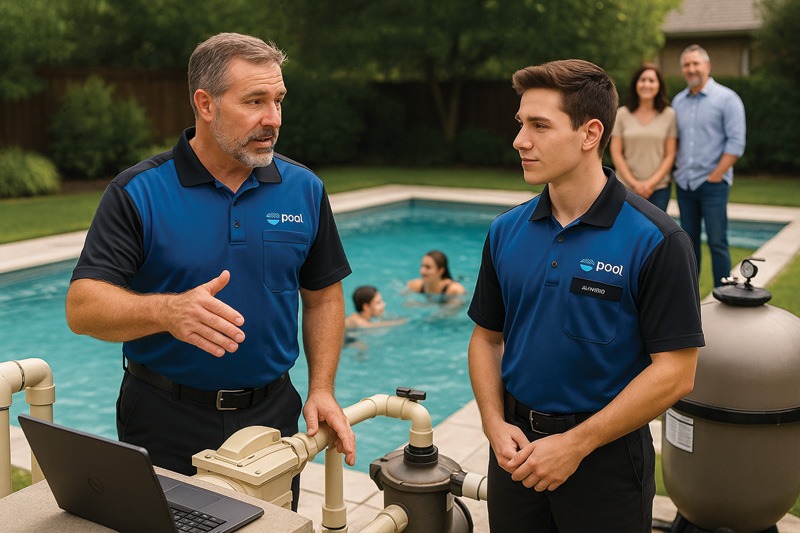
Clarity is one of the most valuable gifts a leader can give their team. Every employee should have a well-defined job description and a clear understanding of what success entails in their role. Vague expectations often lead to confusion, frustration, and missed opportunities. However, when roles and responsibilities are clearly outlined, it establishes a strong foundation for accountability, coaching, and development. Clear expectations enable leaders to provide meaningful feedback, monitor performance, and recognize potential, making it easier to promote from within and build a strong, motivated team. Without clearly defined roles, a business risks doing its staff a disservice.
Make the pool industry a career, not just a summer job
Too often, the pool and spa industry is viewed as a seasonal job rather than a long-term career. It is time to shift that perspective. Employees become more engaged and motivated when they are offered clear career pathways, leadership opportunities, and ongoing professional development, such as attending industry events and support groups. Employers should inspire staff to see the business as a place to grow and build a future. When employees can picture themselves advancing within the organization, they are more likely to stay, contribute meaningfully, and develop their skills over the long term.
Onboard with purpose
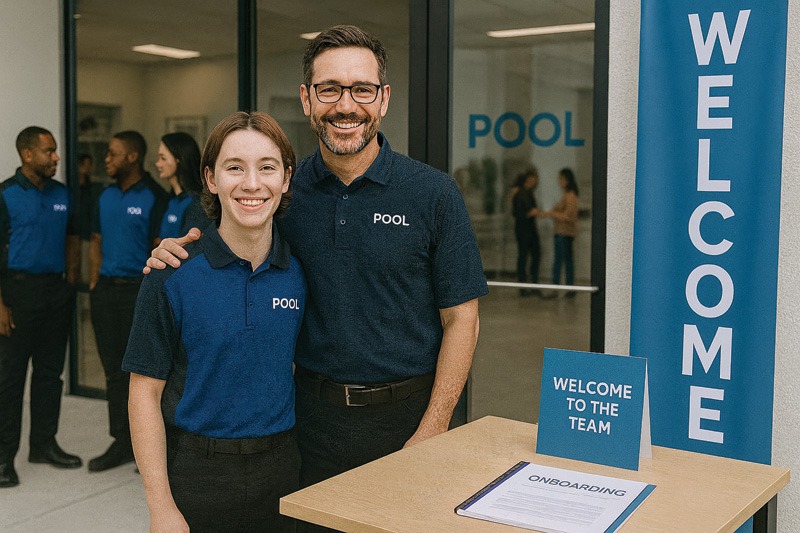
The first 30 to 60 days influence how long an employee stays. In “The Power of Moments” by Chip and Dan Heath, the authors explain how defining experiences, or “peaks,” can create lasting impressions. Onboarding offers an opportunity to craft those defining moments that set the tone for success. Instead of just handing over a manual, employers should design experiences that make new hires feel they are joining something meaningful and valuable.
Pair them with a mentor so they have a guide and role model. Give them clear, achievable goals so they can secure early wins and build momentum. Schedule regular check-ins to answer questions and celebrate progress. Small, intentional moments, such as a welcome lunch, a handwritten note from leadership, or a team photo on their first day, signal that they belong.
When onboarding goes beyond simple orientation, it turns new hires into dedicated team members who take pride in being part of the business.
Water is what we do; people are how we succeed
Hiring and training staff is not an expense; it is an investment in the brand, the customer experience, and the company’s future growth. When a workplace culture values learning, celebrates achievement, and leads with integrity, it does more than retain employees; it creates a passionate team.
Leaders should stay alert for potential talent, whether on the sales floor or ordering a latte. Great people are everywhere; the key is being prepared to invite them into this incredible industry.
What makes an employee stay?
- They feel valued—Recognition matters. When people are thanked, noticed, or celebrated for their work, they feel a sense of belonging.
- They are growing—Learning equals loyalty. Employees who are growing their skills, being challenged in a good way, or offered training are more likely to stay.
- They like who they work with—Relationships are the glue in one’s company. A positive team, a supportive boss, and a sense of fun can make even tough days easier. Play an in-store game, host a friendly competition that incorporates work, or organize a company BBQ with survivor games.
- They see a future—Career paths give people hope. When employees can see where they are headed and believe in the company they work for, as well as see the company helping and rooting for them to achieve their goals, they are more likely to stick around and continue to grow. Find a way to support each other and help each other succeed.
- They are treated fairly—Trust is everything. Fair pay, clear communication, and consistent treatment build trust and respect. But it works both ways. The employee must also be trustworthy and fulfil their responsibilities as expected.
- Work-life balance is real—Flexibility equals loyalty. When people can take time for family, rest when they are sick, and feel human, they are more likely to stay. A team that covers for each other so people can go to appointments or pick up their kids goes a long way.
Author
Lindsey Antonopoulos has over 25 years of experience in the pool and spa industry, holding various roles and supporting British Columbia and Alberta as a dealer development specialist at Backyard Brands. She also helps lead the Women of Water CARE Network, fostering mentorship and growth for women in the industry.
Sign up for our newsletter
Get all the latest news and features from Pool & Spa Marketing. Submit your email below to get our twice-monthly newsletter.
Products


Read the Latest Issue