
Luxury through simplicity: The rise of clean-line pool design
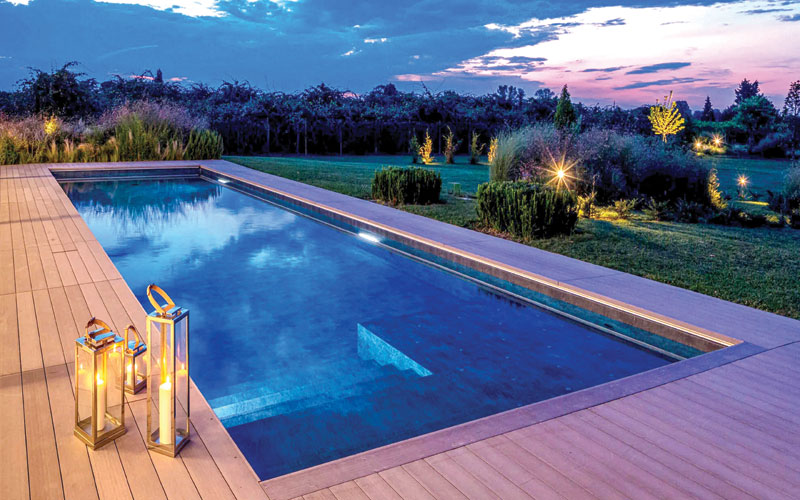
In luxury pool design today, simplicity has become a defining element of sophistication. While ornate finishes and elaborate shapes once dominated high-end backyards, many architects and builders are now embracing a different philosophy: pools emphasizing geometry, calm surfaces, and architectural integration.
This shift reflects broader trends in contemporary design. Across architecture, interior design, and landscape planning, luxury is increasingly expressed through restraint rather than excess. In pool design, that means straight lines, carefully proportioned spaces, and materials chosen not only for appearance but also for performance.
Several design trends have contributed to the rise of minimalist pool design.
Contemporary architecture increasingly favours clean geometry, large expanses of glass, and seamless indoor-outdoor living. At the same time, landscape designers are embracing simplified material palettes, structured outdoor spaces, and resort-inspired environments. Together, these trends have shifted pools from decorative backyard features to architectural elements that complement the home’s overall design.
Pools as architectural elements
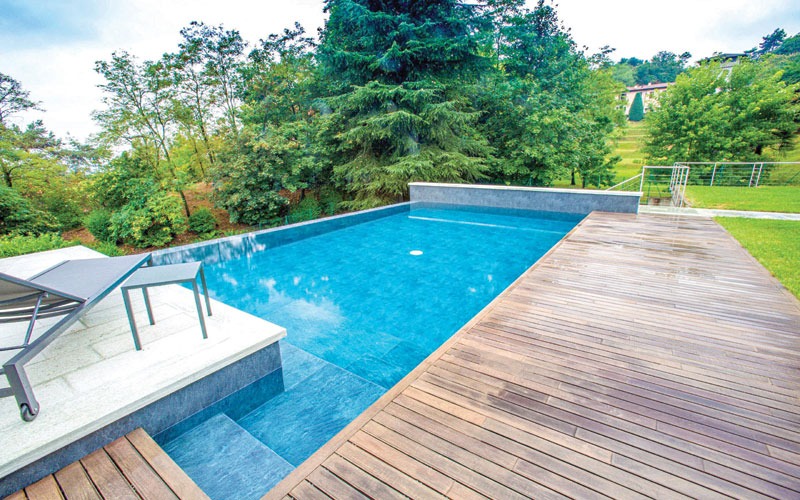
Rather than positioning a pool as a separate landscape element, architects are aligning water features directly with the home’s geometry—mirroring rooflines, terraces, and outdoor living spaces.
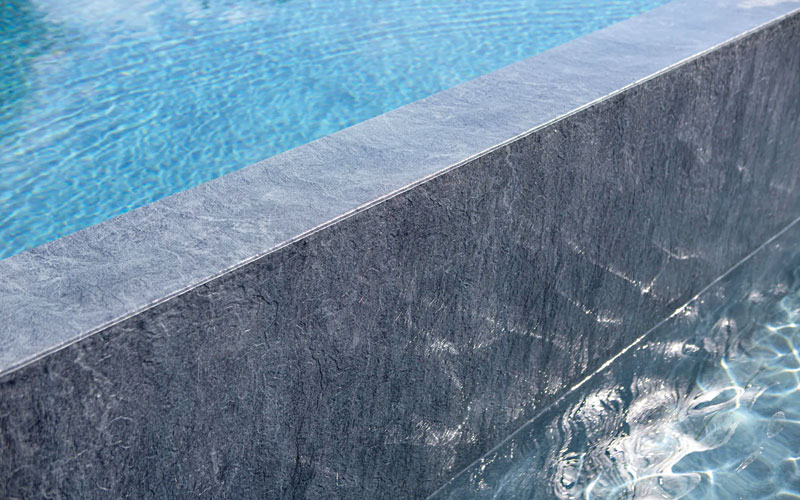
Reinforced PVC membranes are being developed for high-end architectural projects, emphasizing textures and premium colours designed to elevate pool projects. Examples include minimalist retreats, grey stone finishes for minimalist design environments, and natural textures that support contemporary architectural settings. A good example would be a rectangular residential pool with a stone-inspired reinforced membrane, aligned with the surrounding decking and landscape materials. Therefore, the pool reads as part of the architecture rather than a separate decorative element.
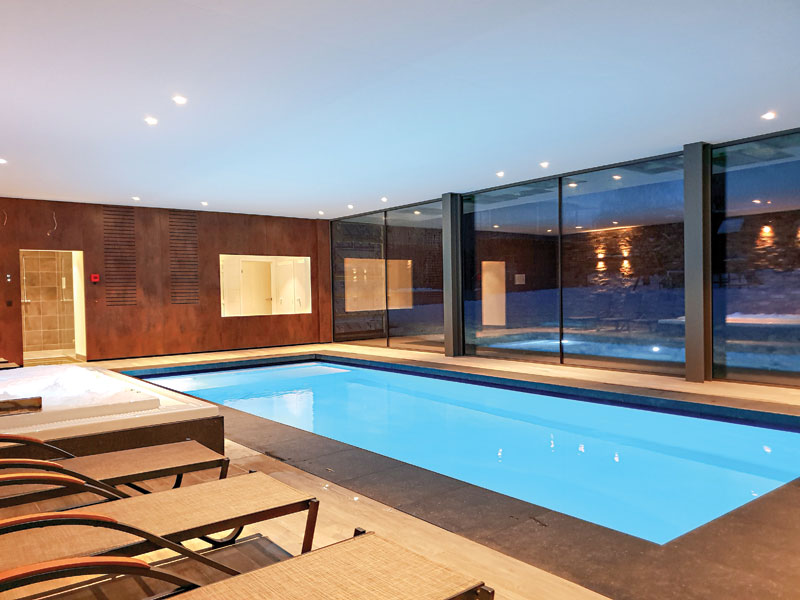
This approach often results in pools defined by clean, geometric forms. Sharp corners, consistent waterlines, and minimalist detailing allow the water to function as a reflective plane that complements surrounding materials such as stone, concrete, and glass.
Minimalist designs leave little room to hide imperfections. Small variations in wall alignment, corner geometry, or waterline elevation become much more noticeable in clean-line pools. Achieving this level of precision requires careful co-ordination between the structure, interior finish, and surrounding hardscape materials.
In this context, visual calm becomes a design goal. The pool is meant to enhance the architecture rather than compete with it.
Designers say this approach creates a sense of balance between the built environment and the landscape, particularly in properties where outdoor living spaces have become as important as interior rooms.
Pools are often integrated with outdoor kitchens, dining areas, lounges, fire features, spas, and wellness spaces through co-ordinated materials, elevations, and sightlines. The goal is to create a seamless transition between recreation, relaxation, and entertainment areas, allowing the entire outdoor space to function as a cohesive extension of the home.
The rise of the compact luxury pool
Another trend shaping modern pool design is the growing popularity of smaller, architecturally focused pools. In urban environments and in homes where outdoor space must be carefully planned, plunge pools are increasingly seen as a refined alternative to large traditional swimming pools.
While exact unit data for residential plunge pools is limited, multiple market signals point to rising demand. David Hobaica, co-founder of Plunge Pool Concepts, describes plunge pools as “one of the fastest-growing trends in outdoor living,” driven by smaller footprints, lower maintenance, wellness benefits, faster installation, and sustainability. Broader market research also identifies wellness and health trends as drivers for plunge and vitality pools.1,2 Rather than simply replacing traditional pools, compact pools are creating a distinct category focused on wellness, design efficiency, and lower ownership demands. Plunge pools also allow homeowners to integrate water features into smaller yards, terraces, or outdoor living spaces while still achieving a high-end esthetic.
Founded by second-generation pool builders David and Robert Hobaica of Easton Pool & Spa, Plunge Pool Concepts builds on decades of experience in traditional concrete-pool construction, adapting that expertise to a format that aligns with modern lifestyles.
Several factors are driving demand for smaller pools. Homeowners are increasingly prioritizing wellness, relaxation, and outdoor living while seeking lower maintenance and operating costs. At the same time, smaller lot sizes and rising construction costs have made compact, multifunctional pool designs more attractive.
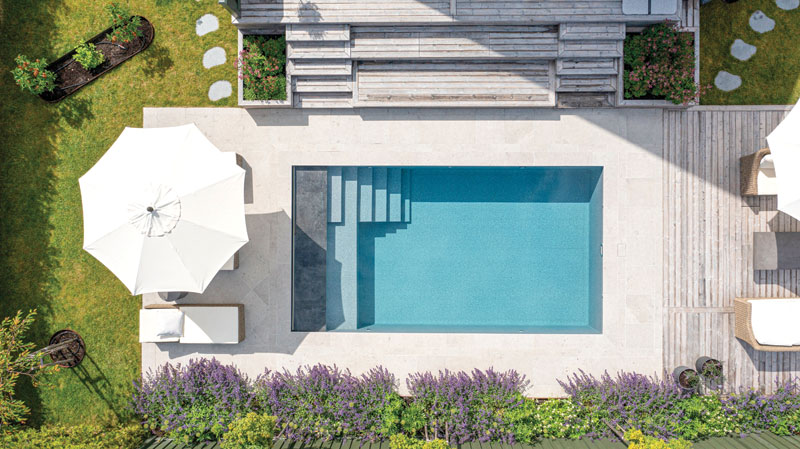
A recent project Plunge Pool Concepts worked on saw a 2.7-m x 6.4-m (9-ft x 21-ft) plunge pool integrated into a manicured backyard with natural stone decking, seating, umbrellas, landscaping, and a fire pit. The key point is that the pool delivers a luxury outdoor experience without requiring a large footprint. The design demonstrates how compact geometry, premium materials, and surrounding amenities can make a constrained site fully functional.
This shift is also changing how designers approach outdoor environments. “Maximizing the whole yard becomes the priority,” says David Hobaica. “Designers are no longer focused on just the pool, but on how the pool fits into the patio and overall lifestyle.”
Designers often maximize outdoor space by combining the plunge pool with other amenities such as lounges, outdoor kitchens, fire features, and wellness areas. Compact pool footprints, integrated seating, and efficient layouts help create multiple functional spaces while maintaining an open, uncluttered feel.
Precision design meets modern materials
Clean-line pools demand materials capable of delivering precise geometry and consistent surfaces. Traditional pool finishes can sometimes limit design possibilities when tight corners, integrated benches, or minimalist detailing are required.
Designers most commonly encounter these limitations in modern geometric pools, integrated benches, tanning ledges, and other architectural features, where sharp corners, complex detailing, and a uniform appearance are critical to the overall design.
Modern interior systems are increasingly helping designers achieve these architectural goals while supporting a more integrated design approach. As David Hobaica notes, “When the interior finish is executed thoughtfully, the pool no longer feels like an add-on—it becomes a seamless extension of the home’s architecture.”
Designers are increasingly specifying large-format porcelain pavers, architectural concrete, natural stone, frameless glass, and concealed drainage systems to create clean, uninterrupted lines. These materials complement minimalist pool designs by emphasizing simplicity, consistency, and strong architectural integration.
For example, some pools incorporate reinforced PVC membranes as an interior finish.
“The durability and luxury of reinforced PVC made it the right choice for our product,” explains David Hobaica. “In frost-belt climates, the material performs exceptionally well and isn’t affected by freeze-thaw cycles.”
Freeze-thaw performance is important in colder climates because repeated freezing and thawing can cause cracking, delamination, and surface deterioration in some traditional cementitious finishes. Reinforced PVC membranes remain flexible and waterproof, allowing them to accommodate temperature-related movement without the same risk of damage. This helps maintain both appearance and watertightness over time.
“I had read several articles about reinforced PVC being used in commercial pools and learned that it had been used successfully in Europe for many years,” explains Robert Hobaica. “So, when the opportunity came to explore it for our plunge pool product, we wanted to see if it could deliver the performance and look we were aiming for.”
To test the material, he first installed it in his own backyard pool.
The evaluation confirmed that reinforced PVC membranes provided the durability, appearance, and freeze-thaw performance they were looking for. The team also found that the material delivered a consistent finish quality and offered more flexibility during construction.
Durability meets design
Beyond esthetics, durability is becoming an increasingly important consideration in luxury pool construction. High-end clients expect pools to perform reliably for many years with minimal maintenance interruptions.
Compared to five or 10 years ago, homeowners are placing greater emphasis on long-term performance, maintenance requirements, and lifecycle costs. Clients increasingly ask about stain resistance, colour retention, watertightness, freeze-thaw durability, and how often a finish may require repair or replacement. They want materials that not only look good on day one but continue to perform for decades.
That performance often surprises homeowners. “Many assume it’s just another liner,” says David Hobaica, “but once they see and feel the material, they’re impressed by how substantial and durable it is.”
Robert Hobaica says one experience with his personal pool installation demonstrated the resilience of the reinforced PVC system.
“After the pool’s interior was completed, I left the pool empty for almost five months while I worked on a full backyard renovation,” he recalls. “The pool interior was exposed to rocks, dirt, sun, and debris the entire time, but the material was completely unaffected.”
Reinforced PVC membranes have a long track record in Europe, where they have been used in swimming pools for more than 40 years. In real-world applications, these systems have commonly demonstrated service lives exceeding 20 to 30 years when properly maintained. Long-term lifecycle simulations and stress testing also support their ability to perform over extended periods. This is especially relevant for high-end clients focused on lifecycle cost, watertightness, reduced maintenance, and avoiding premature renovation.
This level of durability, combined with predictable installation timelines and resistance to weather delays, has made the system particularly attractive.
“It eliminates some of the scheduling challenges that come with traditional finishes,” says David Hobaica. “It can also handle freeze-thaw conditions and doesn’t require water to remain in the pool during construction phases.”
Compared to traditional plaster or aggregate finishes, reinforced PVC membranes can significantly simplify scheduling. A typical 6.1 m x 12.2 m (20 ft x
40 ft) pool can often be completed in two to three days and can be filled immediately upon completion, since no curing period is required. Traditional finishes typically involve multiple application stages, curing times, and greater sensitivity to weather conditions, making project timelines less predictable.
Esthetic versatility
While durability and reliability are essential, appearance remains central to luxury pool design.
Modern reinforced PVC membranes now offer a wide range of textures, colours, and patterns, allowing architects and builders to co-ordinate pool interiors with surrounding materials.
For minimalist pool designs, neutral and natural-inspired finishes remain the most popular. Light and medium greys, concrete-inspired textures, soft stone patterns, and subtle earth tones are frequently specified because they complement contemporary architecture without drawing attention away from the overall design. Homeowners and designers are increasingly choosing finishes that enhance the colour of the water while creating a clean, timeless esthetic.
This flexibility is particularly important in minimalist pool designs, where the simplicity of the surrounding architecture heightens the visual impact of the water surface.
Rather than relying on decorative tile or intricate mosaics, many designers now use subtle interior finishes that enhance the water’s natural colour and create a cohesive visual connection with the surrounding landscape.
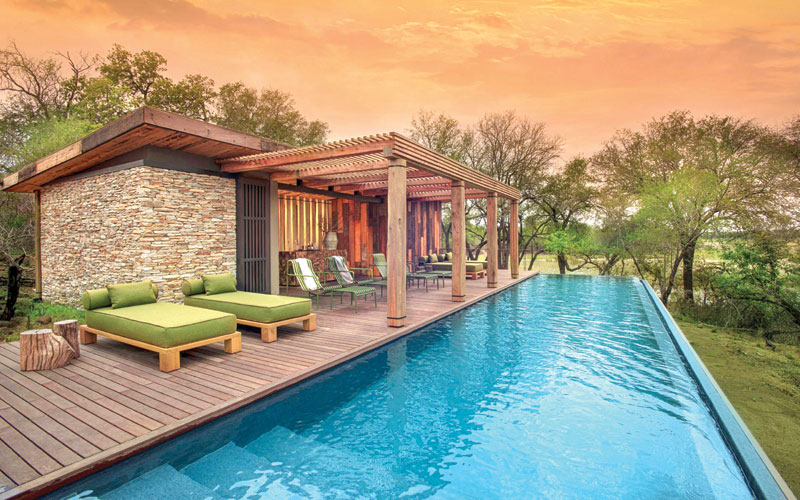
Interior finish selection has a significant impact on both water colour and the overall character of a pool. Lighter finishes tend to create brighter blue and turquoise tones in water, while darker greys and slate-inspired finishes produce deeper blue hues and more reflective, mirror-like surfaces. Stone and concrete-inspired finishes often create a natural, contemporary appearance that complements modern architecture, whereas brighter finishes can evoke a more tropical or resort-style esthetic.
A new standard for outdoor living
Wellness-focused features are transforming pools from recreational amenities into year-round lifestyle and recovery spaces, as homeowners are incorporating cold plunges, hydrotherapy zones, integrated spas, and saunas to support relaxation, fitness, and overall well-being. This trend is also driving demand for smaller, multifunctional pools that can serve multiple purposes while fitting seamlessly into a broader outdoor living environment.
Compact plunge pools, minimalist geometry, and performance-driven materials contribute to a design philosophy that prioritizes both beauty and practicality.
For builders, the appeal of this approach is clear. “These pools are easier to maintain, heat, and clean, while still offering luxury add-ons like built-in spas and architectural finishes,” says David Hobaica. “Plunge pools are quickly becoming a category of their own. As outdoor spaces become more important and lot sizes continue to shrink, homeowners aren’t just adding a pool—they’re investing in a full backyard where the pool is only one part of the experience.”
Over the next five to 10 years, luxury pool design will likely be shaped by wellness, sustainability, and the continued integration into outdoor living environments. Homeowners are increasingly seeking multifunctional spaces that combine recreation, relaxation, fitness, and recovery. At the same time, demand for compact, highly efficient pool designs is expected to grow as lot sizes decrease and construction costs rise. Materials that offer long-term durability, water conservation benefits, design flexibility, and low maintenance—such as reinforced PVC membranes—will also continue to gain traction as homeowners place greater emphasis on lifecycle value rather than just initial appearance.
In many ways, the movement toward clean-line pool design reflects a broader evolution in luxury living. The most refined environments are no longer defined by size or complexity but by thoughtful design, material performance, and the ability to create calm, elegant spaces where architecture and water work together seamlessly.
Notes
1Grand View Research, “Cold Plunge Tub Market Size & Trends, 2026–2033,” grandviewresearch.com/industry-analysis/cold-plunge-tub-market-report.
2Global Wellness Institute, “2024 Hydrothermal Initiative Trends,” April 30, 2024, globalwellnessinstitute.org/global-wellness-institute-blog/2024/04/30/2024-hydrothermal-initiative-trends/.
Author

Matthew Sands is a sales engineer with RENOLIT and has more than 20 years of specialized experience in construction renovation, product installation, and project engineering. He supports architects, installers, and distributors across North America with technical expertise, field training, and system design guidance. Additionally, he trains international customers through RENOLIT’s Global Training Academies worldwide. He can be reached at matthew.sands@renolit.com.
Sign up for our newsletter
Get all the latest news and features from Pool & Spa Marketing. Submit your email below to get our twice-monthly newsletter.

Read the Latest Issue